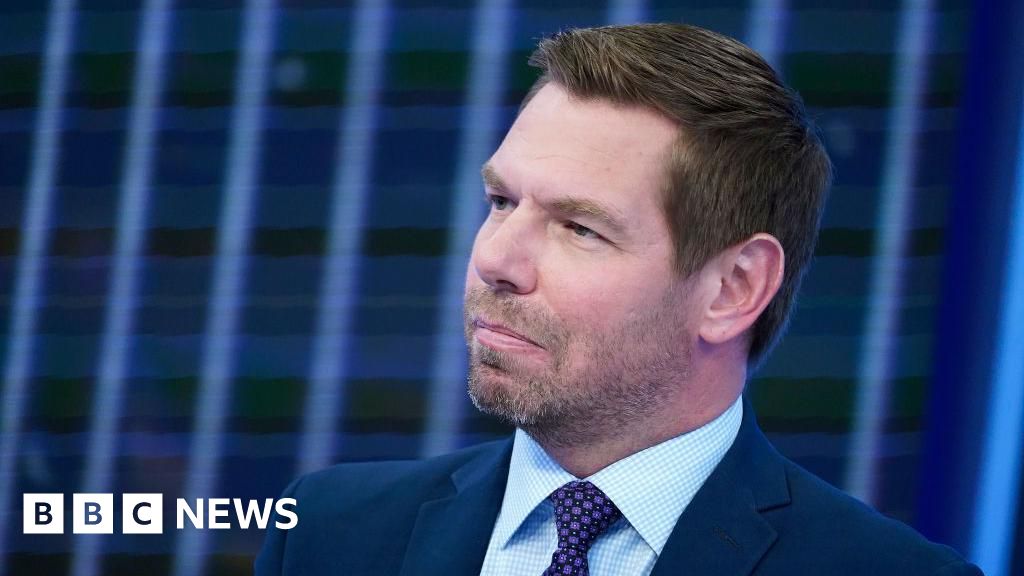
The Manhattan District Attorney has launched an investigation into sexual misconduct allegations against congressman Eric Swalwell, with four women accusing him of behavior ranging from harassment to rape. Swalwell denies the claims, but the allegations have already cost him backing from prominent Democratic supporters in California's governor race. The story is politically material but is unlikely to have broad market impact beyond individual political exposure.
This is not an event-driven equity catalyst by itself, but it is a meaningful governance shock for any politician with a statewide ballot horizon. The immediate market effect is on campaign viability: losing elite endorsements at the start of a crowded primary can quickly translate into weaker fundraising, lower volunteer conversion, and softer polling in the next 2-6 weeks, which matters more than the legal merits at this stage. In a field where vote-splitting is already the dominant strategic variable, even a modest erosion in one frontrunner can re-rank the entire probability tree for who reaches the general election.
The second-order effect is that reputational contamination tends to be asymmetric: allies distance faster than donors do, so the first-order damage is social and institutional, while the financial damage lags until the next disclosure cycle. If additional complainants surface or prosecutors broaden the inquiry, the downside can compound non-linearly because media coverage tends to re-open prior allegations and force repeated denials, extending the headline half-life from days to months. Conversely, if no formal charges emerge and the story fades, the candidate can stabilize enough to remain a spoiler, which preserves the broader primary fragmentation risk.
The contrarian read is that markets often overprice the near-term collapse of a political franchise before legal process advances. In this case, the more tradable implication may be not the candidate’s personal odds but the downstream reallocation of endorsement, donor, and media attention toward rival Democrats, which can alter California primary dynamics and, by extension, the composition of November ballots. That makes the real watch item the next 10-20 days of polling, fundraising reports, and any prosecutor signaling, not the initial accusation burst.
AI-powered research, real-time alerts, and portfolio analytics for institutional investors.
Request DemoOverall Sentiment
strongly negative
Sentiment Score
-0.55
