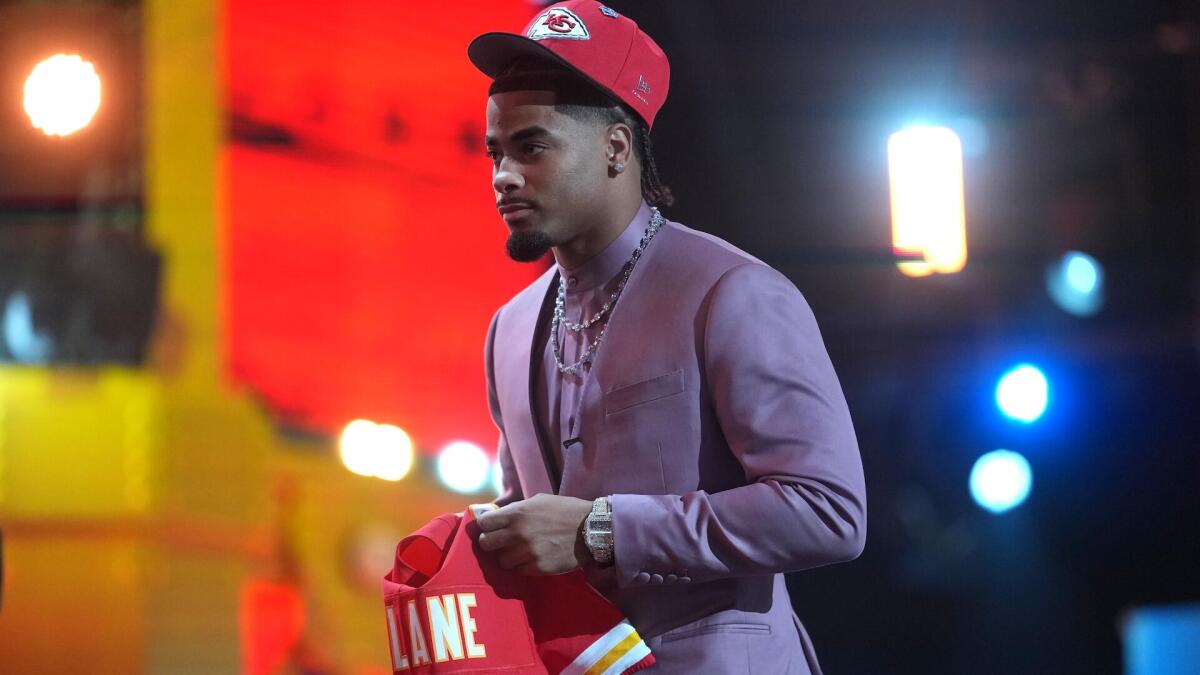
The article is a factual recap of Round 1 of the 2026 NFL Draft, highlighted by Kansas City trading up to No. 6 for CB Mansoor Delane, the Rams taking QB Ty Simpson at No. 13, and the Jets adding three first-round starters. It also notes notable slips, including Caleb Downs falling out of the top 10, and reports that nine offensive linemen were selected in Round 1, tying the second-most in the Common Draft Era. Overall, the piece is sports-news commentary with no direct financial or market-moving catalyst.
This draft is a signal that several franchises are prioritizing structural roster optionality over near-term offensive efficiency, which matters for market narratives around coach/GM job security and win-total volatility. The clearest beneficiary is the Jets: three Day 1 starters materially compress the variance of a team that was pricing like a bottom-tier rebuild, and that should support a faster re-rating in 2026 season-win markets if the defense translates quickly. The more interesting second-order effect is that the Jets’ aggression reduces the probability of a multi-year teardown, which can lift the floor on related exposure to local media and in-market sponsorship ecosystems even if the offense remains capped.
Kansas City’s choice to spend premium capital on defense rather than insulation for Mahomes suggests the front office believes the offensive decline is cyclical, not fixable via incremental draft additions. That stance is risky: if quarterback efficiency has structurally stepped down, another defense-first offseason could deepen the gap between team quality and public perception, making the Chiefs more vulnerable to regular-season unders than consensus expects. The market may overvalue “Mahomes premium” in futures while underestimating the possibility that the roster is simply aging out of elite efficiency faster than fans assume.
The Rams’ quarterback selection is the biggest long-dated option in the class. It creates a low-cost succession hedge, but it also introduces a non-trivial chance of short-term tension if the veteran starter’s window is being managed toward a faster handoff than the locker room wants. That kind of ambiguity is usually positive for franchise valuation and negative for weekly consistency, because it raises the odds of uneven in-season usage, media noise, and a wider range of outcomes on game-to-game offense.
The offensive-line run is less about one position group and more about how teams are valuing floor versus upside in a year where front offices appear allergic to luxury picks. That tends to flatten the ceiling for skill-position-only teams while making young quarterbacks and run-game dependent offenses less fragile. The market is likely underestimating how much this draft shifts competitive balance toward teams with established infrastructure, especially if rookie linemen hit early enough to improve pass protection by midseason.
AI-powered research, real-time alerts, and portfolio analytics for institutional investors.
Request TrialOverall Sentiment
neutral
Sentiment Score
0.05
