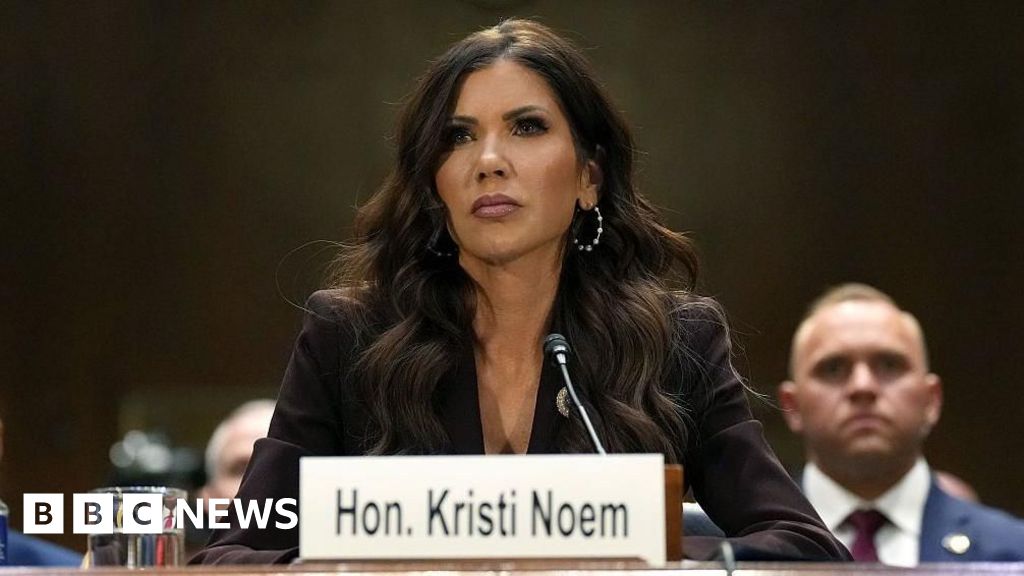
Homeland Security Secretary Kristi Noem defended DHS operations at a Senate hearing amid a partial department shutdown as Democrats press to withhold funding pending reforms; some DHS employees (including TSA staff) are receiving partial pay or working without pay. The hearing highlighted controversy around Operation Metro Surge—during which two US citizens were shot—and Noem declined to apologize for calling one victim a 'domestic terrorist'; senators also pressed her over a roughly $220m DHS advertising campaign and procurement concerns linked to contractors. Lawmakers from both parties questioned policy, spending and leadership, keeping political and oversight risks elevated for DHS operations and related contractors.
Market structure: The hearing crystallizes a bifurcation — firms tied to border security/defense (Leidos LDOS, L3Harris LHX, ManTech MANT) stand to win if DHS funding and enforcement persist, while airlines (AAL, DAL) and consumer-facing travel names risk short-term disruptions from TSA staffing and reputational blowback. Private-prison operators (CoreCivic CXW, GEO Group GEO) have asymmetric exposure: policy that increases removals boosts demand for detention capacity, but contract scrutiny and litigation can wipe out revenue quickly. Cross-asset: expect modest flight-to-quality into Treasuries (2s/10s) if appropriations fights widen, a small USD safe-haven bid, and elevated IV in small/mid caps tied to DHS contracts for 30–90 days.
Risk assessment: Tail scenarios include a prolonged DHS funding standoff (30–60+ days) that freezes new contracts and forces layoffs, or a high-profile legal ruling/contract cancellation that drives 30–50% hit to niche contractors or private-prison names. Near-term (days–weeks) key risk is volatility around appropriations votes; short-term (1–3 months) is contract re-bids and DOJ/Inspector General probes; long-term (quarters) is regulatory/legal restructure under intensifying public scrutiny. Hidden dependencies: revenue timing for contractors depends on invoicing cycles and continuing resolutions; advertising/contract award probes can spill into broader govt procurement delays.
Trade implications: Favor selective exposure to large, diversified government contractors (LDOS, LHX) via limited directional or call-spread exposure (3–6 month horizon) while shorting concentrated, politically vulnerable names (CXW, GEO) via puts or small outright shorts. Pair trade: long LDOS 1.5% of portfolio vs short CXW 1% (captures reallocation from contentious detention providers to audited primes). Hedge tail risk with 1–3% allocation to short-duration Treasuries (SHY/VGSH) if DHS shutdown extends beyond 14 days.
Contrarian angles: The market underestimates the probability that oversight will re-route spending toward larger incumbents — a fast re-bid cycle could favor LDOS/LHX by +15–25% within 3–6 months while press-driven backlash could reduce CXW/GEO revenue by 30–40%. Reaction is mixed: headlines pressure names tied to raids but funding uncertainty also temporarily depresses contractors’ multiples — this offers opportunities to buy large primes on pullbacks below 12–14x forward EBITDA. Watch for a decisive appropriations vote within 30–60 days; that event will likely reverse pricing dislocations quickly.
AI-powered research, real-time alerts, and portfolio analytics for institutional investors.
Request TrialOverall Sentiment
moderately negative
Sentiment Score
-0.40
