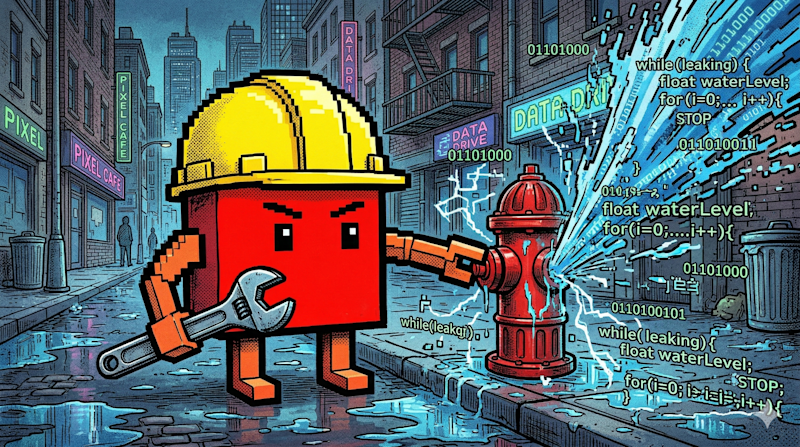
Anthropic accidentally published a 59.8 MB source-map for Claude Code v2.1.88 to npm, leaking a ~512,000-line TypeScript codebase that exposes memory architecture, internal model codenames (Capybara/Fennec/Numbat) and telemetry; Claude Code accounts for an estimated $2.5B ARR while Anthropic reports a $19B annualized revenue run-rate (Mar 2026). The leak materially erodes Anthropic's IP moat and raises immediate security risks — competitors can replicate agentic orchestration and attackers can exploit revealed orchestration logic; a concurrent supply-chain compromise of axios (between 00:21–03:29 UTC on Mar 31) may have delivered a RAT via axios 1.14.1/0.30.4, so customers should inspect lockfiles, rotate keys, reinstall compromised hosts, and migrate to the native installer.
The most important market mechanic is rapid horizontalization: when high-agency orchestration patterns become reproducible, differentiation shifts from proprietary stack design to enterprise trust, integration depth, and managed services. Expect enterprise buyers to accelerate spend on vetted deployment paths and third-party validation (SaaS security posture, managed installers, binary signing) rather than pay a premium for “secret sauce.” This change favors vendors who can offer auditable, on-prem or tightly managed cloud delivery and hurts players whose valuation relies on IP-as-moat.
From a risk perspective, attackers and auditors now have clearer failure modes to target and test; that drives a front-loaded security capex cycle (3–12 months) as customers harden endpoints and pipelines, and a follow-on compliance wave (12–36 months) as auditors codify new controls. The immediate revenue opportunity is concentrated in EDR, workload protection, and managed detection; the long run consequence is margin pressure for orchestration vendors as commercial terms migrate toward longer-term, service-heavy contracts.
Valuation mechanics: expect multiple re-rating in two buckets — security/cloud infra up 5–20% as recurring, sticky revenue accelerates; pure-play orchestration/software players see 15–40% compression as differentiation declines and churn risk rises. A contrarian possibility is that broader, cheaper access to orchestration primitives expands total addressable market fast enough to offset IP loss, implying winners will be those who convert accelerated adoption into platform lock via telemetry-driven monetization.
AI-powered research, real-time alerts, and portfolio analytics for institutional investors.
Request DemoOverall Sentiment
strongly negative
Sentiment Score
-0.65
