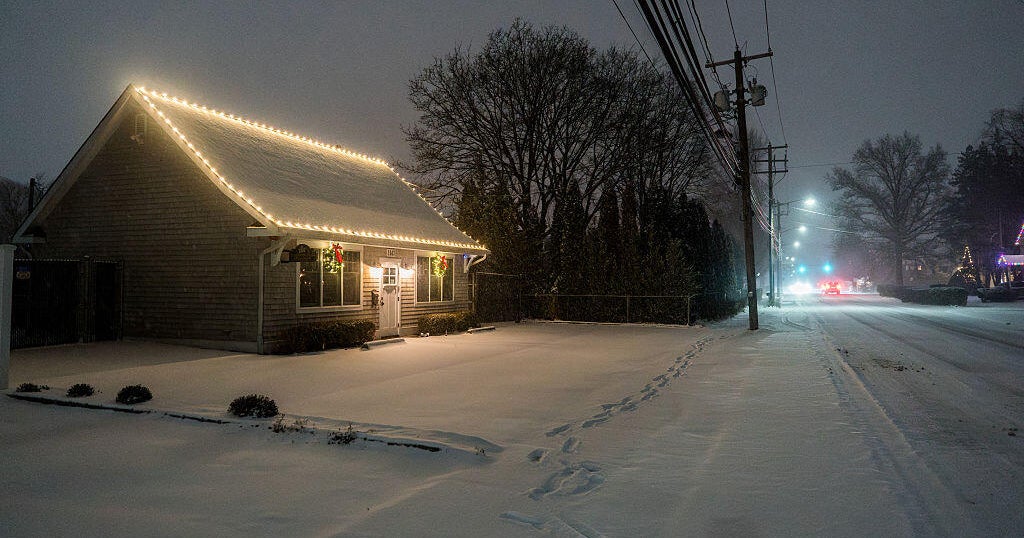
A potent winter storm across the Northeast and Great Lakes disrupted travel and logistics over the holiday period, with at least 2,700 U.S. flight cancellations since Friday and thousands more delays; New York City recorded just under 3 inches of snow. New York declared a state of emergency, more than 13 million people are under winter weather advisories and 7.7 million under storm watches, and forecasters warned of ice, power outage risk and blizzard conditions in parts of the Midwest by early Monday — risks that could transiently hit airline operations, ground transportation and regional energy demand.
Market structure: The storm creates concentrated, short-duration winners (home-improvement retailers, residential-generator makers, local snow-removal contractors) and losers (airlines, airports, perishable logistics). Expect 1–3 day operational shocks to airline revenue-per-ASM and gate-utilization (2,000–3,000 cancellations noted) and a 1–4 week pickup in retail SKUs tied to winter prep (Generators GNRC, HD, LOW). Jet-fuel demand may dip modestly while heating-fuel and spot natural-gas demand spike regionally.
Risk assessment: Tail risks include a major regional power outage causing extended supply-chain losses (multi-day delays cascading into weekly revenue misses for airlines and logistics) or severe infrastructure damage triggering insurance claims >$100m for select carriers/airports. Immediate effects are days; elevated operational volatility persists weeks; balance-sheet impacts (insurance reserve hits, margin compression) could surface over quarters. Hidden dependencies: airport gate/crew/time-of-day scheduling creates nonlinear cascade risk if cancellations exceed ~5% of a carrier's daily flights.
Trade implications: Short-duration trades favor options and pairs: buy short-dated puts on large US carriers (AAL, DAL, UAL) to capture elevated idiosyncratic risk; go long GNRC/HD/LOW for 1–3 month demand pickup; add tactical long natural-gas exposure (NG futures or 2-month call spreads) on colder-than-normal HDD prints. Size positions small (1–3% NAV each), use stop-losses (8–12%) and volatility-aware option sizing (target theta-neutral where possible).
Contrarian angles: Markets often overprice airline downside for localized storms — cancellations tend to mean-revert in 7–14 days; deep, longer-term airline shorts require labor/fuel catalysts not present here. Conversely, generator/retail rallies could be underbought if outage reports exceed expectations; monitor flight cancellations >5k and regional outage maps as triggers. Historical parallels (2018/2019 Northeast storms) show 70–90% operational recovery within two weeks, implying transient mispricings in equity sell-offs.
AI-powered research, real-time alerts, and portfolio analytics for institutional investors.
Request DemoOverall Sentiment
moderately negative
Sentiment Score
-0.30
