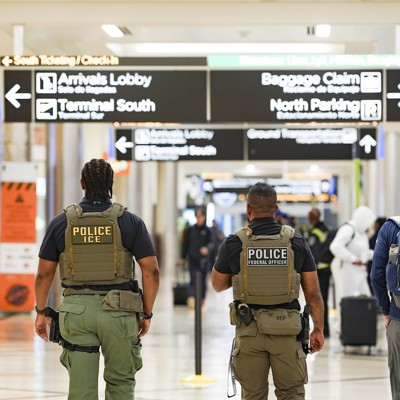
TSA staffing is critically strained: the agency lost ~3,000 employees in 2025 (~5% of its workforce) and has seen nearly 500 leave since the February shutdown, with ~12% of screeners calling out on Monday and call-out rates above 20% at nine airports. ICE agents, after two days of training, have been deployed to more than a dozen airports to assist with ID checks and crowd control, but DHS faces a potential third partially missed paycheck for >100,000 employees and warnings from Coast Guard and FEMA about payroll and fund shortfalls, raising operational risk ahead of the World Cup.
This staffing mismatch creates a durable operations wedge that will ricochet through travel, contracting, and labor relations over the next 3–9 months. With specialized screener capacity operating on a six-month training cadence, incremental stopgap labor (ICE or contractor temps) only blunts the margin of disruption at peak demand events; expect sustained elevated delay risk during concentrated travel windows which will compress airline unit revenues and raise ancillary recovery costs (buses, hotels, rebooking).
A second-order beneficiary cohort is vendors of non-technical queue-management, ID-reading and biometric front-line tech — these products reduce dependence on headcount and shorten marginal training time; procurement cycles typically run 3–12 months, so vendors with existing DHS/airport footprints can see accelerated orders if airport leaders choose capex over hiring. Conversely, airlines and airport concessionaires face variable, asymmetric downside: a single multi-hour disruption at a major hub in the 60–90 day window can knock quarterly revenue-per-passenger more than recent baseline volatility implies.
Political and fiscal catalysts dominate path risk. A near-term roll-call (days–weeks) to bifurcate DHS funding could either resolve payroll stress quickly or extend it; litigation or an incident that questions the use of ICE in screening could force an abrupt policy reversal and re-hire costs. The market is underpricing the optionality around supplemental DHS appropriations: if funding flows within 2–6 weeks, contractors’ near-term revenue will spike and airline disruption premium will compress; if deadlock persists for months, expect sustained delta in regional carriers’ margins and higher claims exposure for insurers covering travel interruption.
AI-powered research, real-time alerts, and portfolio analytics for institutional investors.
Request DemoOverall Sentiment
moderately negative
Sentiment Score
-0.60
