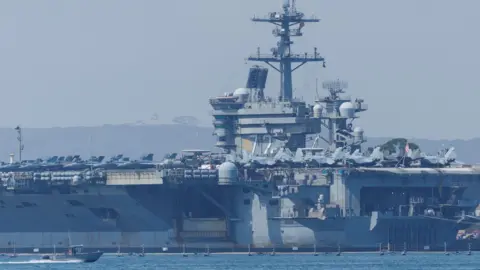
The USS Abraham Lincoln carrier strike group has deployed near Iranian waters as Iran reels from the most extensive and violent domestic crackdown since 1979, with human-rights groups reporting thousands killed amid an internet blackout. The article warns that Tehran's past pattern of delayed, calibrated retaliation may break under internal pressure, raising the risk of rapid regional escalation that would pressure oil markets, boost defense and safe-haven flows, and create broader instability across emerging-market exposures.
Market structure is shifting toward defence and energy beneficiaries (Lockheed LMT, Northrop NOC, Raytheon RTX; integrated oil XOM, CVX) as risk premia increase; losers in the near term are EM equities (EEM), regional airlines/cruise (AAL, UAL, CCL) and Gulf-exposed banks. Strait of Hormuz disruption risk (affecting ~20–30% of seaborne crude) raises crude upside of $5–$20/bbl in days–weeks, boosting energy cashflows and marine insurance rates while pressuring global trade volumes and travel-reliant sectors.
Tail risks include a direct US–Iran strike causing oil to spike >$20/bbl and a multi-month regional escalation, cyberattacks on energy infrastructure, or collapse of Iranian internal order triggering refugee flows and EM funding stress. Time buckets: immediate (days) = risk-off, oil/gold jump; short (weeks–3 months) = defence rerating +10–25% potential; long (3–24 months) = sustained higher defence budgets and selective re-shoring of supply chains.
Trade implications: tactically overweight large-cap defence primes and high-quality integrated oil for 3–12 months while hedging with equity tail protection. Use options for asymmetric exposure: buy XLE/Brent call spreads for 1–3 month windows and purchase short-dated SPX downside protection; reduce cyclical travel/leisure exposure and trim EM by ~3–5% to free capital.
Contrarian view: the market may overprice persistent escalation—history (post-2019 Gulf tensions) shows oil spikes often mean-revert within 6–12 weeks once strategic reserves or shipping rerouting occur. Prefer defence names with secular backlog (LMT, NOC) over smaller contractors and use profit targets (take 50% gain in energy positions if Brent +15% within 10 trading days) to avoid being long through a policy-coordinated supply response.
AI-powered research, real-time alerts, and portfolio analytics for institutional investors.
Request DemoOverall Sentiment
strongly negative
Sentiment Score
-0.65
