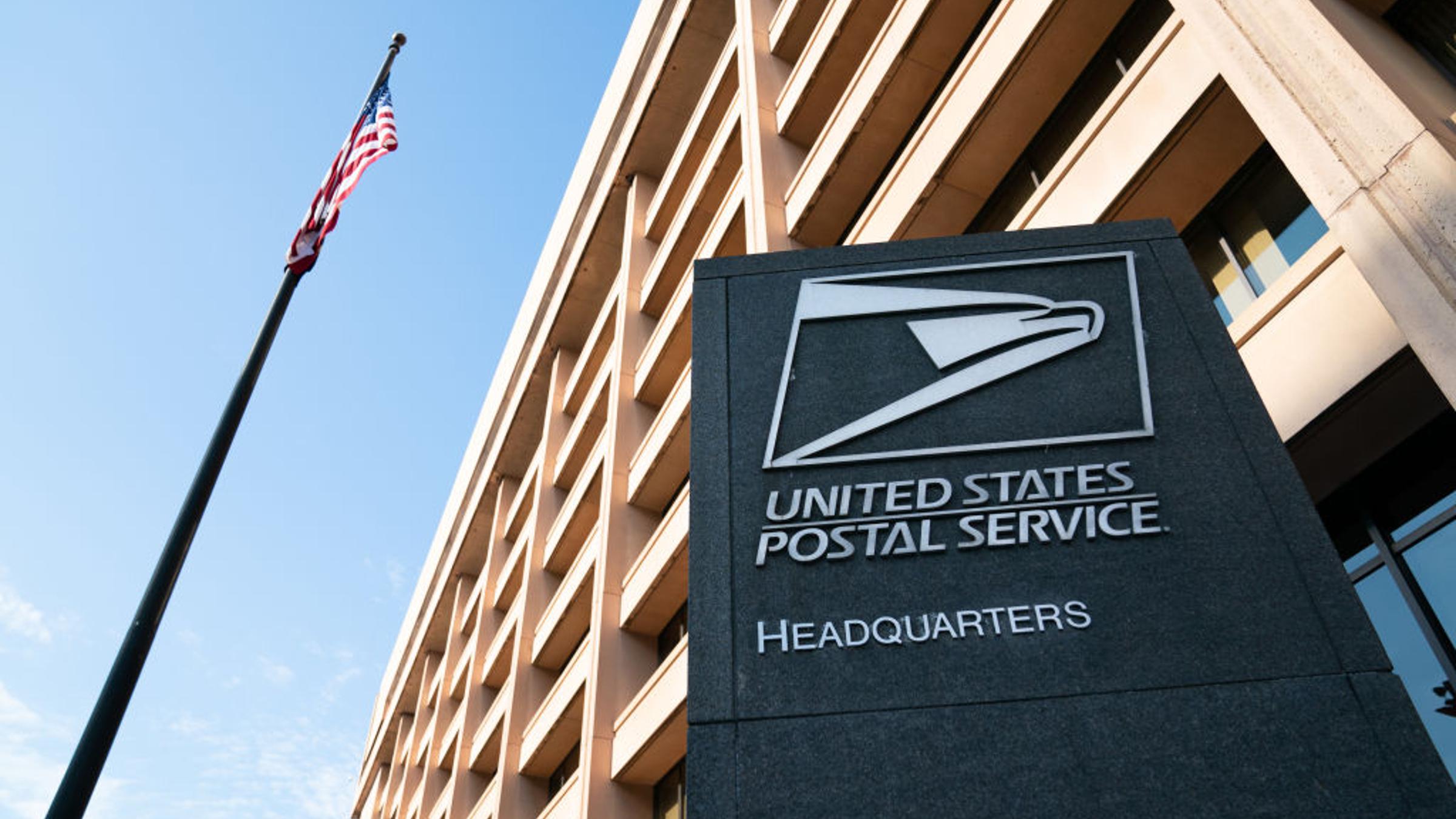
USPS said it will temporarily suspend employer contributions to the FERS defined benefit pension plan, saving about $2.5 billion in the current fiscal year, while also seeking a 4.8% postage rate increase that would lift First-Class Forever stamps from 78 cents to 82 cents. The agency says the move is necessary to preserve liquidity amid a severe financial crisis, after warning it could run out of cash in 2027 if no changes are made. USPS also noted it has reached its federal borrowing limit and has lost more than 104 billion pieces of annual mail volume since 2006.
The immediate market read-through is not UPS/FDX earnings sensitivity from volume loss, but a higher-probability shift in the mix of parcel demand toward the most reliable national network. When a ubiquitous delivery utility starts rationing balance-sheet capacity, shippers tend to pay up for certainty, which can modestly improve pricing discipline for integrated carriers and pressure lower-tier regional operators first. The second-order effect is on service levels, not just volume: if USPS degrades on timing, e-commerce merchants will re-optimize checkout defaults toward premium ground and home-delivery products, which is supportive for the large incumbents' yield per package even if unit growth is unchanged. The bigger near-term catalyst is regulatory rather than operational. Any visible deterioration in mail reliability will raise political urgency around USPS borrowing authority and pension flexibility, but that relief would likely arrive with strings attached and only after a lag of months, not days. That creates an asymmetric window where the agency can preserve liquidity by pushing prices and working capital behavior, while competitors can capture incremental share before any policy backstop stabilizes the system. The contrarian view is that the headline may overstate direct financial contagion to parcel carriers. USPS is structurally weakest in letters and dense last-mile with low-margin, price-sensitive traffic; UPS and FDX compete more on speed, reliability, and B2B service quality, where the crossover share gain can be slower than the headline suggests. So the trade is less about immediate revenue displacement and more about a gradual repricing of network trust over the next 2-3 quarters, with the biggest upside to carriers that can monetize service premium rather than raw volume.
AI-powered research, real-time alerts, and portfolio analytics for institutional investors.
Overall Sentiment
strongly negative
Sentiment Score
-0.55
Ticker Sentiment
