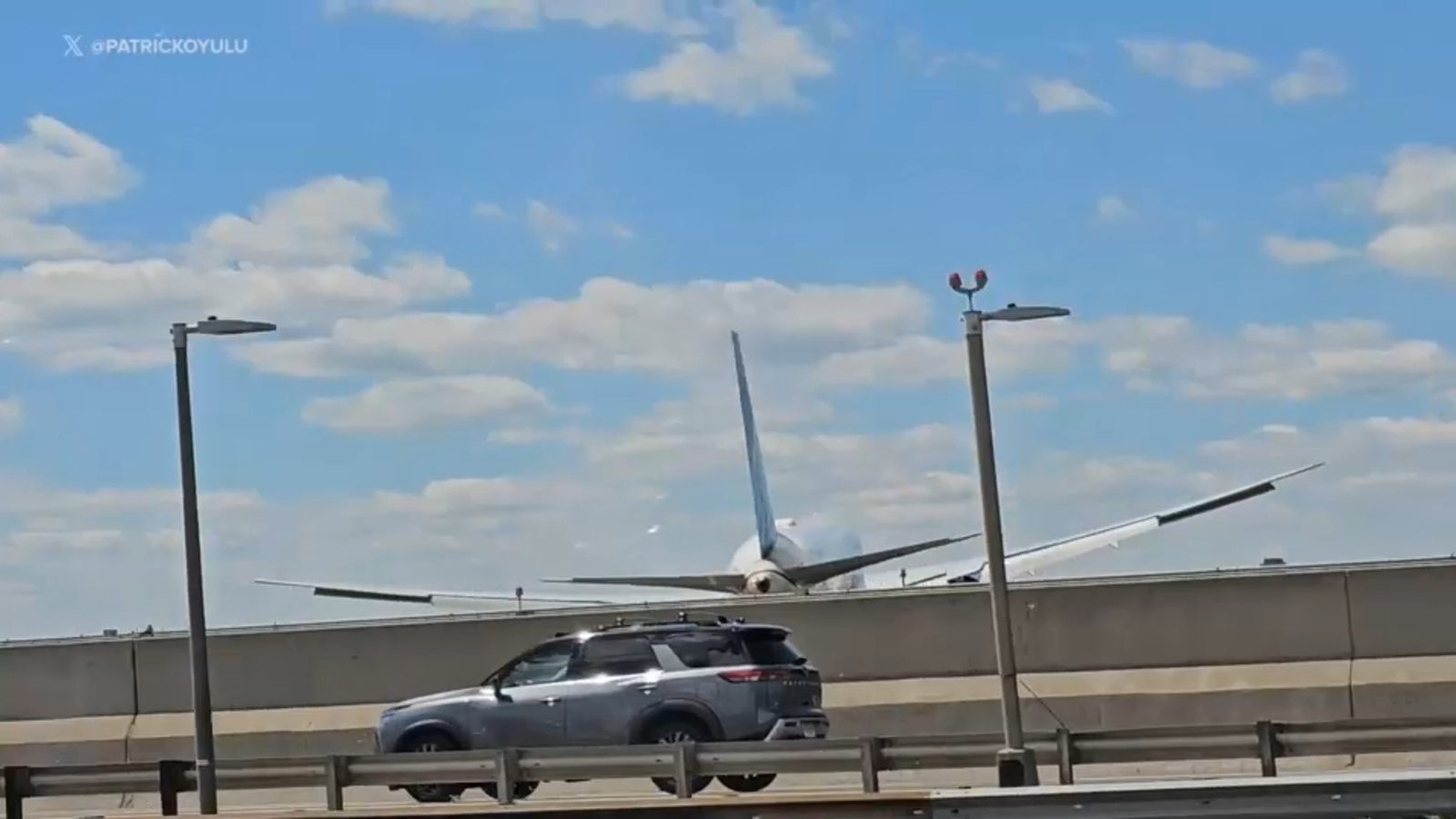
A United Airlines Flight 169 from Venice to Newark struck a light pole on final approach, damaging a tractor-trailer below and sending its driver to the hospital with minor injuries. The aircraft landed safely with 221 passengers and 10 crew on board, and United said the plane sustained only minor damage while the FAA opened an investigation. Airport operations resumed quickly after runway inspections, limiting broader operational disruption.
This is less a one-off headline risk than a process risk for UAL: an FAA investigation plus crew removal means the overhang is not the minor airframe damage, but the possibility that operational procedures, approach path management, or airport/airspace design deficiencies are found. In the near term, the market will likely price a small, non-fundamental hit to sentiment rather than earnings, but aviation names can underperform for days to weeks when regulators are visibly involved because it invites a broader safety narrative and management distraction. The second-order issue is operational resilience at Newark, not just United-specific liability. If the inquiry points to approach constraints near the airport perimeter, the downstream effects could include extra spacing, reroutes, or temporary throughput constraints that would pressure unit costs and on-time performance even if the airport avoids formal restrictions. That would hurt UAL first, but also reduce confidence in capacity growth assumptions for other carriers with heavy EWR exposure and could modestly benefit nearby hubs if travelers and corporate accounts diversify away from Newark for a quarter or two. The contrarian read is that the immediate selloff in UAL may be overdone if investors treat this as a hard demand shock; there is no evidence of customer behavior change or fleet grounding risk yet. The bigger risk is asymmetric tail liability: if the FAA uncovers repeatable procedural issues, the impact shifts from optics to economics through crew scheduling, maintenance inspections, and possible airport design remediation over months rather than days. For now, the event is a volatility catalyst, not an earnings reset.
AI-powered research, real-time alerts, and portfolio analytics for institutional investors.
Overall Sentiment
mildly negative
Sentiment Score
-0.15
Ticker Sentiment
