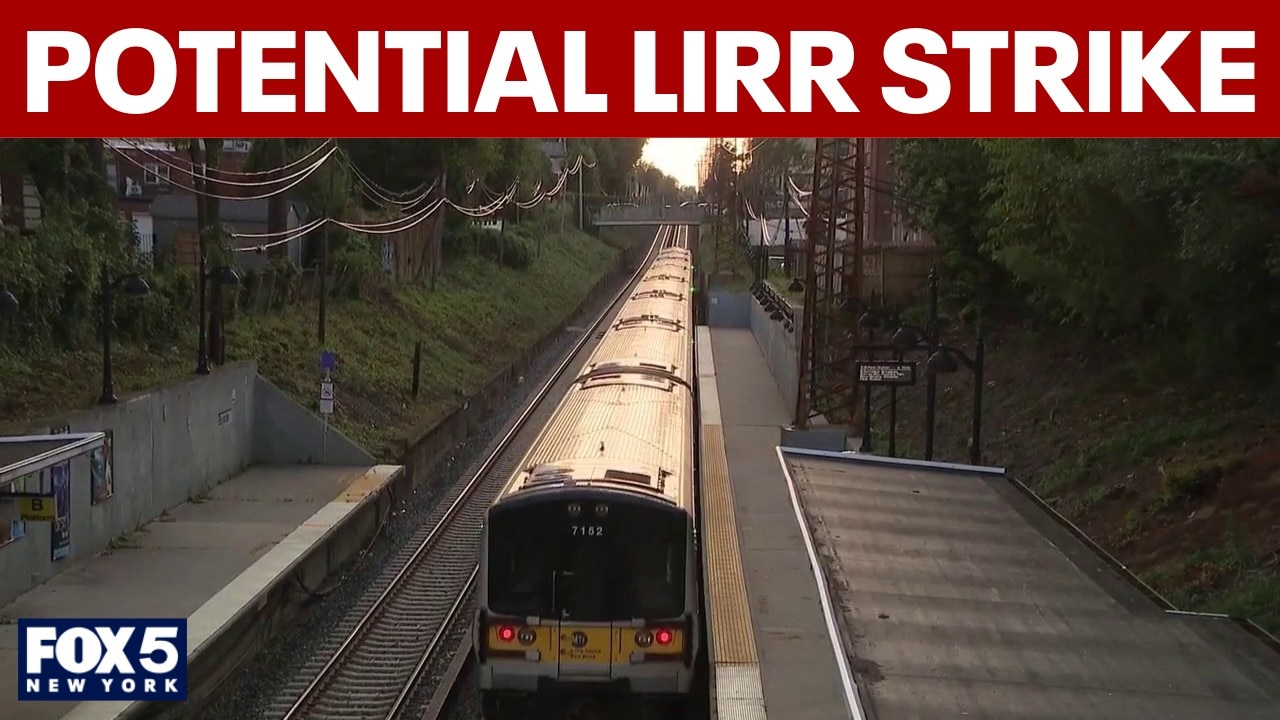
A potential Long Island Rail Road strike could begin as soon as Saturday and would shut down service entirely, disrupting more than 300,000 daily riders. The dispute centers on wages, with unions seeking a 5% raise versus the MTA's 3% offer, and the agency warning that higher pay could force fare hikes or service cuts. The MTA has outlined limited shuttle bus contingencies, but commuters are being urged to avoid nonessential travel and work from home if possible.
The immediate market effect is not the rail system itself but the substitution shock onto roads, parking, and short-haul transit nodes. A full LIRR stoppage would concentrate incremental demand into already constrained bridges, tunnels, and local bus networks, creating a one- to three-day spike in congestion costs that is more visible in commuter-sensitive sectors than in broad equity indices. The biggest second-order beneficiary is the private transport stack: rideshare, car rental, parking operators, and gas stations near suburban railheads should see a temporary volume uplift if the strike persists beyond a weekend.
For the MTA, the issue is less lost fare revenue than the repricing of political and funding risk. A strike that forces bus shuttles and a mode shift onto the subway increases operating complexity and exposes the agency to complaints about service reliability just as it tries to defend future fare increases. That matters because any perception of weakened labor discipline or contingency failure can widen the probability distribution around future wage settlements across the transit ecosystem, making this a template event rather than an isolated labor dispute.
The key catalyst window is extremely short: if a deal lands before commuters fully rearrange behavior, the market impact fades fast; if the stoppage lasts multiple weekdays, the pain compounds nonlinearly as employers formalize remote-work policies and riders lock in alternative routines. The contrarian read is that the wage gap itself is not the market issue — it is the pass-through into fares and political pressure, which likely remains small in the near term but becomes meaningful if management concedes and then revisits pricing or service cuts later in the year. That creates a delayed risk for consumer-facing Long Island and outer-borough names that depend on commuter foot traffic more than on regional headline demand.
AI-powered research, real-time alerts, and portfolio analytics for institutional investors.
Request DemoOverall Sentiment
moderately negative
Sentiment Score
-0.45
Ticker Sentiment
