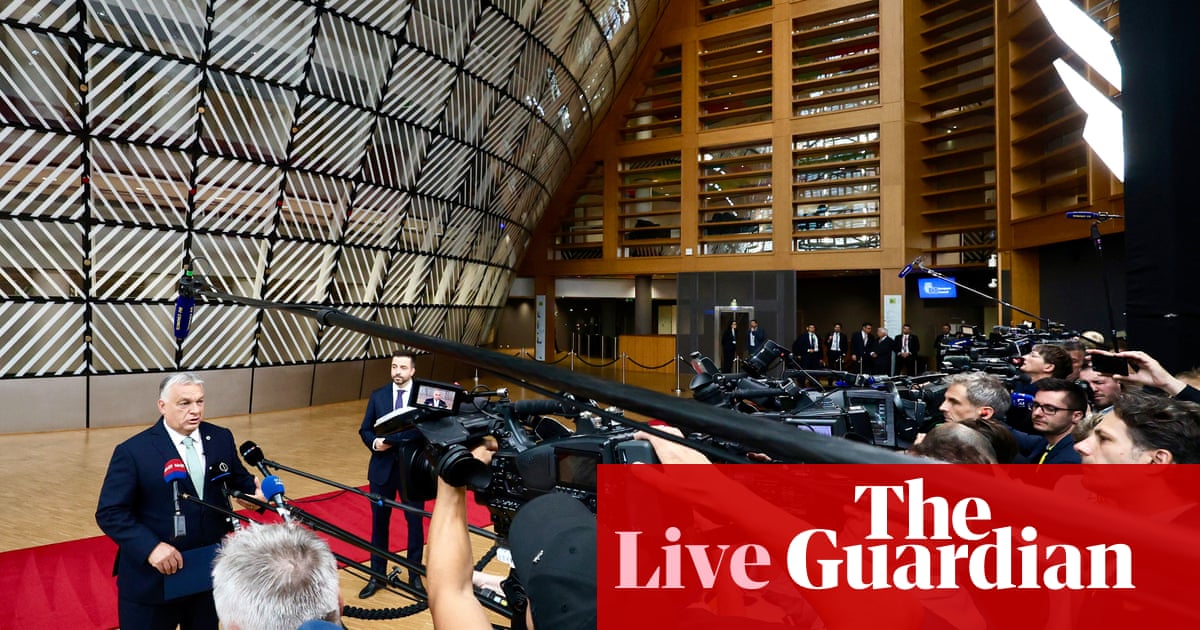
The European Council meeting on June 26, 2025, reveals deep divisions among member states, notably regarding the proposed 18th package of sanctions against Russia, which faces potential vetoes from Slovakia and Hungary despite some reported compromise offers. Leaders are also grappling with Ukraine's EU membership bid, with Lithuania pushing for 2030 accession while Hungary expresses strong opposition, fearing integration of the ongoing conflict. Concurrently, the EU faces internal pressure to address the humanitarian situation in Gaza and is prioritizing a crucial trade deal with the U.S. by the July 9 deadline to ensure market certainty, underscoring the bloc's challenges in achieving consensus on critical foreign policy and economic competitiveness in a volatile geopolitical landscape.
The European Council meeting on June 26, 2025, reveals significant fractures within the EU on key geopolitical and economic policies, creating notable uncertainty for markets. The proposed 18th sanctions package against Russia faces a potential veto from Hungary and, more recently, a hardening stance from Slovakia, which is reportedly leveraging the issue to gain concessions on a separate EU proposal concerning Russian nuclear fuel imports. This internal division, which contrasts sharply with the strong pro-sanctions stance of nations like Latvia and Finland, complicates the bloc's ability to maintain a unified front. Concurrently, a critical deadline of July 9 looms for a trade arrangement with the United States, which the Irish Prime Minister described as "extremely important" for providing certainty to markets, investors, and industry. This economic pressure is amplified by deep disagreement over Ukraine's EU accession, with Lithuania advocating for a 2030 entry while Hungary's Viktor Orbán staunchly opposes it, fearing the integration of an active war. These tensions underscore the challenge the EU faces in formulating cohesive policy amid divergent national interests and external pressures.
AI-powered research, real-time alerts, and portfolio analytics for institutional investors.
Overall Sentiment
Neutral
Sentiment Score
-0.15
Ticker Sentiment
