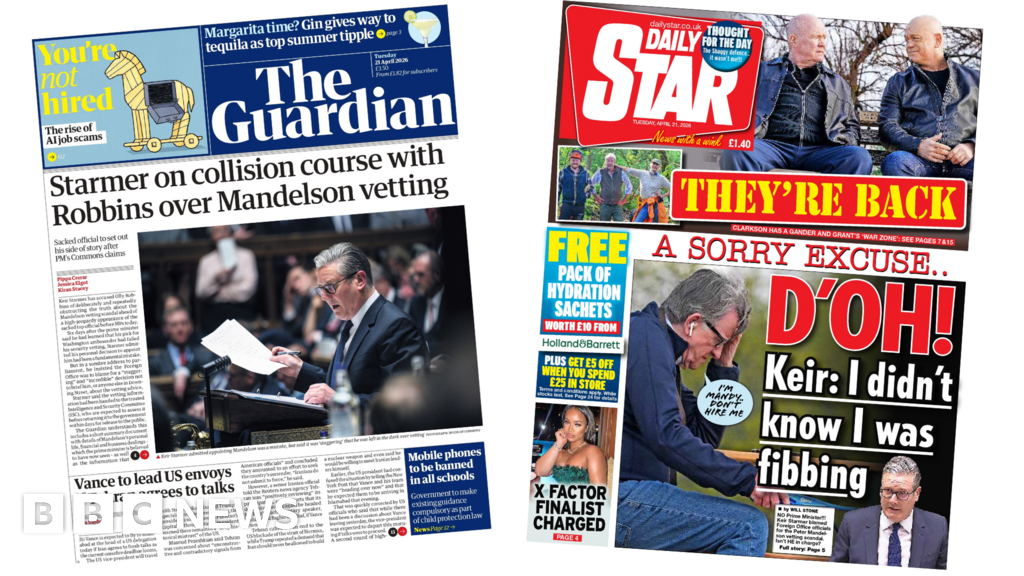
UK political coverage is dominated by the Lord Mandelson vetting scandal, with Sir Keir Starmer facing claims that officials were deliberately kept in the dark and pressure over whether he approved the appointment despite failed checks. Sir Olly Robbins is due to give his account, adding to the governance controversy around No. 10 and the Foreign Office. The article is largely a political news roundup and is unlikely to have direct market impact beyond modest sentiment effects.
This is less an idiosyncratic personnel scandal than a stress test of the government’s credibility budget. Once a leadership team starts blaming opaque process failures, the market for domestic policy execution reprices quickly: backbench discipline weakens, civil service risk aversion rises, and the odds of further ministerial churn increase over the next 1-3 months. The second-order effect is not immediate macro damage; it is slower policy throughput, which matters most for sectors dependent on planning reform, procurement, and regulatory clarity. The biggest beneficiaries are likely defensive UK domestic earners with limited policy beta, while the losers are the “policy reflation” names that were trading on smoother execution and faster reform implementation. Banks, housebuilders, infrastructure contractors, and regulated utilities can underperform if investors start discounting delays to approvals, capital allocation decisions, or consumer-support measures. In contrast, globally diversified FTSE constituents with dollar revenues should hold up better because the political noise is mostly a UK governance discount, not a demand shock. A contrarian read: the market may overestimate the medium-term economic importance of the scandal. Unless this converts into a broader loss of parliamentary control, the direct earnings impact is small; what matters is whether the episode becomes a template for more resignations or a one-off reset. The highest-probability short-term trade is therefore a sentiment trade rather than a fundamental one, with the catalyst window concentrated in the next several Commons appearances and any follow-on leak cycle. From a cross-asset lens, the cleaner expression is to fade UK domestic cyclicals on rallies rather than press outright index shorts. If political headlines stay noisy but policy continues, the trade can reverse quickly; if the government appears increasingly transactional and reactive, then the repricing can persist for weeks as investors demand a higher governance discount.
AI-powered research, real-time alerts, and portfolio analytics for institutional investors.
Request DemoOverall Sentiment
mildly negative
Sentiment Score
-0.20
