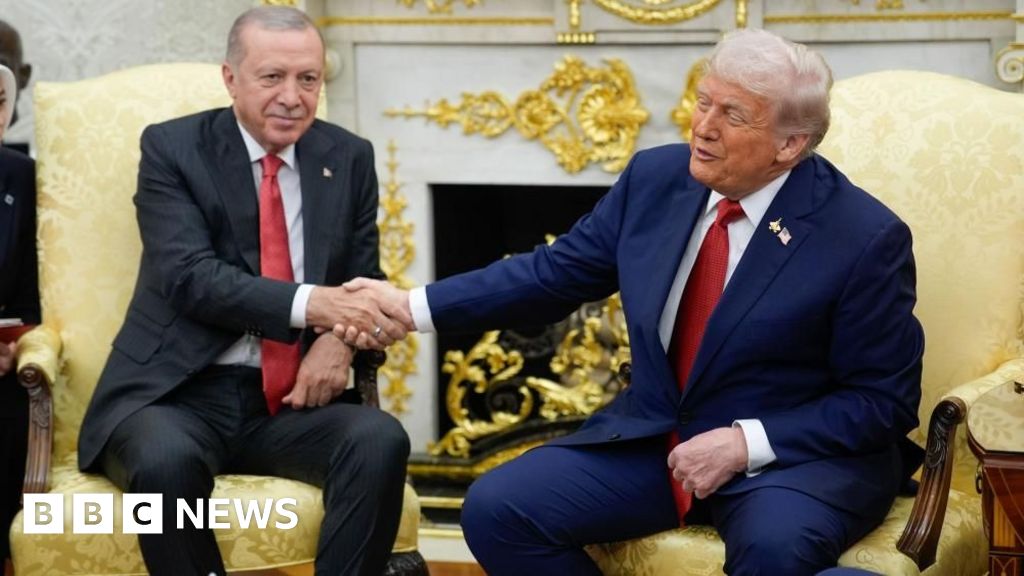
President Trump urged Turkish President Erdogan to cease Russian oil imports, framing it as a critical step to cut Moscow's war funding, while expressing optimism for lifting US sanctions and facilitating F-35 fighter jet sales to Turkey. The meeting concluded without firm commitments, but Trump's statements signal a potential quid pro quo, where Turkey's energy procurement decisions could significantly impact its geopolitical standing and access to advanced US defense technology. This underscores US efforts to leverage defense and economic incentives to influence allies' energy policies vis-à-vis Russia.
The meeting between US and Turkish leadership highlights a significant geopolitical negotiation with direct implications for the defense and energy sectors. The US is proposing a quid pro quo, leveraging the potential sale of Lockheed Martin's (LMT) F-35 fighter jets and the lifting of sanctions in exchange for Turkey ceasing its oil imports from Russia. This negotiation attempts to unwind a major policy block; Turkey was expelled from the F-35 program in 2019 and formally barred from purchases by a 2020 US defense bill after acquiring Russian S-400 defense systems. While the meeting concluded without firm commitments, President Trump's optimistic language suggests a deal is actively being considered, which could realign Turkey's strategic and energy partnerships. However, political hurdles remain, including opposition from a bipartisan caucus in the US Congress concerned with Turkey's military activities. The situation's uncertain nature is reflected in a mixed sentiment score, but a potential resolution would be a material event for LMT and could modestly impact Russian energy export dynamics, as Turkey is one of Moscow's largest customers.
AI-powered research, real-time alerts, and portfolio analytics for institutional investors.
Overall Sentiment
mixed
Sentiment Score
0.00
Ticker Sentiment
