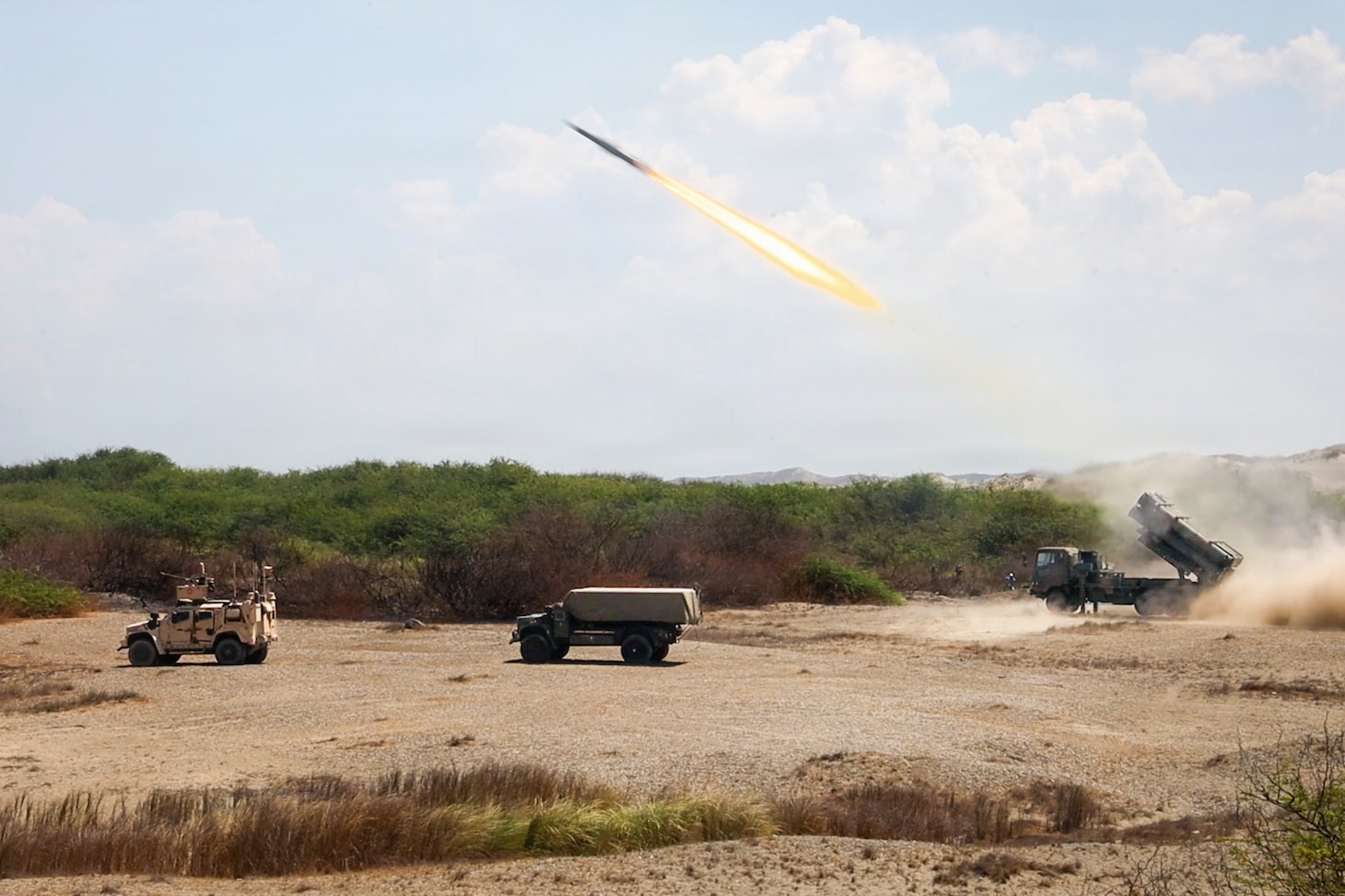
Exercise Balikatan 2026 featured a two-day multinational live-fire maritime operation involving the Philippines, U.S., Japan, Canada, and allied forces, demonstrating integrated command-and-control and interoperability. The drills used Type-88 missiles, HIMARS, Philippine Air Force FA-50PH and A-29 aircraft, and other sensors and strike assets to sink pre-arranged decommissioned naval targets. The article is primarily a military capability update and alliance message, with limited direct market impact.
This is less a headline about one exercise than a signal that allied kill-chain integration in the Western Pacific is moving from concept to repeatable operating model. The second-order implication is incremental budget durability for the vendors that enable distributed sensing, C2, targeting software, ISR fusion, and anti-ship strike — not just the missile primes, but also the middleware, datalinks, EW, and battle-management stack that make cross-service interoperability real. In practice, exercises like this create procurement bias toward systems that can plug into U.S.-led architectures with minimal integration friction, which tends to favor incumbents with existing NATO/US interoperability over pure-play regional bidders. The most important near-term effect is signal compression for regional planners: Japan, the Philippines, and other partners are effectively rehearsing a maritime denial architecture that raises the expected cost of any coercive action in the first island chain. That should translate into a multi-year lift in demand for coastal defense, anti-ship missiles, airborne early warning, unmanned ISR, secure comms, and command software. The less obvious beneficiary is logistics and sustainment — more dispersed, multinational force posture means more spares, training, secure transport, and maintenance spend, which often accrues to large diversified defense contractors before the headline munition names see it. The contrarian risk is that the market overestimates the immediacy of this turning into orders. Exercises create optionality, but budget conversion typically lags by 6-18 months and can be diluted by election cycles, industrial bottlenecks, and alliance politics. There is also a non-trivial escalation tail risk: the more visible the integrated deterrence message, the more it incentivizes adversaries to invest in longer-range stand-off, electronic warfare, and decoys, which can compress the advantage of legacy strike platforms unless counter-UAS, counter-EW, and resilient C2 budgets rise in parallel.
AI-powered research, real-time alerts, and portfolio analytics for institutional investors.
Request DemoOverall Sentiment
neutral
Sentiment Score
0.10
