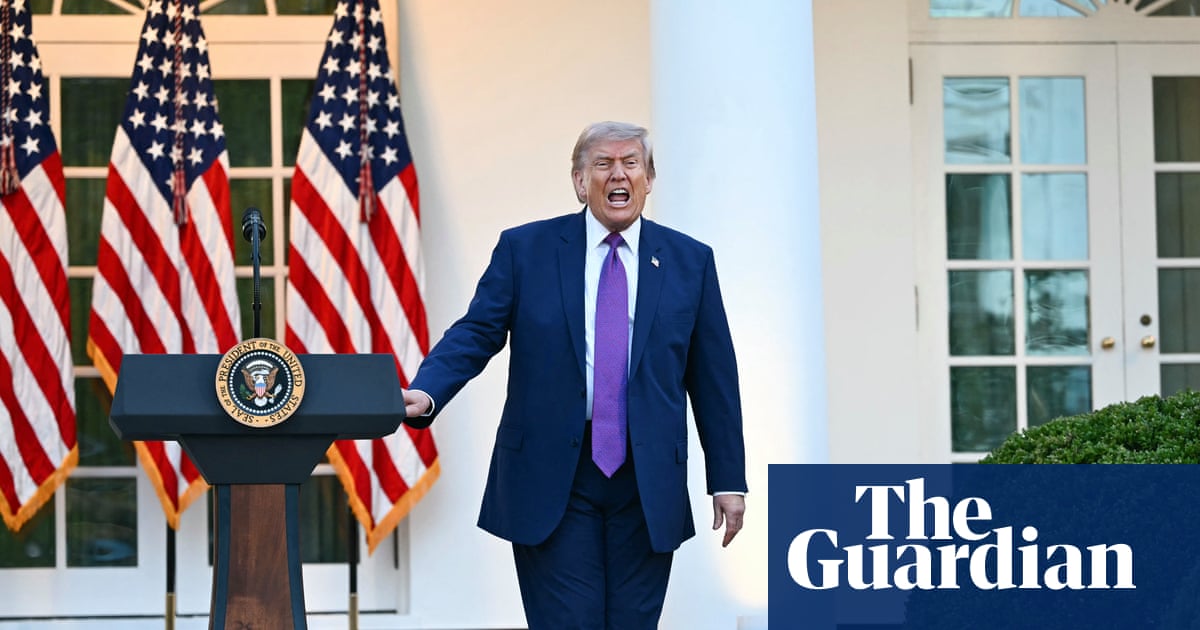
Trump posted more than 50 times in a late-night tirade ahead of a trip to China, amplifying false claims against political rivals and conservative justices while again pushing prosecution rhetoric. The article also highlights mounting economic pressure from the US-Israel war with Iran, rising living costs, and Trump’s support for curbing fuel price increases. Market relevance is mainly through geopolitical risk, energy prices, and policy uncertainty rather than a direct company-specific catalyst.
The near-term market issue is not the rhetoric itself; it is the signal that policy attention is being pulled toward domestic grievance management precisely when energy, tariffs, and judicial constraints are becoming binding inputs to asset prices. That combination raises the probability of abrupt, headline-driven policy swings: fuel-cost intervention, tariff escalation, or pressure on institutions that can change the path of inflation expectations in days, not months. For multi-asset, the risk is a higher-volatility regime where the same administration can alternate between disinflationary gestures and inflationary impulse, keeping duration and cyclicals unstable.
NYT is exposed less through the article’s direct attack than through a broader litigation-and-retaliation channel: any increase in political hostility toward media and public institutions tends to lift legal spend, threaten ad demand at the margin, and support a persistent risk discount for the sector. The second-order winner is not necessarily another publisher, but volatility products and event-driven strategies; when political conflict becomes performative and frequent, implied vol tends to underprice weekend and overnight gap risk. In equities, that usually favors owning optionality over cash equity because the distribution of outcomes widens faster than analysts can revise estimates.
The more important macro catalyst is the linkage between war costs and consumer stress. If fuel relief is politically prioritized, it likely comes via temporary, visible measures rather than durable supply improvements, which may soften inflation prints for a month or two while leaving medium-term energy policy risk unresolved. That creates a tactical window for disinflation-sensitive assets, but it is fragile: any breakdown in ceasefire optics or tariff re-acceleration would reverse it quickly and reprice front-end rates higher. The consensus is probably underestimating how quickly the administration can inject inflation volatility without improving real growth, which is bearish for real incomes and supportive of headline-driven cross-asset dispersion.
AI-powered research, real-time alerts, and portfolio analytics for institutional investors.
Request DemoOverall Sentiment
moderately negative
Sentiment Score
-0.35
Ticker Sentiment
