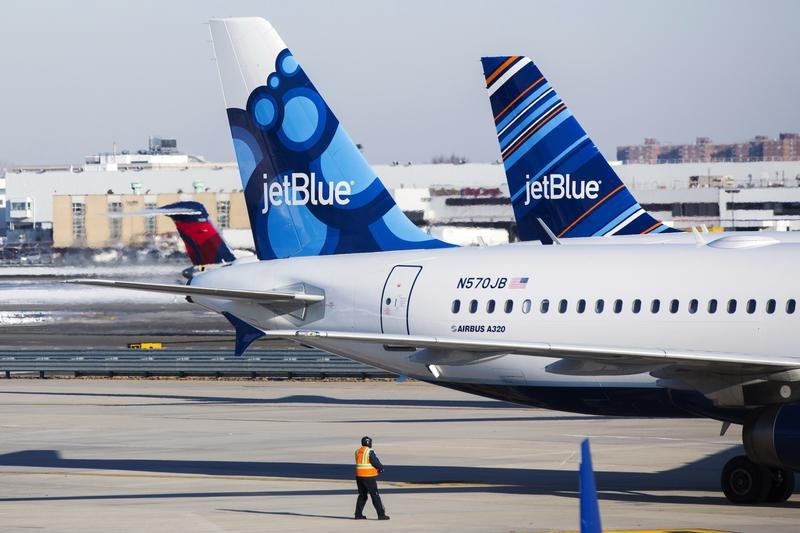
JetBlue Airways rose over 4.1% and Frontier Group gained roughly 4% in pre-market trading after Spirit Airlines shut down over the weekend, canceling all flights and leaving more than 15,000 employees without jobs. The shutdown could benefit competing U.S. carriers by shifting passengers and capacity toward rivals. The move is materially positive for JetBlue and Frontier, but the broader market impact is limited to the airline sector.
The immediate winner is not just JBLU/ULCC on capacity rationalization; it is any carrier with enough scale and network relevance to capture stranded demand without having to buy it through pricing. The bigger second-order effect is that the ultra-low-cost segment just lost a persistent price anchor, which should steepen fare dispersion on leisure-heavy routes and improve unit revenue for incumbents with better schedule depth and loyalty programs. That is especially relevant if competitors can hold capacity discipline for just 1-2 quarters, because the earnings leverage shows up faster in fares than in labor or fuel costs. The market is likely underestimating how much of Spirit’s demand will be permanently disrupted versus temporarily rebooked. A meaningful share of customers in this cohort are price-sensitive but not brand-loyal; if they exit the air travel system or shift to driving, the industry sees a demand leak rather than a pure share transfer. That means the bullish read on JBLU/ULCC is tactically correct, but the more durable winner may be the broader domestic leisure complex only if management teams resist the temptation to backfill capacity too aggressively. Risk-wise, the trade is most vulnerable over the next 2-8 weeks if regulators, bankruptcy courts, or lessors facilitate a faster-than-expected restart or asset transfer that keeps Spirit’s network alive in a slimmer form. On the other hand, if aircraft are redeployed slowly, the pricing benefit can last through the summer booking window and bleed into Q3 guidance revisions. The contrarian view is that ULCC’s move may be overextended: a dead competitor does not automatically fix balance-sheet fragility, and smaller carriers often struggle to monetize capacity gains before fixed costs reassert themselves.
AI-powered research, real-time alerts, and portfolio analytics for institutional investors.
Overall Sentiment
moderately positive
Sentiment Score
0.35
Ticker Sentiment
