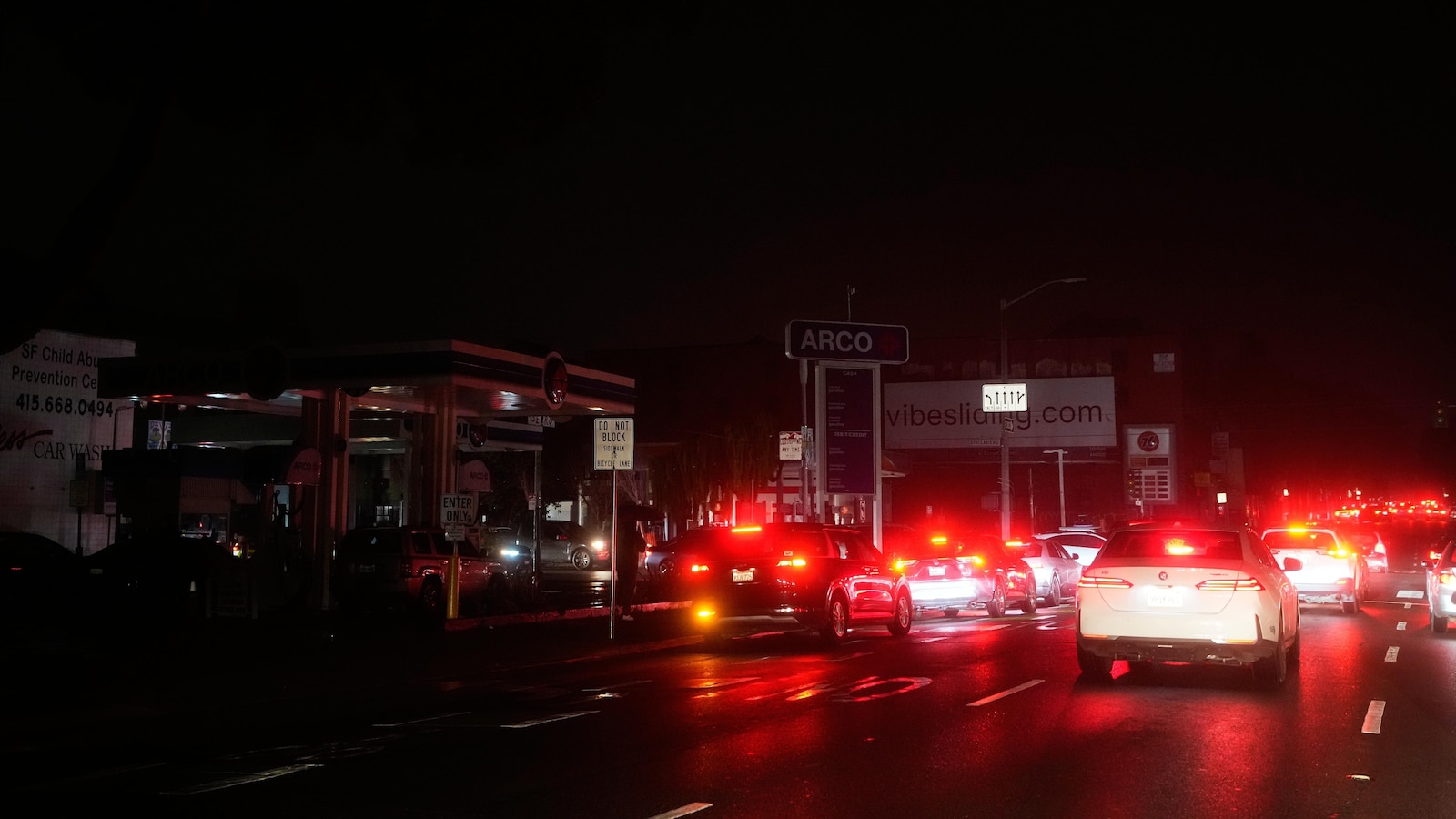
A widespread outage knocked out power to roughly 130,000 San Francisco homes and businesses—about one-third of PG&E’s city customers—starting in the Richmond/Presidio/Golden Gate Park areas and expanding through the afternoon. Fire officials reported a blaze inside a PG&E substation at 8th and Mission; city transit agencies reported significant disruptions with station bypasses and agencies urging limited travel, while PG&E said it had stabilized the grid by about 4 p.m. but could not confirm full restoration timing. The event implies operational and reputational risk for PG&E and localized economic disruption to retail and transportation activity in the city.
Market structure: This outage is an idiosyncratic shock that directly hurts PCG (large negative read-through), downtown retail/restaurants (hours-to-days revenue loss) and transit operators; beneficiaries are grid-equipment suppliers, energy storage and distributed generation providers as municipalities accelerate hardening. Expect a near-term re-pricing: PCG equity implied vol +40-80% intraday, short-term CA day-ahead power spreads up 10-30% in affected zones, and credit spreads on PCG corporate/utility paper could widen 20–50 bps if regulatory risk escalates.
Risk assessment: Tail risks include a CPUC enforcement action or civil liabilities >$1bn (non-trivial; estimate 5–20% probability over 12 months) and accelerated capex mandates that compress near-term ROE. Time buckets: days — operational disruptions and IV spikes; weeks–months — CPUC/press/legal responses and potential stock reaction; 6–24 months — rate-case outcomes and mandated grid spending. Hidden dependencies: subcontractor quality, aging urban distribution assets, and political pressure that flip cost recovery dynamics.
Trade implications: Short-term alpha is idiosyncratic: favor downside exposure to PCG while going long equipment/storage names that win capex (6–18 month horizon). Credit-sensitive plays: buy protection on PCG 3–5yr CDS or underweight CA utility muni exposure. Volatility trade: buy 1–3 month PCG puts or a 3-month long strangle to monetize elevated IV and event risk.
Contrarian angles: Consensus may over-penalize PCG because regulated utilities can often recover prudently incurred hardening costs within 6–18 months — a >20% equity selloff could be an entry if CPUC signals provisional cost recovery. Conversely, if CPUC opens formal enforcement within 60 days, downside is larger; set explicit stop-loss and watch for IV compression of 30–50% as a cover signal.
AI-powered research, real-time alerts, and portfolio analytics for institutional investors.
Request DemoOverall Sentiment
moderately negative
Sentiment Score
-0.35
Ticker Sentiment
