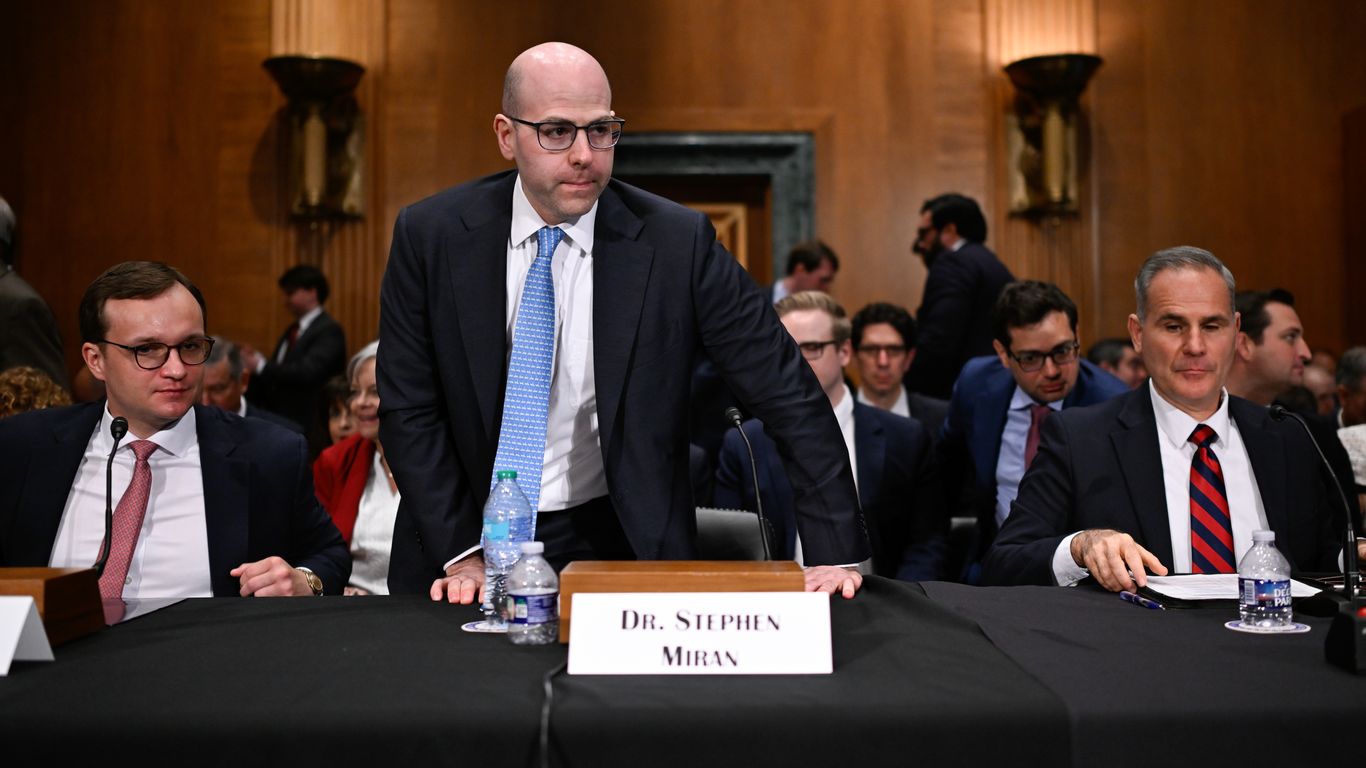
Federal Reserve governor nominee Stephen Miran's recent testimony highlighted the Fed's rarely emphasized mandate for "moderate long-term interest rates," distinct from the traditional view that such rates are merely a byproduct of price stability. This reinterpretation could signal a more activist approach to monetary policy, potentially leading to direct intervention in long-term borrowing costs through balance sheet adjustments, such as ending quantitative tightening, resuming quantitative easing for long-term securities, or even implementing yield curve control. Such a shift, consistent with views from other Trump appointees, would have significant implications for bond markets and broader financial conditions.
A potential doctrinal shift at the Federal Reserve is emerging, signaled by governor nominee Stephen Miran's testimony that elevates "moderate long-term interest rates" to a primary objective alongside price stability and maximum employment. This interpretation diverges from the traditional view, notably articulated by former Fed Chair Ben Bernanke, which treats moderate long-term rates as a downstream consequence of achieving the dual mandate. The significance for markets lies in the potential justification for more activist intervention in the bond market, particularly if political pressure mounts to lower borrowing costs. Such intervention could manifest as halting the runoff of the Fed's $6.6 trillion balance sheet, resuming quantitative easing for long-term securities, or, in a more extreme scenario, implementing direct yield curve control akin to the Bank of Japan's policy. While the commentary is speculative and Miran is a single nominee for a short term, it aligns with a consistent theme from other administration appointees, introducing a new, politically-driven variable for interest rate forecasting and fixed-income strategy.
AI-powered research, real-time alerts, and portfolio analytics for institutional investors.
Overall Sentiment
mildly positive
Sentiment Score
0.30
