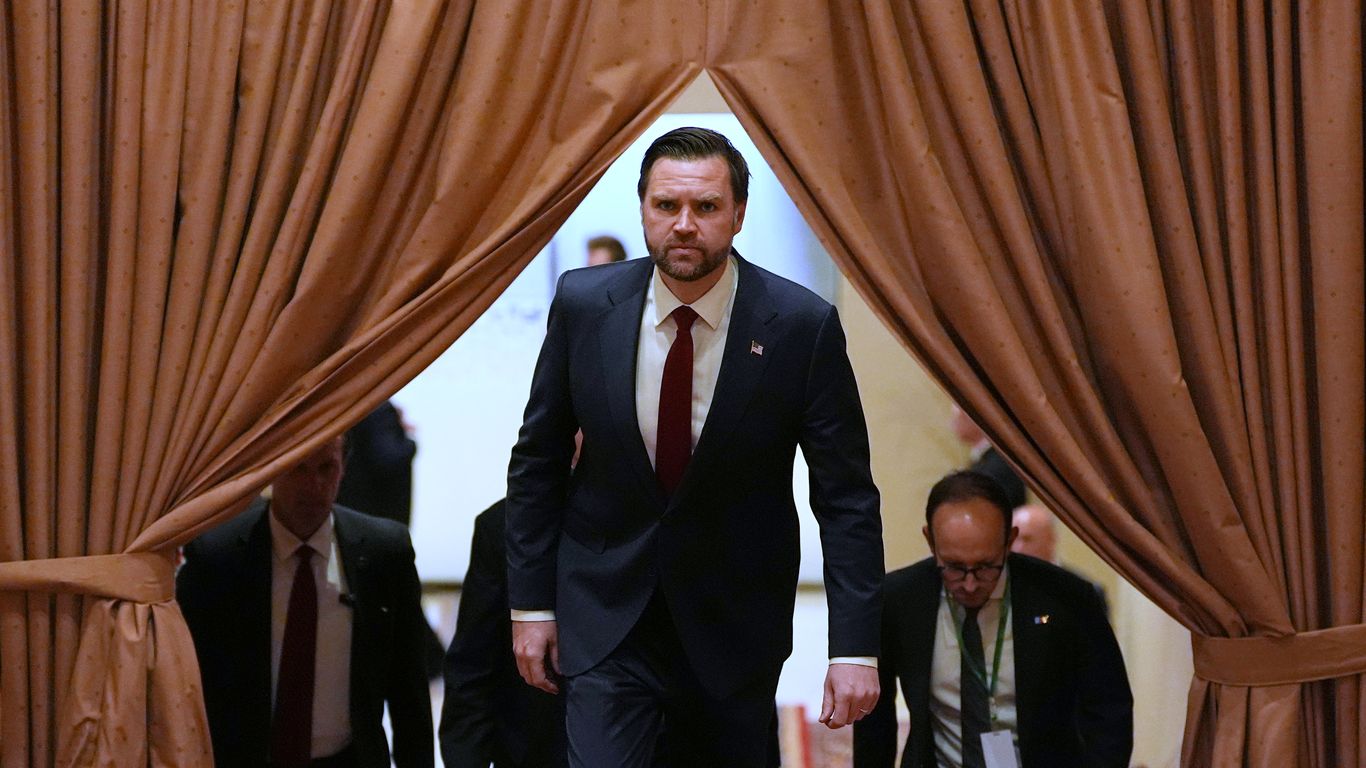
The U.S. and Iran failed to reach an agreement after 21 hours of talks, leaving the two-week ceasefire in limbo and raising the risk of renewed and escalating warfare. Vice President Vance said Washington offered its "final and best offer" and wants a long-term commitment from Iran not to seek a nuclear weapon. The breakdown in negotiations is a market-wide geopolitical risk event, with potential implications for defense, energy, and broader risk sentiment.
The market should treat this as a volatility reset, not a binary peace/failure headline. When diplomatic channels stall after a concentrated negotiating window, the first-order read is higher tail risk of kinetic escalation, but the second-order effect is a pricing dislocation across defense, energy, freight, and regional credit before any formal action occurs. The key mechanism is optionality: even without immediate hostilities, a credible restart of conflict raises the value of assets that benefit from higher defense procurement, sanctions enforcement, and supply-chain rerouting.
The most underappreciated winner is the sanctions-and-compliance stack. If talks fail, enforcement intensity usually rises faster than headline sanctions do, which can tighten flows through intermediary jurisdictions, insurance, shipping, and industrial inputs with Iran exposure. That tends to hit European and Asian cyclicals with latent Middle East trade exposure harder than U.S.-centric names, while U.S. defense primes and select cyber/intel contractors gain from both replenishment demand and elevated readiness spending over the next 1-3 quarters.
The biggest market risk is not just crude moving higher; it is the correlation shock if investors simultaneously reprice shipping lanes, airlines, semis, and global growth. A disruption premium can widen quickly in days, but the more durable move would be a regime shift in capex toward resilience: LNG, missile defense, ISR, and energy security infrastructure. If diplomacy unexpectedly resumes, that premium can collapse just as fast, so the setup favors options over outright beta.
Consensus may be overestimating how much needs to happen for markets to reprice. The absence of a deal already increases the probability distribution of harder enforcement and episodic escalation, and those are enough to move inputs before any shots are fired. The contrarian angle is that the most attractive risk/reward may be in beneficiaries with operating leverage to sustained geopolitical friction, not the obvious oil trade, which can mean-revert if the market believes supply can be protected.
AI-powered research, real-time alerts, and portfolio analytics for institutional investors.
Request DemoOverall Sentiment
strongly negative
Sentiment Score
-0.62
