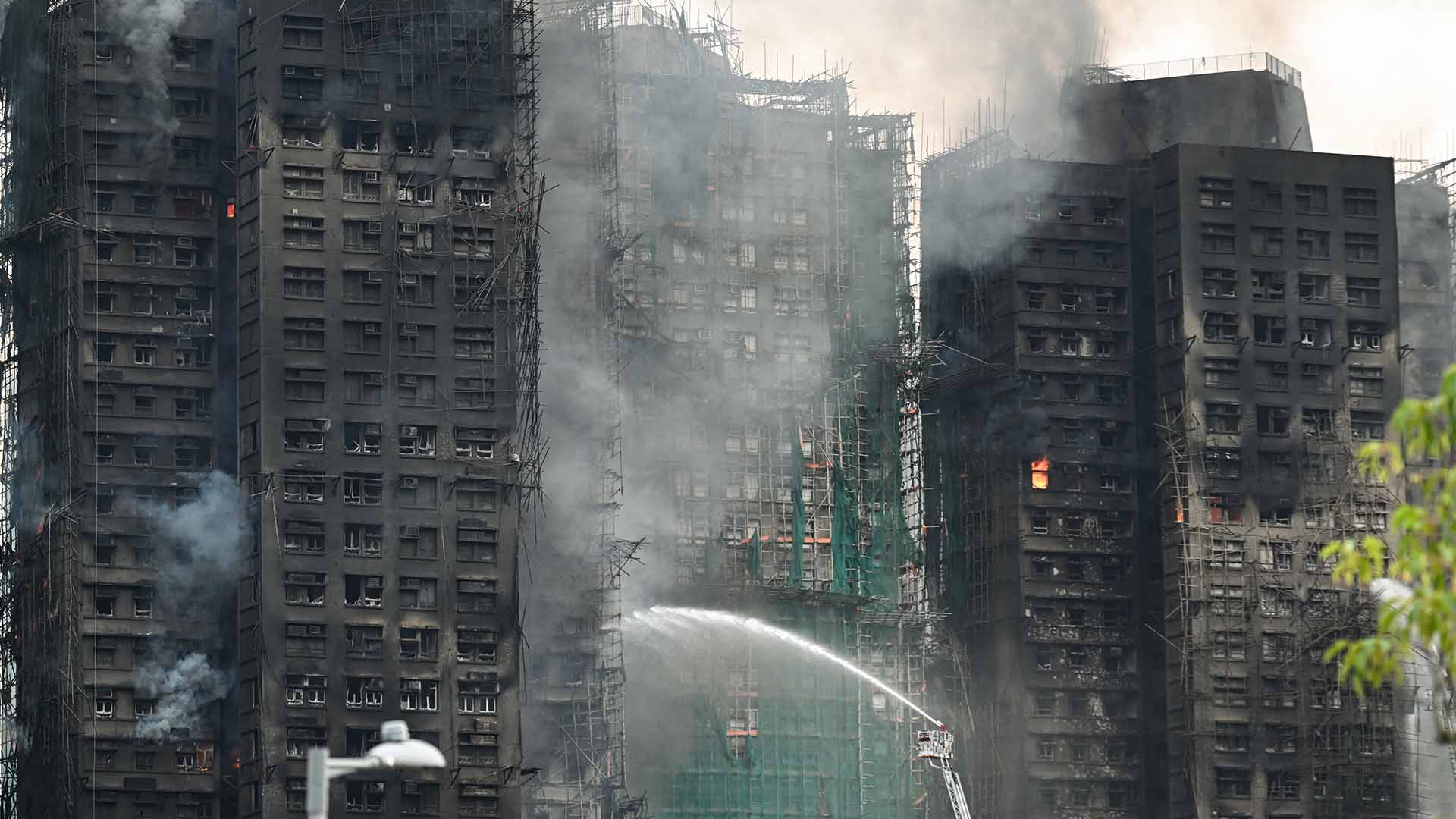
A catastrophic blaze tore through a densely packed Hong Kong housing complex built in the 1980s with about 2,000 flats, leaving an official death toll of 44 and hundreds unaccounted for (some reports citing 250+ missing); firefighting and rescue operations continue. Authorities have opened a criminal probe after discovering suspected non‑compliant polystyrene coverings and plastic sheeting on scaffolding used during extensive renovations, and three arrests have been made; the government has identified ~1,400 temporary units and opened community centres for displaced residents. Expect heightened regulatory and legal scrutiny on construction suppliers, scaffolding/renovation contractors and insurers, with potential localized impacts on Hong Kong residential construction and materials sectors.
Market structure: Immediate winners are suppliers of fire‑retardant materials, retrofit contractors and inspection/remediation firms (global names: RPM, OC) as regulators likely mandate upgrades; losers are Hong Kong legacy landlords, small contractors that used cheaper sheeting and developers with older stock (Sun Hung Kai 0016.HK, Henderson 0012.HK) because compliance costs and litigation risk will compress margins 200–500bp in affected projects over 6–24 months. Dense subsidized housing exposure will shift demand toward short‑duration rehousing services and government social housing budgets, reducing discretionary property turnover for 1–3 quarters.
Risk assessment: Tail risks include citywide mandatory retrofits or a high‑profile class action that forces developers to reserve 2–5% of market cap for claims, capital flight that lifts HIBOR and pressures HKD liquidity, or a political escalation that undermines market confidence; these are low probability but high impact in 30–90 days. Hidden dependencies include Mainland plastic sheeting suppliers — a targeted import restriction or criminal prosecutions could choke cheap supply and spike replacement costs 10–25%.
Trade implications: Tactical plays: short 2–3% portfolio weight in 0016.HK and 0012.HK via cash or 3‑month put spreads (7% OTM) if they gap down >5% in next 7 trading days; go long 1–2% positions in RPM (RPM.US) or Owens Corning (OC.US) to capture 6–12 month uplift in fireproofing demand. Hedging: buy 3‑month HSI puts or 2800.HK (HSI ETF) protection sized to cover 4–6% portfolio drawdown until regulatory clarity (30–60 days).
Contrarian angles: Consensus will punish HK property indiscriminately; that overprices risk for large diversified mainland developers (e.g., Country Garden 2007.HK) with lower exposure to old public stock — consider pair trade long 2007.HK vs short a pure‑HK older‑stock midcap if the former drops >10%. Key catalysts to watch are a formal citywide inspection order within 14–30 days and criminal charge details — act on those events, not headlines.
AI-powered research, real-time alerts, and portfolio analytics for institutional investors.
Request DemoOverall Sentiment
moderately negative
Sentiment Score
-0.45
