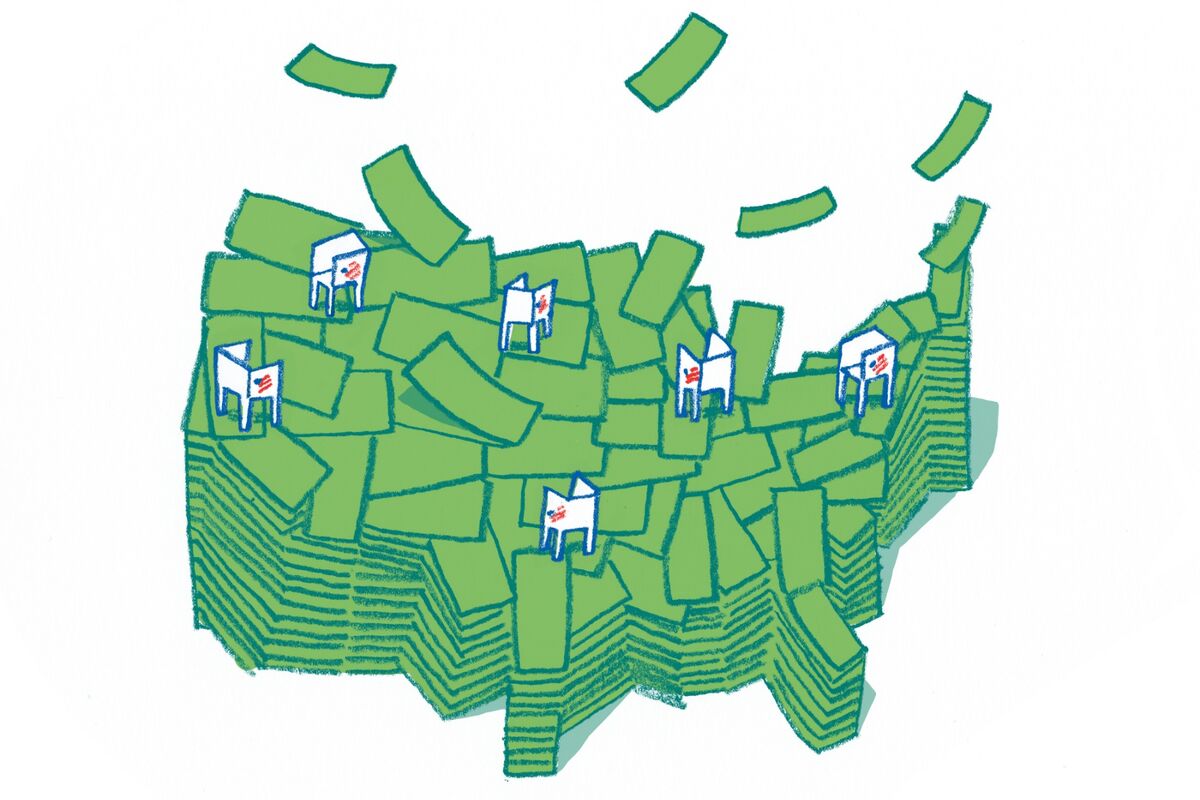
Sports gambling groups funded by FanDuel and DraftKings spent more than $2.2 million to influence a local Alabama state Senate race, underscoring how companies are shifting election spending to the state level to shape future regulation. The article highlights a broader playbook in which firms such as Meta and AI companies seek leverage over policy outcomes amid congressional gridlock. The news is politically relevant but unlikely to move broader markets on its own.
The important takeaway is not the ad spend itself, but the migration of regulatory lobbying from Washington to fragmented statehouses where the marginal dollar can still move policy. That favors companies with repeatable, data-driven political operations and deep balance sheets because the payoff is asymmetric: a few favorable state outcomes can protect multi-year unit economics while the cost is immaterial versus enterprise value. For DKNG, this is effectively a low-cost insurance policy against hostile state-level rulemaking, tax changes, and ballot initiatives; for smaller rivals without comparable PAC infrastructure, it raises the bar to compete in heavily regulated markets.
The second-order effect is that state races become a more scalable lever for firms whose business models depend on local licensing, enforcement, and consumer access. That creates a durable advantage for incumbents that can fund issue advocacy across dozens of jurisdictions, while smaller competitors face a creeping compliance tax and higher customer acquisition uncertainty. META is less directly exposed on this specific election axis, but the broader read-through is important: if the market starts pricing a state-by-state regulatory patchwork for ads, privacy, and content moderation, then large platforms with local lobbying breadth should outperform smaller ad-tech and media names that lack the same policy optionality.
Catalyst timing matters: the trade is a months-long policy optionality story, not a one-day event. The tail risk is a political backlash—if the spending becomes visible enough to trigger anti-gambling or anti-big-tech populism, it could harden regulator positions and force even higher future outlays. The contrarian angle is that consensus may overestimate the immediate revenue payoff; the real value is defensive, in preserving market access and delaying adverse state legislation rather than generating near-term growth.
On balance, this supports owning policy-capable platforms on dips and being selective short smaller exposed operators if state-level enforcement tightens. The market may underappreciate how cheap political spend is relative to the option value it buys in recurring-regulation businesses, especially when Congress is gridlocked and states become the decisive battleground.
AI-powered research, real-time alerts, and portfolio analytics for institutional investors.
Request DemoOverall Sentiment
neutral
Sentiment Score
0.05
Ticker Sentiment
