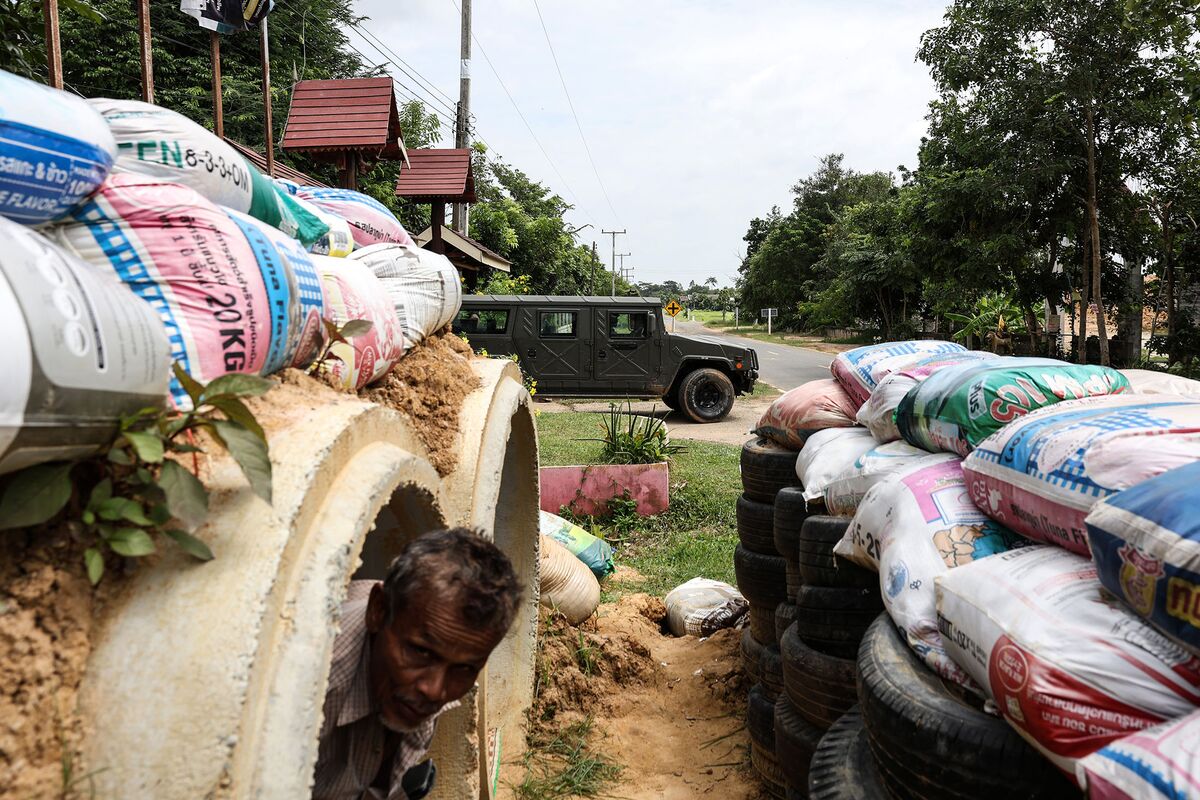
President Trump directly intervened in the conflict between Thailand and Cambodia, informing their leaders that the U.S. would halt ongoing trade deal negotiations if the fighting persists. This move leverages economic policy to pressure de-escalation, signaling a direct link between regional stability and U.S. trade relations.
President Trump has introduced significant economic uncertainty for Thailand and Cambodia by directly linking the continuation of trade negotiations to the cessation of their recent conflict. This action, confirmed via a social media post, weaponizes U.S. trade policy as a diplomatic tool, creating an immediate and material risk for the economic outlook of both nations. The development is assessed with a 'moderately negative' sentiment score of -0.4, reflecting the potential for derailed trade agreements and the negative implications of the underlying conflict. While the broader market impact is currently viewed as low at 0.3, this event establishes regional stability as a direct precondition for preferential trade access to the U.S., a critical consideration for investors with direct exposure to these Southeast Asian economies. The situation firmly places geopolitical risk at the forefront of the investment thesis for both countries.
AI-powered research, real-time alerts, and portfolio analytics for institutional investors.
Request DemoOverall Sentiment
moderately negative
Sentiment Score
-0.40
