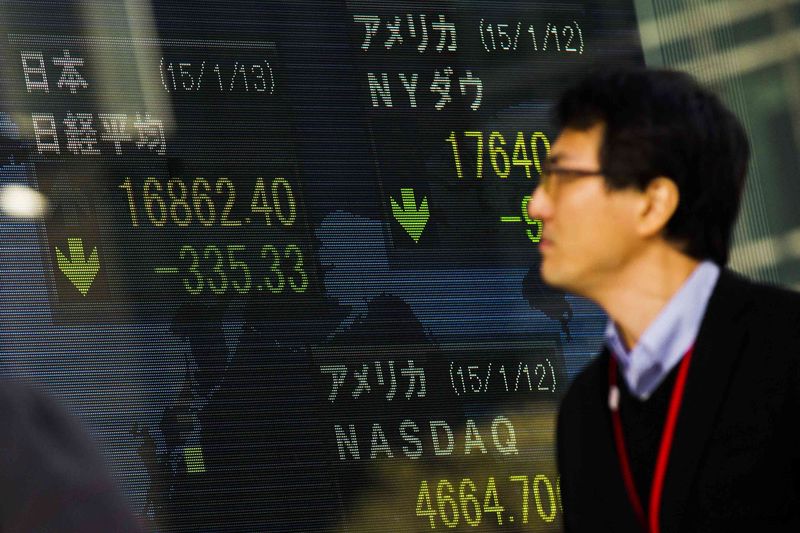
Elon Musk lost a lawsuit against OpenAI and Sam Altman and said he will appeal, adding fresh legal overhang to the AI sector. Broader markets were mixed as Japan’s Q1 GDP grew 2.1% annualized versus 1.7% expected, while oil eased after Trump said he paused a planned strike on Iran and Brent pulled back from above $110 per barrel. Tech stocks were pressured by Nasdaq weakness and Nvidia earnings anticipation, while South Korea’s KOSPI fell 3% with Samsung Electronics down more than 5% on strike concerns.
The cleanest read-through is not on the headline legal outcome itself, but on capital allocation risk around the AI platform stack. If governance uncertainty around OpenAI persists, the market is likely to keep applying a small but persistent discount to the “foundation model moat” narrative, which matters most for the high-multiple semi and software names that are priced off an uninterrupted capex super-cycle. That makes NVDA the immediate barometer: not because its near-term order book is broken, but because any perception that the AI ecosystem’s strategic center is politically or legally unstable can compress multiple expansion faster than it compresses earnings.
The second-order loser is the broader AI basket rather than any single chip supplier. When leadership is concentrated in a few mega-cap AI spenders, any headline that raises doubts about durability tends to trigger de-grossing, profit-taking, and a quick unwind of crowded momentum exposures; that is exactly where names like SMCI and APP can underperform despite no direct event exposure. In other words, this is less a fundamental demand shock than a positioning shock, and those tend to mean-revert once the market sees that hyperscaler budgets have not been revised.
On the macro tape, the risk-off tone is being reinforced by oil and geopolitics, which raises the hurdle rate for long-duration growth assets. If crude stays elevated for another 1-3 weeks, the market will likely continue rotating away from unprofitable AI beneficiaries and toward cash-generative balance sheets, especially ahead of NVDA earnings where expectations are already rich. The contrarian view is that this pullback may be overdone if the legal dispute proves non-economic and the earnings print reasserts that AI infrastructure spending is still accelerating.
The key catalyst window is 24-72 hours into NVDA results: that is where the market will decide whether this is a transitory de-risking episode or the start of a broader multiple reset. A strong guide on forward demand would likely lift the whole AI complex even if litigation headlines remain noisy, because the market is currently trading narrative fragility more than actual order flow.
AI-powered research, real-time alerts, and portfolio analytics for institutional investors.
Request DemoOverall Sentiment
mildly negative
Sentiment Score
-0.20
Ticker Sentiment
