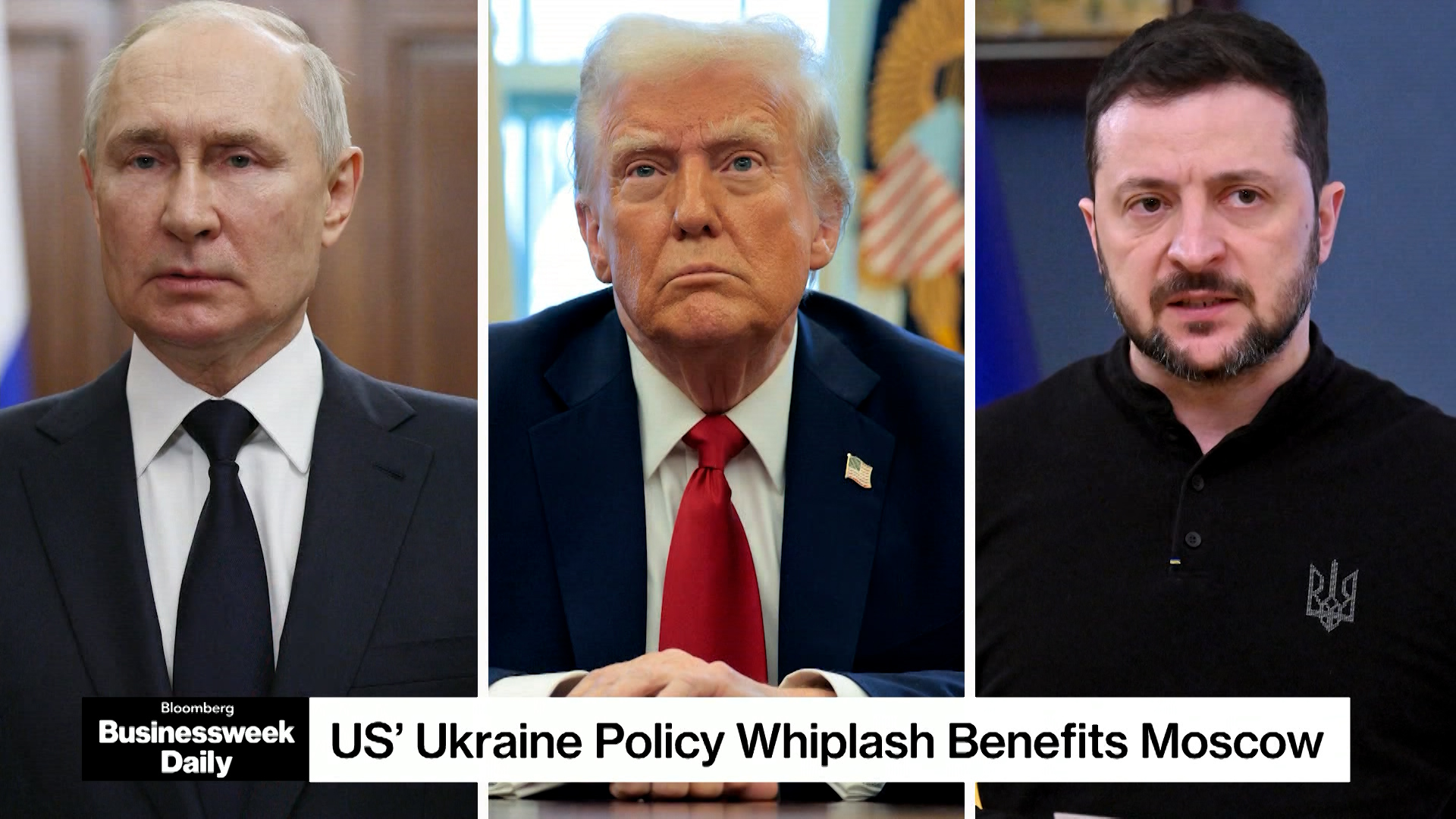
Bloomberg Economics flags U.S. policy whiplash around a 28‑point Ukraine peace plan as benefiting Moscow, noting the original plan — seen as capping Ukraine’s military and excluding it from NATO — has had at least nine points adjusted or removed after pushback from Kyiv and European partners. European concerns center on avoiding a settlement that leaves Ukraine militarily weakened and on control/use of frozen Russian assets, while the U.S. reportedly pressured Ukraine to agree to the initial terms. Analysts assess Russia is unlikely to accept altered terms, is betting on further battlefield gains as time works in its favor, and would be most pressured to change course by significantly tighter Western sanctions.
Market structure: Geopolitical whiplash increases option-implied volatility across defense, energy and FX while creating asymmetric winners. Persistent conflict or renewed sanctions materially benefits U.S. defense primes (LMT, RTX, NOC) and energy majors (XOM, CVX) with potential revenue/backlog re-rating of ~10–20% over 12–24 months if Western aid stays steady; conversely a negotiated ceasefire materially compresses those premia within weeks. Commodities: Brent/WTI become the transmission mechanism — a >$10 move in Brent over current levels will shift flows between equities and sovereign bonds rapidly.
Risk assessment: Tail scenarios include (A) a Russia-favorable truce that collapses defense multiples by 15–25% within 3 months, (B) tightened Western sanctions that cut Russian hydrocarbon exports and spike oil to >$110/bbl, or (C) legal/credit shocks from repurposing >$50bn frozen assets causing EM bank stress. Immediate (days) risk is headline-driven volatility; short-term (weeks–months) depends on EU/US policy votes; long-term (quarters–years) is structural European rearmament or Russian economic attrition. Hidden dependency: EU consensus on frozen assets — if wielded, it funds reconstruction and changes credit curves for EU sovereigns.
Trade implications: Establish tactical long exposure to defense and energy while hedging tail outcomes. Suggested constructs: 2–3% NAV long basket (LMT, RTX, NOC) scaled over 2–6 weeks; 1–2% NAV long XOM/CVX on Brent >$90 trigger; pair trade long LMT vs short LHA.DE (Lufthansa) 1:1 notional to capture relative demand resilience. Options: buy 3-month LMT 25-delta calls (0.5% NAV) and fund with 10-delta puts (0.25% NAV) as asymmetric hedge; buy Brent call spread (3-month, $90–$110) sized to 0.5–1% NAV.
AI-powered research, real-time alerts, and portfolio analytics for institutional investors.
Request DemoOverall Sentiment
moderately negative
Sentiment Score
-0.40
Contrarian angles: Consensus assumes either perpetual war or rapid peace; missing is a medium-probability paused conflict that de-risks defense and energy quickly — this would be a catalyst for a rapid 10–20% drawdown in defense stocks. Historical parallel: post-2014 Crimea produced a multi-year European defense cycle that initially dipped then re-rated; if EU commits >$50bn frozen assets to reconstruction within 60 days, rotate into European primes (Airbus EADSY, Thales HO) over 3–12 months. Unintended consequence: repurposing frozen assets could create legal credit events — short selective European bank exposure if legal rulings look likely within 30–90 days.
