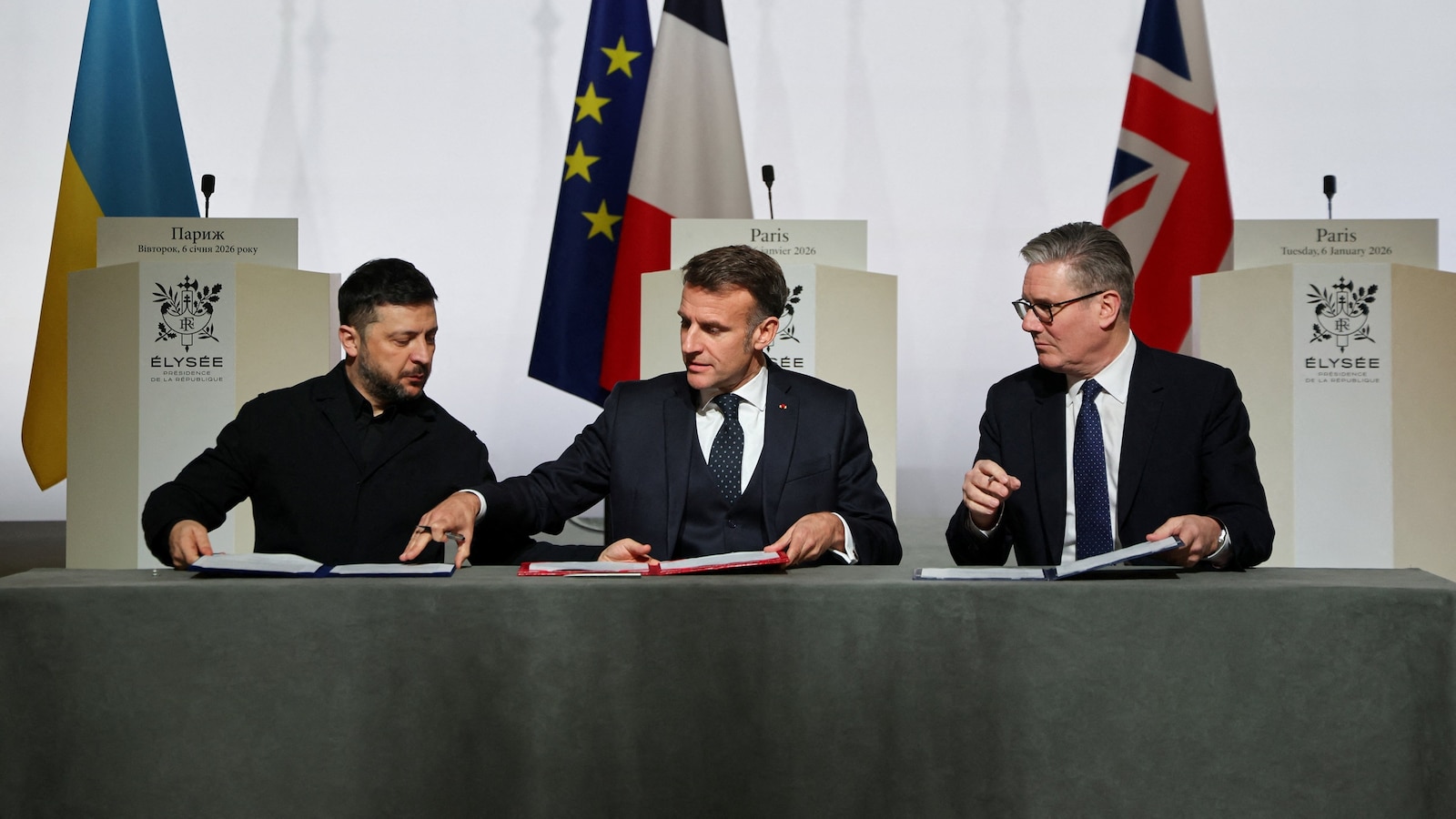
U.S., European and Ukrainian delegations met in Paris to advance a proposed 20-point peace plan, with the U.K. and France signing a Declaration of Intent to establish military hubs and protective facilities in Ukraine and to commit troops to safeguard any future deal; Germany said it is not fundamentally ruling out future military involvement. The Coalition of the Willing proposed U.S.-led ceasefire monitoring, long-term military assistance, intelligence and logistical support and potential additional sanctions as enforcement mechanisms, but Russia rejects NATO troop deployments and the U.S. has ruled out deploying American forces, leaving significant implementation, reconstruction obligations and defense-spending implications unresolved for investors.
Market structure: Commitment by UK/France + Coalition talk materially lifts demand visibility for munitions, air defense, and rebuild contracts; expect prime defense contractors (Rheinmetall, LMT, RTX, GD) to see 10–30% revenue tailwinds in 12–24 months as orders shift from spot emergency buys to multi-year procurement and reconstruction programs. Upside is concentrated in firms with spare capacity, govt frameworks, and ammunition/armor lines; European steel and heavy-equipment OEMs also face higher forward demand and pricing power.
Risk assessment: Primary tail risk is Russian escalation (low-probability, high-impact) that could trigger EU energy embargoes and a euro-area recession within 3–12 months, compressing cyclicals and widening periphery spreads; secondary risk is political backtracking (e.g., U.S. non-participation or German retreat) that would re-rate defense expectations lower by 20–40% vs current priced-in scenarios. Hidden dependency: meaningful upside requires certifiable contracts and supply-chain ramp (semiconductors, specialty steel) — bottlenecks could delay revenue recognition by 6–18 months. Key catalysts: formal treaty text, German troop/asset commitments, and first multi-year procurement awards (expected 3–9 months).
Trade implications: Tactical overweight defense equities and select industrials; use 6–12 month call spreads to capture re-rating while limiting cash outlay. Hedge with FX (long USD vs RUB) and gold for tail insurance; favor primes with export approvals and existing European manufacturing footprints to shorten lead times. Rotate away from consumer discretionary and European tourism names in near term (0–6 months) as defense spending and energy risk raise recession probabilities.
Contrarian view: Consensus underestimates reconstruction duration and overestimates immediate troop deployments — market may underprice a multi-year procurement cycle that supports steady cash flow rather than a one-time spike. Conversely, small-cap specialty defense suppliers are often overbought on headlines; real alpha will come from capacity owners and integrated primes that can secure multi-year framework contracts rather than one-off vendors.
AI-powered research, real-time alerts, and portfolio analytics for institutional investors.
Request DemoOverall Sentiment
neutral
Sentiment Score
0.12
