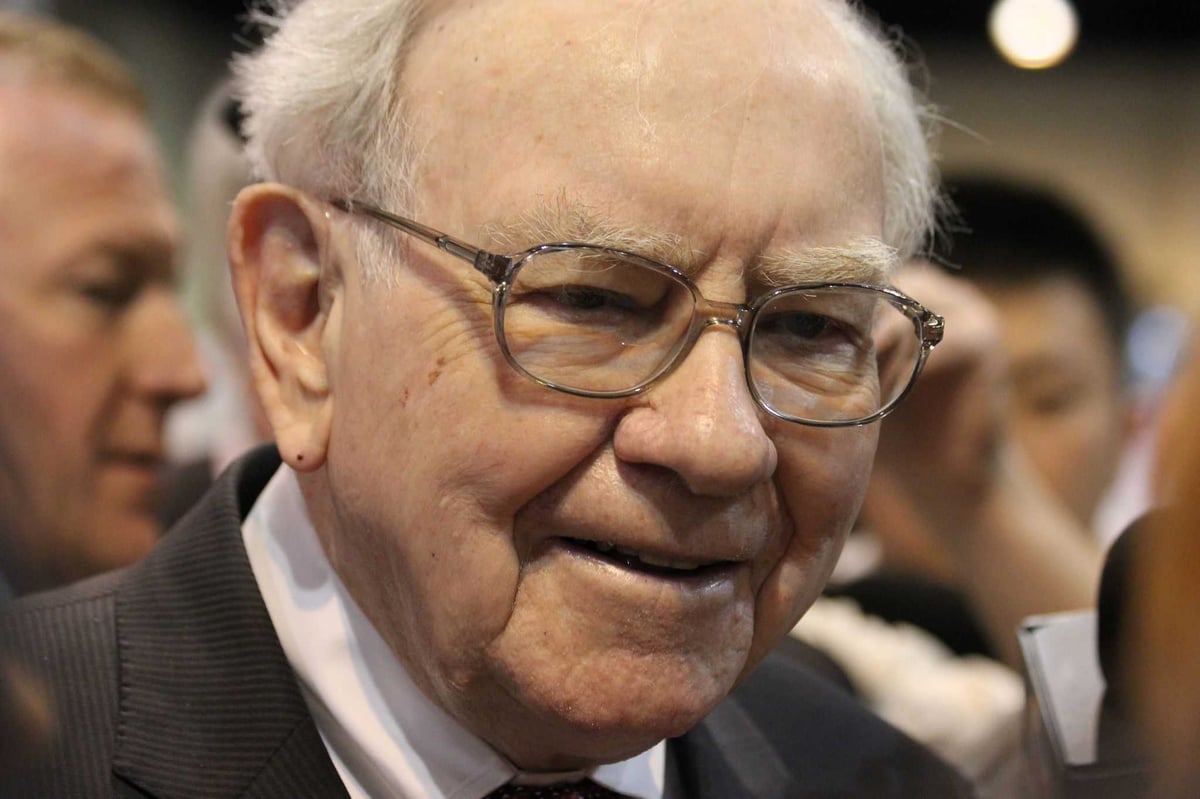
Berkshire Hathaway's largest holding remains Apple despite Buffett progressively reducing the position and retiring at the end of 2025; Buffett praised CEO Tim Cook most recently at the shareholder meeting. Apple has over 2.5 billion active devices and reported record services revenue, highlighting recurring revenue potential from subscriptions and add‑ons. The article argues investor rotation from pure AI plays into proven large‑cap tech names like Apple could drive upside in 2026, but the piece is analysis/opinion rather than new company guidance.
The market rotation narrative into “safer” large-cap technology is plausible, but the actionable mechanism is not pure sentiment — it is flow-driven rebalancing from concentrated AI/semiconductor exposures into dividend-yielding, high-free-cash-flow compounders. Large passive and quant portfolios that trimmed high-volatility AI names in Q1 have to redeploy cash; when that redeployment hits a name with one of the largest retail+institutional demand bases, price impact is nonlinear for weeks around index-rebalance windows and major quarterly flows.
Second-order competitive effects favor vendors tied to Apple’s product cadence and margin profile rather than pure cloud/AI infra plays. Expect incremental revenue to accrue to advanced-node foundries, premium display and camera suppliers, and storage suppliers that can monetize higher ASP components; conversely, demand growth for datacenter inference hardware could decelerate modestly if meaningful AI inference shifts on-device. That cross-ecosystem shuffle also amplifies concentration risk: a services-ARPU surprise scales profit but also tightens regulatory and developer-relationship scrutiny.
Risks and catalysts are clustered by horizon. Days–weeks: index rebalances, quarterly earnings, and WWDC-driven feature cadence will dominate volatility. Months: measured conversion of installed users into higher ARPU services and timing of major product refreshes determine whether multiple expansion is durable. Years: antitrust action on app-store economics or a structural slowdown in upgrade cycles could reverse any re-rating, while an unexpected AI-driven surge in cloud inferencing would re-energize semis and shrink the relative attractiveness of device-tethered monetization.
AI-powered research, real-time alerts, and portfolio analytics for institutional investors.
Request DemoOverall Sentiment
mildly positive
Sentiment Score
0.35
Ticker Sentiment
