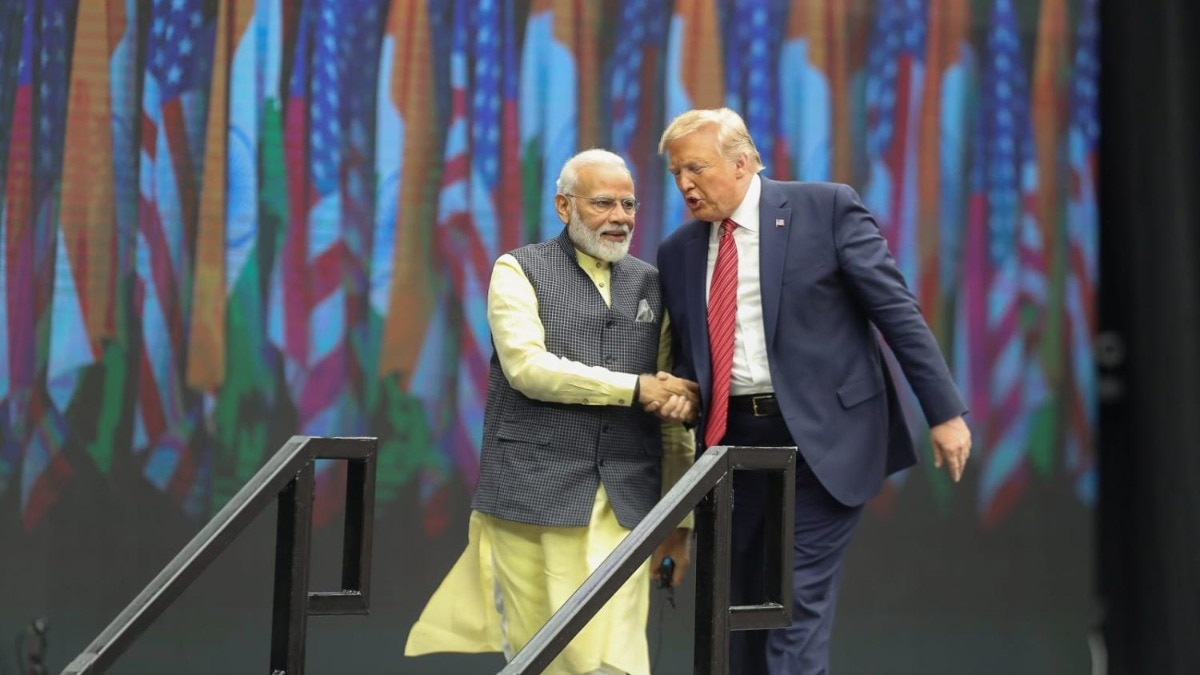
PM Modi and Donald Trump may meet at the June 15-17 G7 Summit in France, with any pull-aside conversation potentially influencing India-US trade relations. The article highlights ongoing tensions over 25% reciprocal tariffs plus an additional 25% levy tied to India's Russian oil purchases, though a February trade framework and a reduced 18% tariff level suggest some thawing. The event is politically significant, but market impact is likely limited unless it leads to concrete trade or tariff progress.
A Modi-Trump pull-aside is less about diplomacy than about whether both sides want to de-risk a tariff spiral without either leader paying a domestic political price. The market implication is that the probability distribution is skewed toward a short-term relief rally in India-facing exporters and risk assets, but the deeper issue is that any thaw is likely to be tactical, not structural, because both leaders have incentives to preserve leverage into trade negotiations. That means headlines can move markets in days, while actual tariff normalization is a months-long process with high reversal risk. The second-order winner is India’s large-cap export complex that is most exposed to US demand and tariff rhetoric. If rhetoric softens, the biggest beta beneficiaries are IT services, pharmaceuticals, and diversified industrial exporters, because they trade more on sentiment and forward order conversion than on immediate tariff pass-through. Conversely, sectors that benefit from India’s desire to reduce dependence on Russia-linked energy or to diversify supply chains away from China can see incremental support if talks improve broader bilateral trust, especially capital goods, electronics assembly, and logistics. The underappreciated risk is that a highly visible handshake can create false confidence while the core trade dispute remains unresolved, leading to a fade in any post-summit rally. If the meeting devolves into more public claims about ceasefires, tariffs, or geopolitical concessions, India could reprice as a “headline risk” market again, with INR volatility and FII flows more sensitive than the underlying fundamentals justify. The key catalyst window is the summit itself and the 1-2 weeks after, when official readouts and follow-on negotiating language will matter more than optics. The contrarian view is that the market may be overpricing the odds of a substantive reset: Trump-style engagement often produces near-term accommodation requests, not durable policy clarity. If India resists a forced trade-off on energy sourcing or market access, the current stalemate could persist, which would be mildly bearish for cyclical Indian exporters but positive for domestic defensives and companies insulated from US policy swings. In other words, the safest trade is not to chase a broad India beta move, but to own targeted beneficiaries of reduced tariff tail risk while hedging the possibility of another public escalation.
AI-powered research, real-time alerts, and portfolio analytics for institutional investors.
Request DemoOverall Sentiment
neutral
Sentiment Score
-0.10
