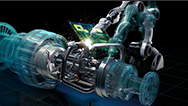
Siemens and NVIDIA expanded their strategic partnership to integrate NVIDIA accelerated computing, Omniverse simulation libraries and models with Siemens industrial hardware, software and domain experts to create AI-accelerated industrial solutions across design, manufacturing, operations and supply chains. The plan includes building the world’s first fully AI-driven adaptive manufacturing sites beginning with Siemens’ Erlangen electronics factory in 2026, GPU-accelerating Siemens’ simulation and EDA portfolios with CUDA-X and PhysicsNeMo to target 2–10x workflow speedups, and scaling capabilities with pilot customers such as Foxconn, HD Hyundai, KION Group and PepsiCo to improve productivity, energy efficiency and resilience.
Market structure: This deal is a clear positive for NVDA (AI stack, infra demand) and Siemens (industrial software + factory rollout), and for cloud/compute suppliers and power/infrastructure vendors; expect incremental GPU demand and higher-margin software monetization with cited 2–10x workflow speedups and factory blueprint scaling from 2026. Losers are niche/legacy EDA vendors and engineering services that cannot GPU-accelerate; pricing power shifts toward vertically integrated AI+automation bundles and hyperscalers who control stacks.
Risk assessment: Tail risks include US/EU/China export controls or antitrust probes (probability >10% over 12 months), major execution failures building AI factories, and energy/grid constraints that could add 10–30% to infra OPEX. Immediate (days) reaction will be sentiment-driven; short-term (3–12 months) depends on product integrations and partner pilots; long-term (12–36 months) value accrues from factory blueprints and recurring software revenue. Hidden dependency: foundry/GPU supply and industrial power/cooling capacity.
Trade implications: Direct plays — favor NVDA equity and 6–9 month call spreads to capture re-rate; add selective industrial-automation exposure to Siemens (SIEGY) or an automation ETF with a 12–36 month horizon; overweight power-infrastructure names (Eaton/Schneider) if available. Options: use defined-cost bullish call spreads on NVDA (buy 6–9m ATM, sell +20–30% OTM) and allocate 30–50% of position to puts as regulatory hedge. Entry: initiate option structures within 1–2 weeks; scale industrial exposure into weakness over 3–6 months.
Contrarian angles: The market assumes frictionless integration and near-term monetization — adoption historically takes multiple quarters to years (ERP/PLM analogy), so upside may be pulled forward into price; NVDA’s implied volatility and concentration risk mean downside if export controls or in-house hyperscaler silicon (AWS/Google) substitutes accelerate. Unintended consequence: concentration of industrial control could trigger cybersecurity/regulatory restrictions, compressing multiples.
AI-powered research, real-time alerts, and portfolio analytics for institutional investors.
Request DemoOverall Sentiment
moderately positive
Sentiment Score
0.50
Ticker Sentiment
