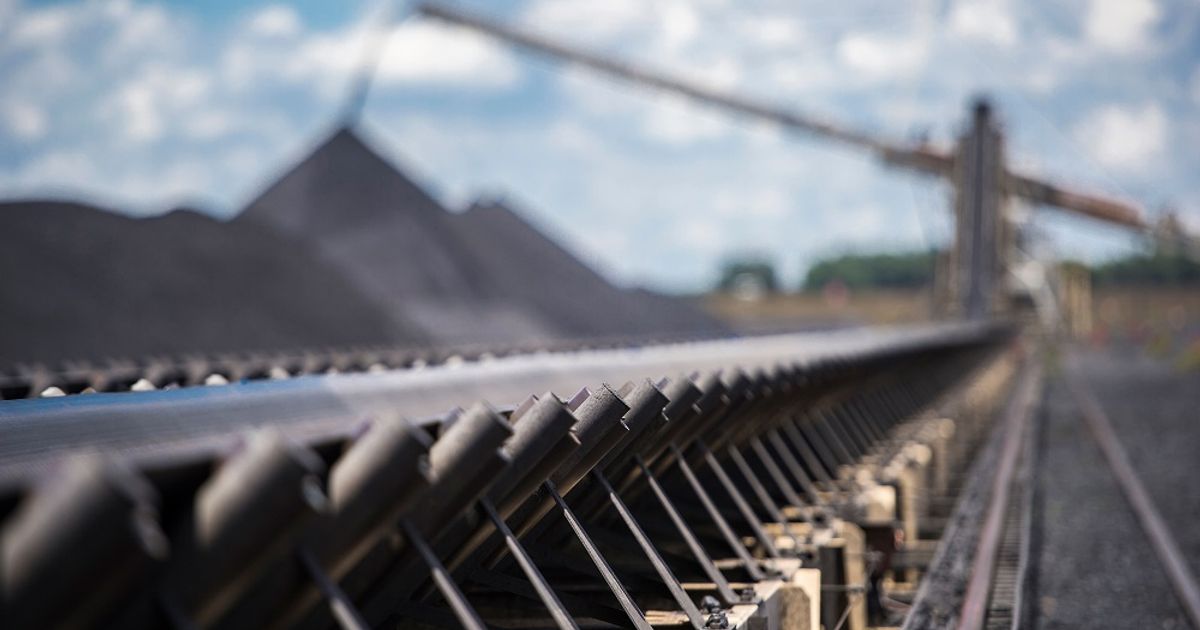
Contango Holdings (LSE:CGO) has agreed a proposed £5m subscription from two strategic investors, issuing ~450m new shares at 1.11p each (a 39% premium to the Feb 12 mid-market close), sending the stock up 42% to 1.14p. Pacific Goal Investments will invest ~£4m to become the largest shareholder with a 29.7% stake and Huo Investments will invest ~£1m to retain a 20.4% holding; proceeds will be used to repay all outstanding debt and shareholder loans, leaving the company debt-free. The transaction is subject to a Rule 9 waiver and shareholder approval; management says the recapitalisation positions Contango to pay dividends as royalty income from the Muchesu coal project (reserves >2bn tonnes) grows.
Market structure: The immediate winners are Pacific Goal (becoming 29.7%) and Huo Investments (maintaining 20.4%) who gain control and operational upside; existing public minority holders are diluted ~450m new shares but benefit from the company becoming debt-free. Competitive dynamics shift in favor of Muchesu as a low-cost optional supply source, but 2bn tonnes is long-dated — expect little near-term price pressure; juniors without strategic operators or balance-sheet cures lose relative investor access. Cross-asset: company bond/default risk falls to near-zero post-repay, sovereign/FX exposure (ZWL, ZWE political risk) remains the key macro channel; coal index (API2) sensitivity is moderate given slow project ramp-up.
Risk assessment: Tail risks include a denied Rule 9 waiver/mandatory offer, Zimbabwe regulatory seizure/royalty hikes, or Pacific Goal governance extraction; each could halve market value (low-probability, high-impact). Time horizons: days — share volatility around GM/waiver (expect moves ±30-50%); weeks–months — operational disclosures, debt repayment completion and dividend policy (0–90 days); years — project development capex, commodity cycles (2–5 years). Hidden dependencies: related-party operations, unenforceable contracts under Zimbabwe law, and potential reintroduction of captive shareholder loans after recapitalisation. Key catalysts: GM/waiver decision (target within 30–60 days), confirmation of cash deployment to clear debt (T+7–30), JORC/production milestones (90–365 days).
Trade implications: Tactical direct play is a small-sized long in CGO (LSE:CGO) sized 0.5–1.0% of portfolio before GM, targeting 2.5–3.0x upside within 3 months if waiver approved and debt cleared; hard stop −40% or immediate exit if waiver refused. Relative-value: overweight liquid thermal-coal exposure (Peabody BTU, Whitehaven WHC.AX) +2–3% vs underweight diversified large-cap miners (Anglo American AAL.L) to capture any short-term coal-price tightening. Options: use call spreads on BTU or WHC with 3–6 month expiries to leverage upside while capping premium; buy cheap puts or put spreads on CGO if liquidity allows as tail-protection. Entry/exit: enter pre-GM size-limited, scale up only on confirmatory filings (debt repaid, dividend policy), take profits 1–3 months after positive execution.
Contrarian angles: The market is over-excited about a premium-priced placement — 2bn tonnes is a headline but not cashflow; minority shareholders face governance and royalty extraction risk from Pacific Goal. Historical parallels: many African juniors recapitalise with strategic operators and still fail to deliver production/returns (multi-year dilution, restructurings). Unintended consequences include reclassification of shareholder loans, downstream asset sales to related parties, or a mandatory offer that forces a low-price squeeze; size positions accordingly and demand strict disclosure within 7–30 days post-deal.
AI-powered research, real-time alerts, and portfolio analytics for institutional investors.
Request DemoOverall Sentiment
strongly positive
Sentiment Score
0.60
