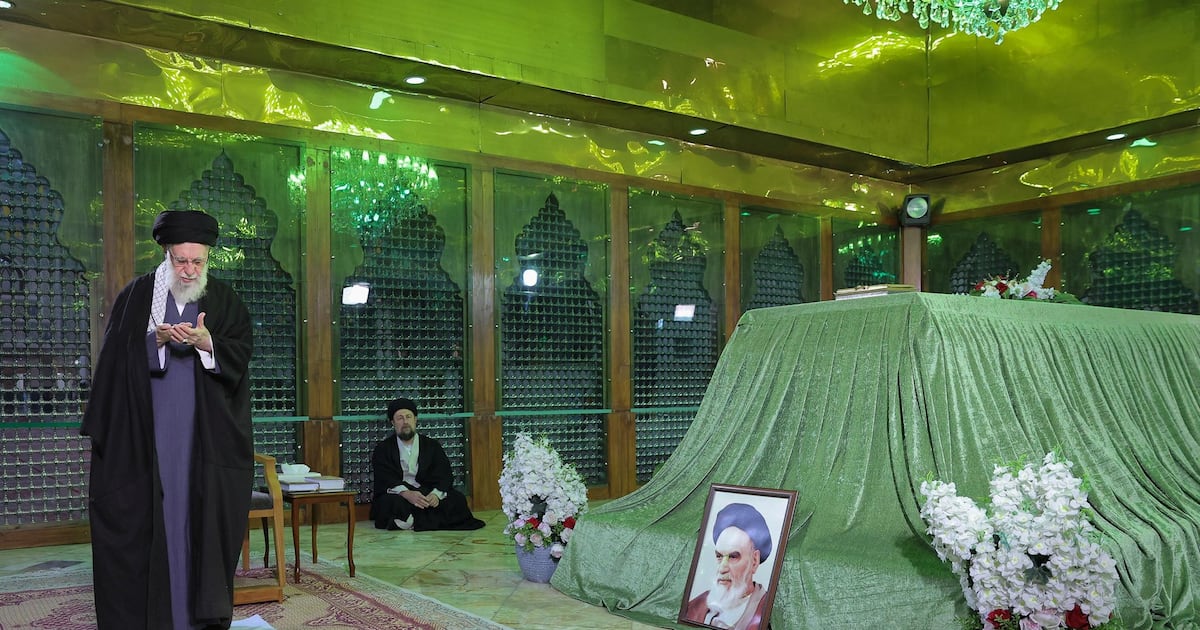
Iran’s Supreme Leader Ayatollah Ali Khamenei visited the Khomeini mausoleum amid mounting U.S. pressure, signaling a public display of domestic resolve and regime continuity. While the report contains no economic data, the visit underscores elevated geopolitical risk around Iran that could sustain higher regional risk premia, warrant continued monitoring for spillovers to sanctions-related dynamics and energy markets.
Market structure: Short-term winners are oil producers (XOM, CVX, COP) and defense primes (LMT, RTX) as risk premia on Middle East disruption rise; losers are EM equities and regional banks sensitive to trade/FX (EEM, EWZ, TRY/IRR exposure). Pricing power shifts toward OPEC+ and shipping insurers—freight and war-risk premiums could add +$2–$6/barrel to Brent for weeks if incidents escalate. Capital flows will rotate into safe havens (GLD, TLT) and USD (UUP) while EM funding spreads widen.
Risk assessment: Tail risks include a Strait of Hormuz shutdown or targeted strikes on infrastructure causing >10% crude shock and EM sovereign defaults; probability low (single-digit %) but impact high. Immediate horizon (days): volatility and FX dislocations; short-term (1–3 months): oil up 5–12% plausible, EMB spreads +50–150bps; long-term (quarters): strategic realignments (Iran-China/Russia) could sustain risk premia and sanctions regimes. Hidden dependencies: shipping insurance, re-routing costs, and secondary sanctions on counterparties can amplify effects.
Trade implications: Tactical plays favor convex exposure to oil and tail hedges on EM: buy 3–6 month oil call spreads or producer equity, hedge with USD/gold longs and EM puts. Use options to control downside—e.g., buy OTM Brent or XLE call spreads sized 1–3% of portfolio to capture 10%+ moves while selling short-dated premium elsewhere. Trim EM beta and lengthen duration in core sovereigns if flight-to-quality intensifies.
Contrarian angles: Consensus may overpay for prolonged conflict—historical Iran incidents (2019–2020) show spikes often mean-revert within 4–8 weeks absent kinetic escalation. If Brent rises >12% without supply outages, fade half the move via short-term call overwrites on producers. Unintended consequence: higher oil could choke global growth, so pure long-energy without growth hedges is risky.
AI-powered research, real-time alerts, and portfolio analytics for institutional investors.
Request DemoOverall Sentiment
mildly negative
Sentiment Score
-0.25
