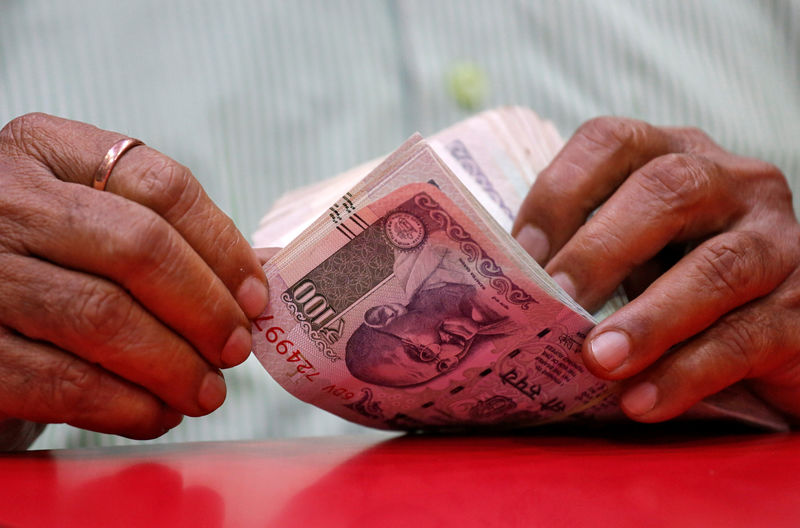
Asian currencies extended losses as the U.S. dollar rose 0.2% for a fifth straight session, with markets pricing out Fed cuts and lifting December hike odds to about 40% from 22% last week. The Indian rupee hit a record low near 95.96 per USD, while USD/CNY, USD/JPY, USD/KRW and USD/SGD all moved higher amid stronger U.S. economic data and caution around Trump-Xi talks. The article also references Trump's portfolio revamp adding Nvidia and other AI names, but the macro FX and Fed backdrop is the dominant market driver.
The cleanest signal here is not just dollar strength, but a tightening global liquidity impulse that disproportionately hits high-beta Asia FX and any balance sheet dependent on external funding. In that regime, the market usually rewards U.S. mega-cap AI hardware because stronger dollar/stricter Fed expectations compress multiple expansion everywhere else, while still leaving secular capex spend intact at hyperscalers. That makes the AI trade less a “growth” expression and more a relative earnings-duration shelter versus EM FX-sensitive risk assets. The second-order loser is India: expensive imported energy plus portfolio outflows create a self-reinforcing current-account and currency stress loop. Historically, once INR starts printing fresh lows, local policymakers have less room to cushion with reserves than the market assumes, because defending the rate too aggressively can worsen domestic liquidity and signal desperation. That argues for near-term underperformance in Indian equities tied to import intensity, financials with offshore funding needs, and any discretionary names exposed to higher fuel and logistics costs. On the AI side, SMCI and APP screen as the sharper momentum beneficiaries than NVDA because their equity beta is higher and their operating leverage to a risk-on AI revamp narrative is greater. But that also makes them the first names to unwind if the summit produces even a modest de-escalation headline or if Fed pricing retraces after the next U.S. data print. The market is likely overestimating how durable this dollar move is if the Fed turns into a one-and-done hike scare rather than a sustained hiking cycle. The contrarian angle: a stronger dollar plus higher oil is usually bearish for broad equities, but it can actually steepen the dispersion inside tech. That creates a window to own the names with real AI revenue acceleration and short the crowded “AI adjacent” basket that has been buying narrative rather than orders. The key tactical risk is policy surprise from Beijing/Washington that briefly reverses FX and risk sentiment for 2-5 sessions before fundamentals reassert.
AI-powered research, real-time alerts, and portfolio analytics for institutional investors.
Request DemoOverall Sentiment
mildly negative
Sentiment Score
-0.35
Ticker Sentiment
