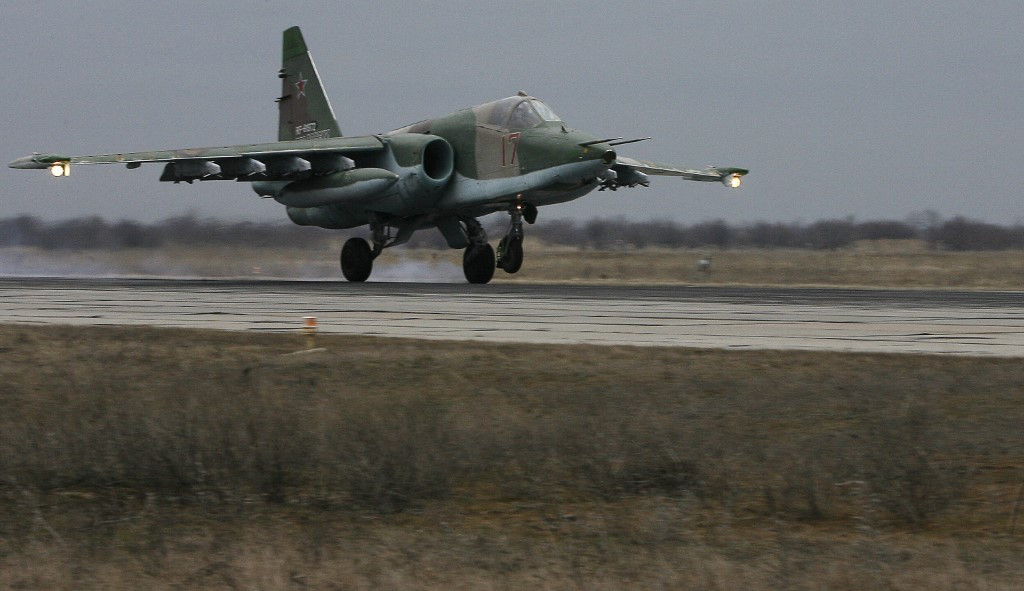
29 people were killed when a Russian An-26 military transport crashed over Crimea on 31 March (6 crew, 23 passengers); wreckage showed no signs of external impact and investigators cite likely technical failure. Immediate market implications are limited, though the loss could modestly disrupt Russian logistical capacity in Crimea and marginally increase operational/geopolitical risk for defense and regional logistics exposures. Monitor for follow-up investigation findings and any operational or escalation signals; broader financial markets are unlikely to be materially affected.
This single-platform loss in an active theatre has outsized informational and procurement consequences relative to its immediate operational impact. Markets tend to price two channels: near-term demand for tactical ISR, imagery and forensics to validate cause and attributions (days–weeks), and medium-term procurement/modernization impulses that follow visible capability gaps (6–24 months).
Expect a measurable, short-lived bid for companies providing commercial satellite imagery, geospatial analytics and missionized data products as governments and contractors pay premiums for independent verification and battle damage assessment; order flow and short-term revenue can spike 20–50% above baseline in discrete contract windows. Over the 6–24 month horizon the more durable effect is on transport/MRO planning and airspace risk premiums — ageing platforms and supply-chain fragilities accelerate replacement/retrofit discussions, which translate into multi-year RFP pipelines rather than immediate revenue for major primes.
Key risk is attribution uncertainty: if the incident is later assessed as hostile action, political escalation could drive larger defense appropriations and sanctions responses; if it remains classified as technical failure, the market impulse will fade quickly. Watch two catalysts closely: release of forensic/satellite evidence within 1–3 weeks, and any parliamentary/budget moves in EU/NATO capitals within 3–9 months that explicitly link capability gaps to procurement lines — either will materially change the size and duration of the market reaction.
AI-powered research, real-time alerts, and portfolio analytics for institutional investors.
Request DemoOverall Sentiment
mildly negative
Sentiment Score
-0.35
