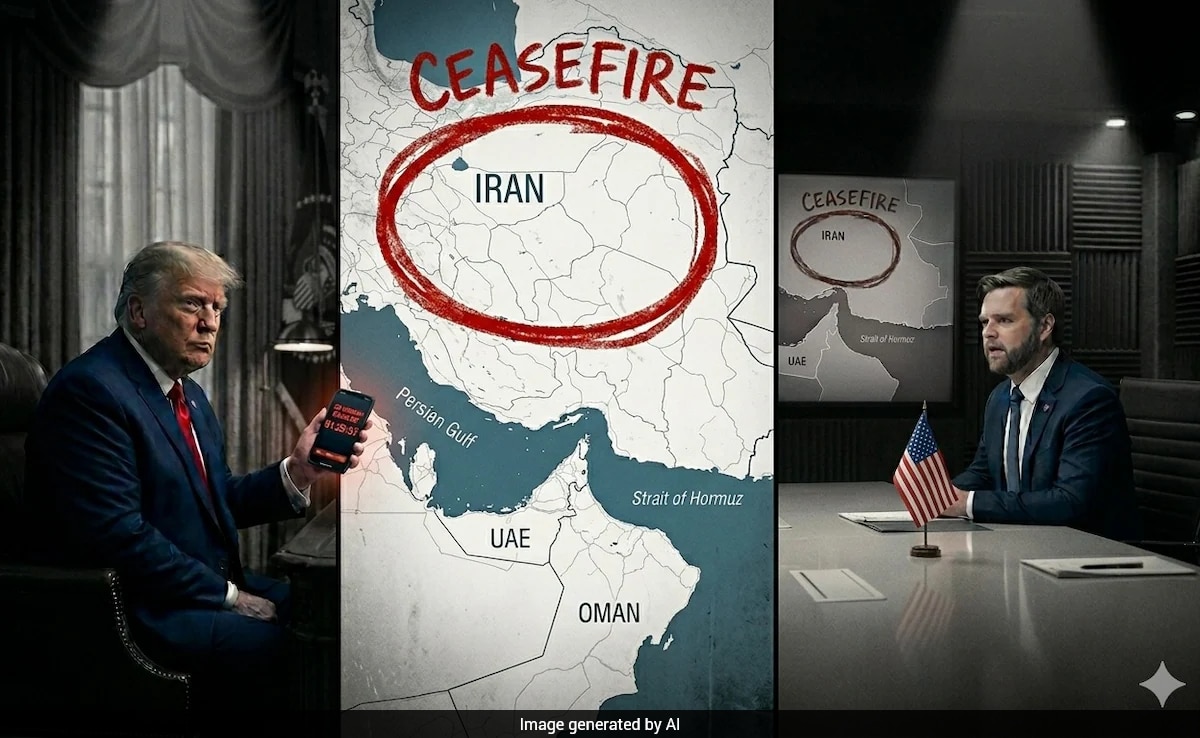
21-hour US-Iran peace talks in Islamabad ended inconclusively after the US failed to secure a fundamental Iranian pledge not to pursue nuclear weapons. Vice President JD Vance said the delegation spoke with President Trump a dozen times during the negotiations and remained in constant contact with the broader national security team. Iran blamed the breakdown on 'unreasonable demands' from the US, leaving the Middle East conflict unresolved.
The market implication is less about the headline failure and more about the signal that Washington is still treating an Iran containment outcome as negotiable, not terminal. That keeps the risk premium elevated across crude, Gulf shipping, and defense procurement, but it also means the first move lower in oil could be faded if traders assume diplomacy is dead; the likely path is a higher-volatility range rather than a clean breakout. The fact that the talks centered on a hard nuclear commitment suggests the real market trigger is not rhetoric, but verification or an explicit red-line escalation, which could arrive in days rather than months.
Second-order winners are energy logistics and security-adjacent names, not just the obvious producers. If the process breaks down, expect more precautionary inventory builds, higher freight/insurance costs through the Strait of Hormuz risk complex, and stronger urgency around missile defense, ISR, and munitions replenishment. That creates a favorable setup for defense primes with Middle East exposure and for select tankers/LNG-linked shipping routes that benefit from routing uncertainty.
The contrarian view is that a failed first round may actually improve odds of a contained bargain later, because both sides now know the economic costs of escalation. That makes shorting geopolitical beta outright dangerous; the better expression is to own convexity in oil and defense while keeping duration exposure modest. The biggest tail risk is a headline-driven military incident that compresses negotiation timelines from weeks into hours and forces a repricing across risk assets.
For equities, the market is likely underpricing how quickly allies will pre-position inventory and contracts if the standoff persists into the next 2-6 weeks. That should help firms with refill/rearm exposure sooner than pure platform builders, while pressuring airlines, refiners, and industrials with fuel sensitivity. The setup argues for tactical hedges rather than a macro thesis: own the supply shock beneficiaries, but be ready to trim if there is any credible ceasefire or backchannel breakthrough.
AI-powered research, real-time alerts, and portfolio analytics for institutional investors.
Request DemoOverall Sentiment
moderately negative
Sentiment Score
-0.34
