



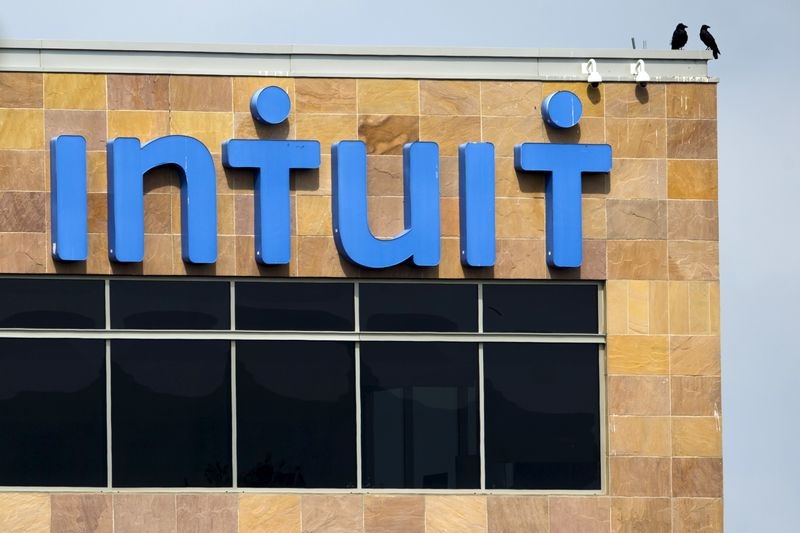
Intuit shares jumped 8.8% to $360.80 after the post-earnings selloff was seen as overdone, with the stock rebounding from about $307 to $383.93 after the May 20 fiscal Q3 release. The company previously reported $8.6 billion in revenue, up 10%, and non-GAAP EPS of $12.80, while raising FY2026 guidance to roughly $21.3 billion-$21.4 billion in revenue and about $24 in EPS. Analyst support, new AI product launches, and expectations that TurboTax and QuickBooks can continue growing are helping offset concerns about TurboTax pricing and slower DIY tax growth.
INTU’s rebound looks less like a clean re-rating of fundamentals and more like a mechanical reset after positioning got too one-sided on the downside. The important second-order effect is that when a high-quality software compounder gaps down hard on guidance sensitivity, the first bid usually comes from systematic and fundamental underweights scrambling to re-establish exposure; that can power a sharp multi-day squeeze even if estimates are still drifting. In other words, the near-term tape is being driven by sentiment normalization, not a decisive change in operating trajectory.
The competitive read-through is mixed: AI features help defend the premium narrative, but they also raise the bar for monetization because investors will now expect AI to translate into higher attach rates, lower churn, or faster seat expansion rather than just marketing uplift. That sets up a longer-duration test for HRB and lower-cost tax alternatives: if INTU holds pricing without visible share loss, HRB’s value proposition weakens; if not, this rally likely fades as the market re-prices TurboTax as a more mature franchise. PAYX is less directly impacted, but the broader lesson is that payroll/accounting software names with durable workflows may catch a sympathy bid if investors rotate back toward mission-critical SMB software.
The contrarian risk is that today’s move could be front-running a lower revision cycle rather than the end of it. A 7% growth expectation for a core product is still a deceleration story, and the next leg depends on whether AI products produce measurable revenue in the next 2-3 quarters; absent that, the stock can drift back toward the prior post-earnings range once the squeeze exhausts. NVDA’s supportive commentary helps sentiment for software, but it does not eliminate the market’s core question: whether AI is margin-accretive or merely deflationary for software pricing power.
From a trading perspective, the cleaner expression is to fade the panic, not chase the full mean reversion. The stock is likely tradable over days to weeks, but the durable upside needs evidence over months; until then, the right framing is a high-beta bounce within a still-degraded estimate set. If the move stalls and volume fades, the path of least resistance reverts to range-trading rather than trend continuation.
AI-powered research, real-time alerts, and portfolio analytics for institutional investors.
Request TrialOverall Sentiment
moderately positive
Sentiment Score
0.62
Ticker Sentiment
