A senior US military delegation led by Army Secretary Dan Driscoll and top generals arrived in Kyiv to meet President Zelensky and discuss efforts to end the war, including next steps on defence agreements and a roughly $105m Patriot support sale; Driscoll and Gen. Randy George are the most senior US military visitors since President Trump took office. Their visit coincides with media reports — unconfirmed by Washington or Moscow and downplayed by the Kremlin — that US and Russian envoys have privately drafted a 28‑point peace plan calling for Ukraine to cede territory, relinquish weapons and sharply shrink its armed forces, a formula Kyiv has publicly rejected; meanwhile at least 26 were killed in a Russian strike on Ternopil. With Trump‑era envoys involved in back‑channel talks and US special envoy Keith Kellogg set to depart in January, the trip signals heightened diplomatic activity but leaves the prospects and terms of any negotiated settlement unclear.
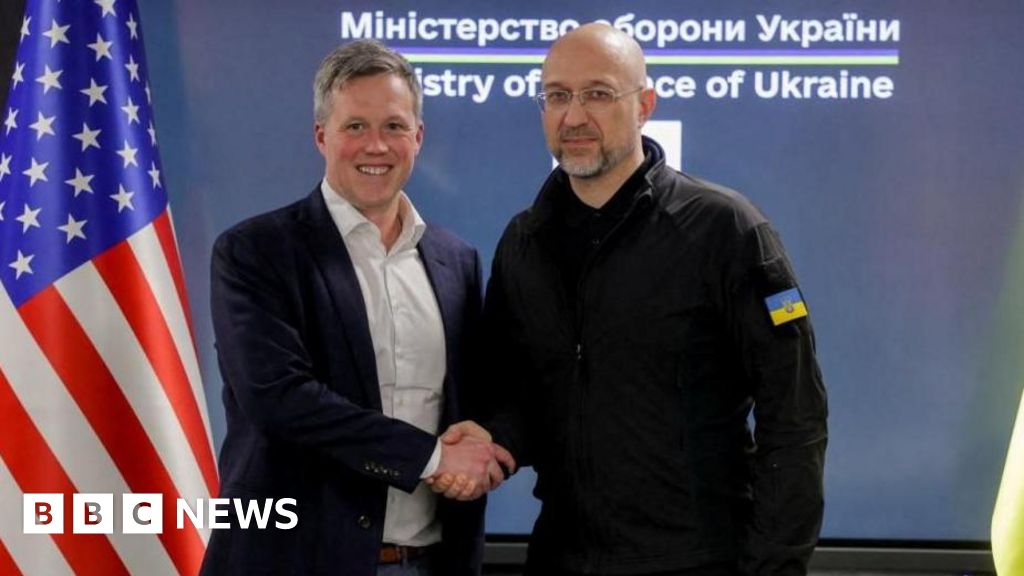
A senior US military delegation led by Army Secretary Dan Driscoll — joined by Gen. Randy George, Gen. Chris Donahue and Sergeant Major Michael Weimer — arrived in Kyiv on a fact‑finding mission to "discuss efforts to end the war" and is expected to meet President Zelensky when he returns from Turkey. The visit is the most senior US military engagement in Kyiv since President Trump took office and included a meeting with Defence Minister Denys Shmyhal, who noted next steps on defence agreements and thanked Washington for approving roughly $105m in Patriot support.
The trip coincides with unconfirmed media reports that US and Russian envoys have drafted a 28‑point peace plan calling for Ukraine to cede territory, relinquish weapons and sharply reduce its armed forces; neither Washington nor Moscow have confirmed the plan and the Kremlin has publicly downplayed the reports. President Zelensky has ruled out territorial concessions, Kyiv and Western allies continue to demand immediate ceasefires while Moscow reiterates preconditions cited by Foreign Minister Lavrov, leaving the content and feasibility of any negotiated settlement unclear.
At least 26 people were killed in a Russian missile and drone attack on Ternopil the same day, underscoring that kinetic risk persists even as diplomacy intensifies, and the White House confirmed special envoy Keith Kellogg will leave his post in January, a personnel change that could affect policy continuity. The combination of intensified U.S. military diplomacy, contested back‑channel negotiations and ongoing strikes elevates near‑term geopolitical uncertainty and warrants monitoring of defense procurement headlines and regional risk indicators.
AI-powered research, real-time alerts, and portfolio analytics for institutional investors.
Request DemoOverall Sentiment
mixed
Sentiment Score
-0.05
