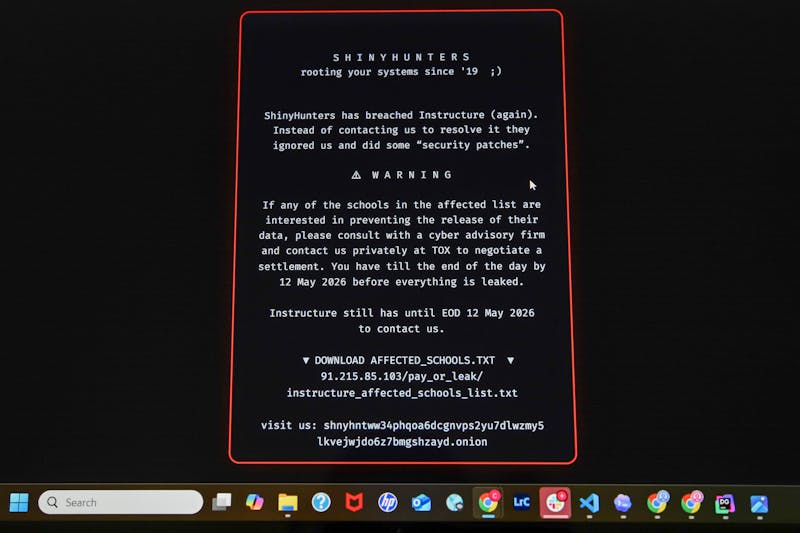
Penn reported a cyberattack that shut down Canvas access on Thursday afternoon, with ShinyHunters claiming it breached Instructure and threatening to leak data by the end of day May 12, 2026 unless contacted. The breach is said to affect multiple institutions and may involve data on more than 306,000 Penn affiliates, including emails, names, Penn ID numbers, and course enrollments. Penn said it is actively investigating and working with Instructure and law enforcement to restore access.
This is less a one-off campus IT incident than a template for recurring vendor concentration risk in higher education. If a single LMS provider becomes a choke point, the blast radius is not just reputational—it's operational leverage for extortion, because schools cannot easily switch platforms mid-term without disrupting grading, class communication, and compliance workflows. That creates a near-term asymmetry where attackers can force institutions into short-dated decision windows while victims bear the reputational cost of delay.
The second-order loser is the entire cloud/SaaS education stack: identity management, email security, backup, and managed security vendors will likely see accelerated procurement as schools reassess vendor segmentation and incident response playbooks. The more interesting implication is for cyber insurers and educational IT budgets, where retention and premiums could step up over the next renewal cycle if this turns into a multi-client disclosure event. In practice, boards will demand tabletop exercises and zero-trust controls faster than they approve core platform migration, so spend shifts toward monitoring and response rather than replacement.
The key catalyst path is not the outage itself but whether downstream data publication escalates into legal claims and regulatory scrutiny over the next 2-8 weeks. If the attackers have internal messages, the probability of embarrassment-driven settlement pressure rises sharply, but any sign of mass exfiltration or class-action coordination would extend the damage into months. A partial reversal only happens if the vendor can credibly prove containment and if institutions can show no material sensitive data beyond routine directory/course metadata was exposed.
Consensus likely underestimates how sticky the procurement fallout will be. Even if this specific incident fades, the event supports a multi-quarter re-rating of cybersecurity budgets at universities and adjacent institutions with similar legacy SaaS dependencies. The trade is therefore less about Penn-specific headline risk and more about buying the beneficiaries of forced remediation while fading overexposed education technology names with weak security narratives.
AI-powered research, real-time alerts, and portfolio analytics for institutional investors.
Request DemoOverall Sentiment
strongly negative
Sentiment Score
-0.75
Ticker Sentiment
