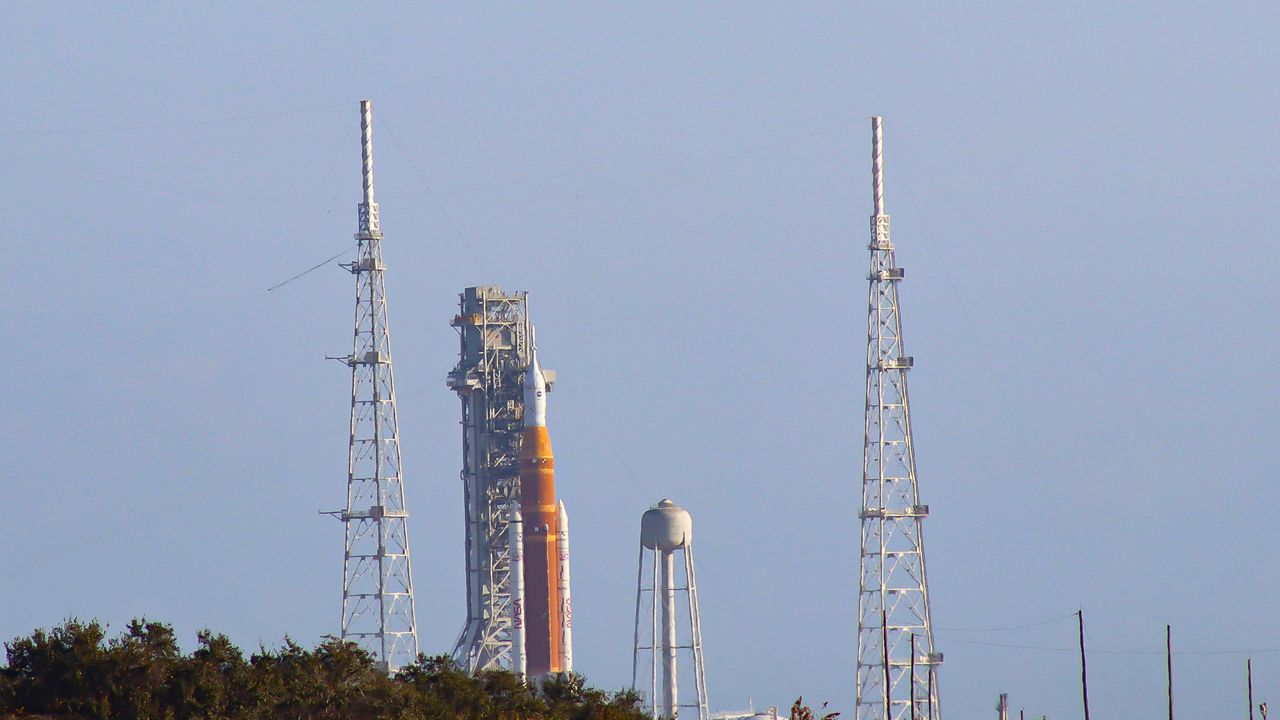
Artemis II is nearing launch using NASA's Space Launch System (SLS), a more-than-300-foot vehicle that produces about 8.8 million pounds of liftoff thrust, with twin solid rocket boosters and four RS-25 engines providing roughly 25% of that thrust. The crewed Orion will undertake a ~10-day lunar mission following lessons from Artemis I (Nov 2022) as NASA pushes to return Americans to the Moon and build a sustained presence.
Primes that own niche, hard-to-replicate large-rocket capabilities stand to capture outsized near-term margin expansion from follow-on Artemis sustainment work; that’s a multi-year revenue stream because the fixed costs of tooling, test stands and qualified human capital create high barriers to entry. Expect contract awards, spare-parts buys and integration services to roll out on a 6–24 month cadence as NASA transitions from demonstration to operational cadence — those cadence steps will show up as lumpy revenue and backlog beats rather than steady quarterly growth.
The largest non-obvious supply-chain lever is rocket-stage repeatability: long lead items (engine turbomachinery, composite casings, avionics harnesses) create bottlenecks that allow suppliers to charge premium pricing and push out margins upstream of primes. Conversely, a single dominant architecture (one SLS-derived path) concentrates technical and political tail risk — a single severe anomaly or a pivot to lower-cost commercial heavy lift (Starship-style) could extinguish multi-year procurement plans in 12–36 months.
Operationally, the market will reprice winners on two signals: (1) visible contract awards / backlog increases reported in quarterly filings (near-term, 1–3 quarters), and (2) demonstrable reduction in refurbishment cycle times and per-launch cost (medium-term, 6–24 months). Watch public statements from NASA/OMB and DoD budget language for funding cadence; a failure to lock multiyear appropriations is the highest-probability catalyst that reverses the sector rally and compresses forward multiples by 20–40% within a year.
AI-powered research, real-time alerts, and portfolio analytics for institutional investors.
Overall Sentiment
mildly positive
Sentiment Score
0.20
