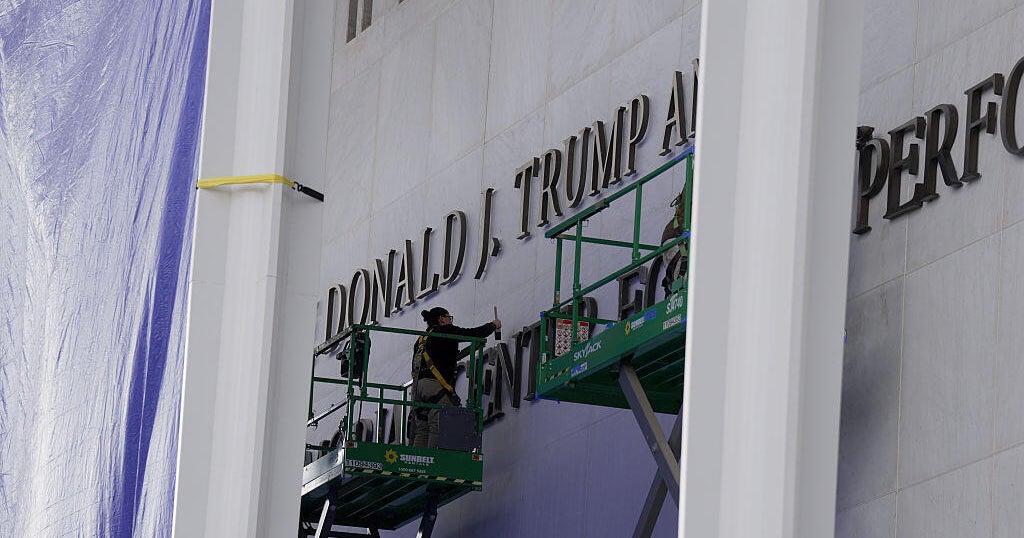
The Kennedy Center's board voted to rename the institution "The Donald J. Trump and The John F. Kennedy Memorial Center for the Performing Arts," and President Trump's name was added to the building's exterior; many trustees were appointed by Trump. The decision provoked outrage from Democrats and members of the Kennedy family and may face legal or legislative hurdles—Congress originally renamed the center and a statute limits additional public-area memorials after Dec. 2, 1983, suggesting a name change likely requires an act of Congress. The action creates reputational and governance risk but carries no direct financial metrics or clear market implications.
Market structure: This is a governance/political shock to a single marquee cultural institution with limited direct corporate earnings impact, but it shifts demand signals for PR, security, legal and fundraising services. Expect short-term spikes in media coverage and donor reallocation (10–30% of marginal gifts could re-route within 3 months based on comparable charitable controversies), benefiting firms that monetise polarization (news, PR, security) and disadvantaging donor-dependent programming and some local hospitality venues in DC for 1–2 quarters.
Risk assessment: Tail risks include a Congressional intervention or injunction (low probability, high impact) that triggers litigation and higher operating costs for the Center; this could force write-downs or fundraising shortfalls over 6–18 months. Hidden dependencies: corporate sponsors and government grant renewals; a 10–20% sponsor pullback in worst-case would materially strain cash flow and bookings. Catalysts to watch: Congressional hearings, major donor public statements, or a coordinated corporate sponsorship boycott within 30–90 days.
Trade implications: Direct market moves will be small and idiosyncratic; focus on adjacent beneficiaries (media platforms, crisis communications firms, event-security contractors) and hedges for live-entertainment exposure. Use options to express short-duration sentiment (30–120 days) around media coverage spikes and buy downside protection for tourism/hospitality exposure to DC. Scale positions small (0.5–2% portfolio) given weak correlation to macro and high political noise.
Contrarian angles: Consensus treats this as symbolic; the underpriced angle is persistent governance risk across cultural institutions leading to higher recurring spending on security/PR and potential shifts from public-domain funding to private paid performances. Historical parallels (museum controversies 2016–2018) showed 6–12 month revenue swings for venues and a 15–25% surge in corporate PR/security budgets — lean into trades that monetise that follow‑on demand rather than the headline itself.
AI-powered research, real-time alerts, and portfolio analytics for institutional investors.
Request DemoOverall Sentiment
neutral
Sentiment Score
-0.10
