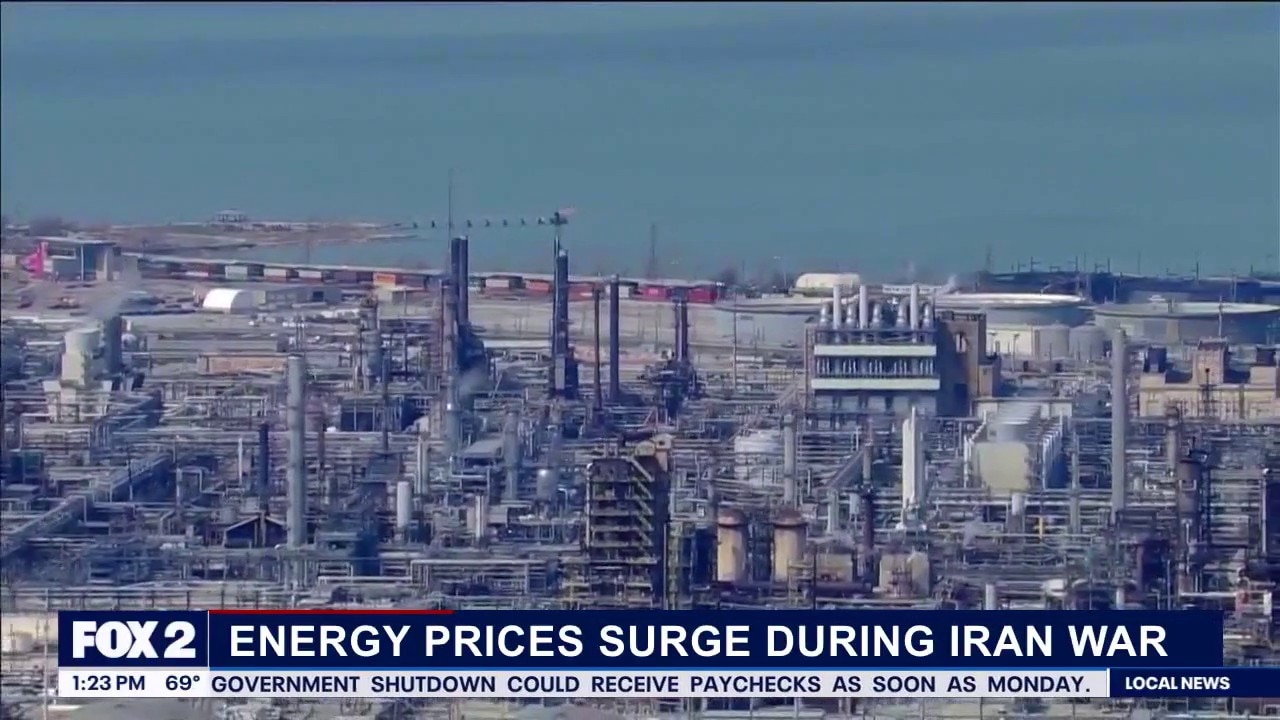
Michigan Gov. Gretchen Whitmer declared an energy emergency and issued an executive order easing fuel-blend vapor pressure requirements in Southeast Michigan to permit higher-vapor-pressure gasoline, aiming to reduce pump prices by about $0.10–$0.20 per gallon. U.S. gas averages near $4/gal and Michigan at $3.89/gal, roughly $1 higher than a month ago; the order suspends the May 1 low-vapor-pressure requirement in Wayne, Oakland, Macomb, Washtenaw, Livingston, Monroe, St. Clair and Lenawee counties. Whitmer cited tariffs and conflict in the Middle East (including disruption around the Strait of Hormuz) as drivers of higher fuel costs; the measure provides localized consumer relief but is unlikely to materially move national energy markets.
A localized, temporary easing of summer-spec gasoline constraints materially shifts marginal supply economics in a regional market: higher-RVP blends reduce demand for alkylate and reformate and increase demand for C4/C5 butane as blendstock, compressing the regional RFG (reformulated gasoline) crack by an expected $0.05–$0.15/gal versus more neutral regions over the next 2–8 weeks. Refiners with flexible blending (simple hydroskimmers + available butane storage) can arbitrage the spread and capture incremental margin, while complex refineries that rely on selling higher-value reformate face margin erosion and potential inventory markdowns.
Logistics will reprice: barges and short-haul trucks that historically moved low-RVP gasoline into the Great Lakes corridor will see reduced utilization, lowering rack-to-retail basis and pressuring inland freight rates. Conversely, butane suppliers and terminals with vapor-handling capacity become short-term bottlenecks—look for a 10–20% spike in regional butane basis and higher rail/barge load factor within 2–6 weeks if neighboring states follow suit.
Key near-term catalysts that could reverse the impact are federal regulatory pushback (EPA emergency waiver reversal), a heatwave that amplifies evaporative-emissions pushback, or a global crude shock that overwhelms local pump effects; any of these can re-widen RFG crack or restore previous supply flows within 1–3 months. Tail risk: coordinated multi-state waivers would shift the move from idiosyncratic to structural, lowering national summer crack spreads and squeezing refiners for an earning cycle.
The market likely underestimates concentration risk: consumer savings are diffuse and will primarily show up as transient volume gains for local retailers, not sustainable EPS improvements for large refiners. The largest mispricing is in regional midstream and independent refiners and terminals—liquidity is thin, so targeted option strategies or short-dated spreads can capture the asymmetry faster than directional equity positions.
AI-powered research, real-time alerts, and portfolio analytics for institutional investors.
Request DemoOverall Sentiment
mildly negative
Sentiment Score
-0.25
