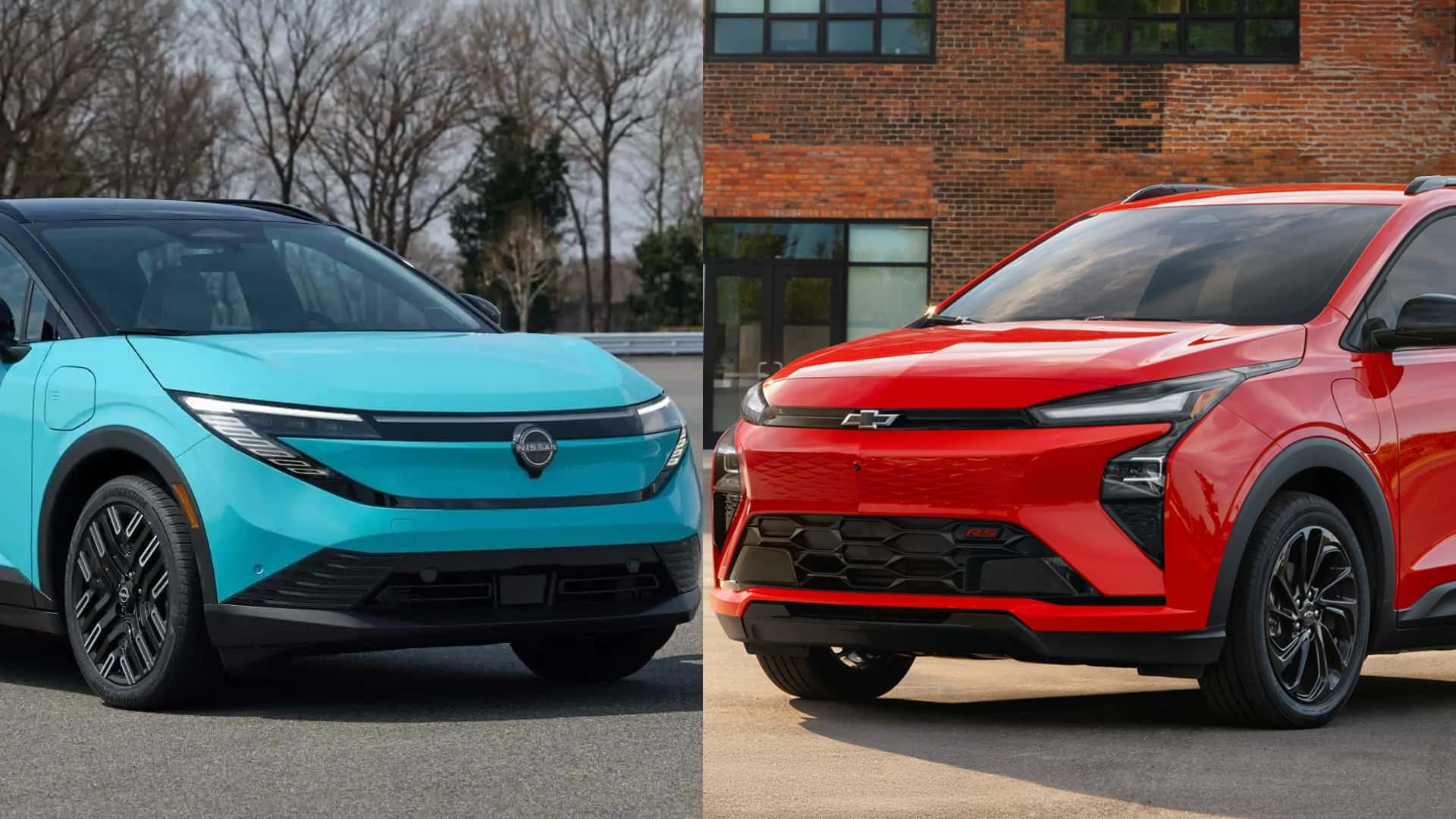
General Motors' 2027 Chevrolet Bolt and Nissan's 2026 Leaf are poised to significantly disrupt the affordable electric vehicle market, launching with competitive starting prices around $30,000. The Bolt, beginning at $28,995, and the Leaf S+ at $31,485 (with a more economical Leaf S variant anticipated), directly address the market's demand for lower-cost EVs, particularly after shifts in tax credit policies. Key differentiators include the Leaf's superior range (303 miles) and torque, contrasted with the Bolt's faster AC charging and lower entry price, with both models integrating the NACS charging standard. This strategic re-entry by major automakers into the budget EV segment underscores a concerted effort to accelerate broader EV adoption.
General Motors' 2027 Chevrolet Bolt and Nissan's 2026 Leaf are poised to significantly impact the affordable EV market, both launching with starting prices around $30,000. The Bolt, at $28,995, and the Leaf S+, at $31,485, directly address the market's demand for lower-cost electric vehicles, particularly following shifts in EV tax credit policies. This re-entry by major automakers into the budget EV segment signals a strategic move towards broader EV adoption.
The Bolt offers a lower initial price point and faster AC charging at 11.5 kW, alongside a quicker 10-80% DC fast charge time of 26 minutes. Conversely, the Leaf S+ provides a superior driving range of 303 miles and significantly higher torque at 261 lb-ft, despite a slightly higher current base price and slower AC charging. Both models adopt the NACS charging standard and offer comparable DC fast-charging rates of 150 kW.
While the Leaf boasts a complete redesign, offering Apple CarPlay/Android Auto and V2L capability, the Bolt leverages its existing platform with substantial under-the-skin improvements, including V2H capability and Google Built-in infotainment. GM's positive sentiment score of 0.6 reflects the market's favorable view of the Bolt's competitive positioning. The introduction of these models is critical for expanding EV accessibility and challenging the perception of EVs as exclusively premium products.
AI-powered research, real-time alerts, and portfolio analytics for institutional investors.
Overall Sentiment
mildly positive
Sentiment Score
0.25
Ticker Sentiment
