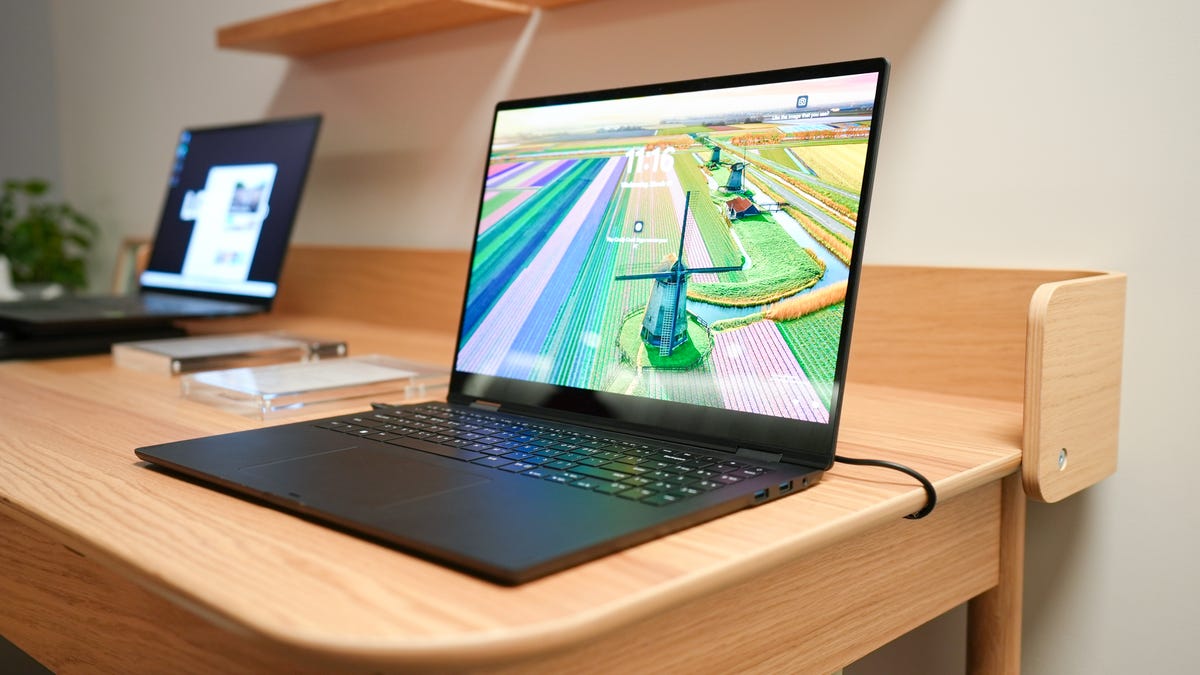
At CES 2026 LG introduced the ultra-portable Gram Pro 17 and Gram Pro 16, highlighting a new in‑house material called 'Aerominum' intended to reduce weight and improve durability. The 17-inch model is touted as the "world's lightest 17-inch RTX laptop" with an Nvidia GeForce RTX 5050 GPU while the 16-inch is expected to feature a higher‑quality WQXGA+ OLED (2,880 x 1,800) versus the 17-inch's WQXGA LCD; both are said to include Intel Core Ultra processors, an upgraded AI assistant and LG Link file/screen transfer support. LG provided no pricing or launch date, and the combination of thin chassis plus discrete RTX class GPU raises thermal and engineering risk considerations for margins and design execution.
Market structure: LG’s use of in-house “Aerominum” and a claim to the lightest 17-inch RTX laptop signals rising attach rates and ASP resilience for mobile discrete GPUs and advanced materials suppliers. Expect NVDA to be a clear beneficiary as OEMs push RTX 50-series into ultraportables, supporting mid-to-high single-digit percentage uplift in mobile GPU ASPs and incremental revenue over the next 4–12 quarters, while traditional integrated-GPU suppliers face margin pressure.
Risk assessment: Key tail risks are US export controls on advanced GPUs (30–90 day catalyst window) and thermal/recall issues from packing RTX 5050 into thin chassis that could create warranty costs >$100M for large OEMs or delay shipments by 6–12 weeks. Hidden dependency: success hinges on cooling solutions and supply of Aerominum—material shortages or CAPEX delays could push time-to-market into H2 2026.
Trade implications: Direct trade is tactical long NVDA exposure via defined-risk 3-month call spreads to capture a 10–25% upside tied to OEM product launches; modest long INTC (0.5–1% of portfolio) for exposure to Core Ultra notebook CPU cycles over the next 6–12 months. Consider a relative-value pair (long NVDA, short INTC) sized 2:1 to express conviction that GPU-driven margin upside outpaces Intel’s mobile CPU recovery over 3–9 months.
Contrarian angles: Consensus assumes flawless execution — it underestimates thermal and supply friction that could mute sales and push refunds/discounting, which would compress OEM margins by low-double digits. Historical parallel: early thin-but-powerful laptop launches (e.g., 2015 Ultrabook wave) showed initial buzz then channel returns; be prepared to trim on >15% short-term pop and to add on >10% pullback driven by technical issues.
AI-powered research, real-time alerts, and portfolio analytics for institutional investors.
Request DemoOverall Sentiment
mildly positive
Sentiment Score
0.28
Ticker Sentiment
