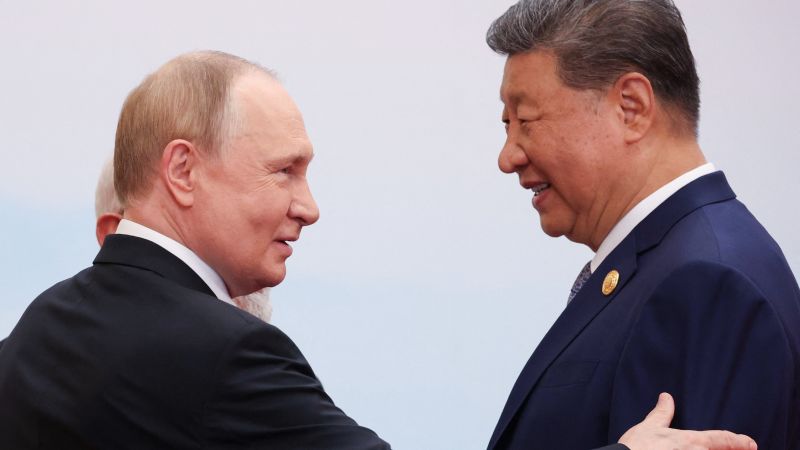
Russian President Vladimir Putin and Chinese President Xi Jinping held formal talks in Beijing, with both leaders emphasizing their 'unprecedentedly high level' relationship and strategic alignment. The meeting underscores a deepening geopolitical solidarity as Putin defies Western pressure over Ukraine and Xi positions China as a leader in a new global governance system. This visit, Putin's longest to a single country since the 2022 Ukraine invasion, signals a strengthening of an alternative power bloc with potential implications for global trade, commodity markets, and international relations.
The formal talks between Russian President Vladimir Putin and Chinese President Xi Jinping in Beijing solidify a strategic alignment that both leaders describe as at an "unprecedentedly high level." This partnership is framed as a counterweight to Western influence, explicitly referencing the ongoing war in Ukraine and a desire to build a "just and reasonable global governance system." The significance of this meeting is underscored by its duration—Putin's longest visit to a single country since the 2022 invasion—and the broader context of a security summit involving other regional powers like Mongolia and North Korea. For financial markets, this deepening Sino-Russian axis signals an acceleration of geopolitical fragmentation. While the immediate market impact is neutral, the long-term implications point toward a potential bifurcation of global trade, supply chains, and technology ecosystems, creating distinct Eastern and Western-aligned economic blocs. This alignment has direct consequences for global commodity flows, particularly Russian energy exports to China, and may foster alternative financial systems to reduce reliance on the US dollar.
AI-powered research, real-time alerts, and portfolio analytics for institutional investors.
Request DemoOverall Sentiment
neutral
Sentiment Score
0.00
