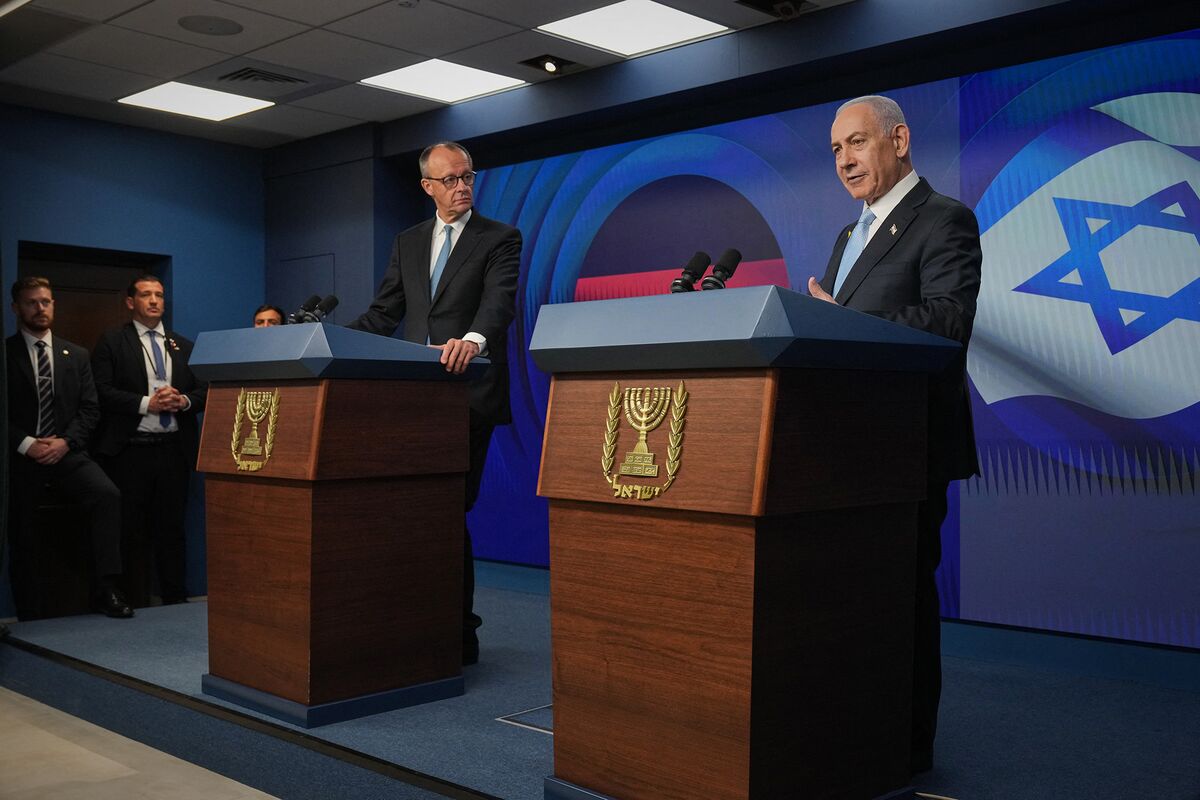
Israeli Prime Minister Benjamin Netanyahu said Israel expects to move shortly to the second, more difficult phase of a Gaza ceasefire plan and will meet U.S. President Donald Trump later this month to discuss "opportunities for peace." At a joint press conference with German Chancellor Friedrich Merz in Jerusalem, Merz said he would not recognize a Palestinian state in the near future. The comments underscore continued uncertainty over ceasefire implementation and regional diplomacy, sustaining geopolitical risk that could affect defense-related sectors and regional asset pricing.
Market structure: A move to a more intense “second phase” in Gaza raises clear winners — defense contractors and related suppliers (LMT, NOC, RTX, ETF: ITA) and energy/commodities (Brent, XLE, USO, GLD) — and losers — Israeli domestic cyclicals (airlines JETS, tourism), Israeli equity ETF (EIS) and short‑duration credit exposed to the region. Pricing power for prime defense OEMs can rise quickly as RFPs/backlogs firm; oil downside tightness could push Brent +$3–$8/bbl within weeks if shipping/production disruptions spread. Cross‑asset: expect 7–30bp downward pressure on UST yields (TLT bid) in acute risk‑off, USD and gold (GLD) +1–3%, and ILS weakening 1–3% near‑term versus USD.
Risk assessment: Tail risks include escalation into a wider regional conflict (low prob, high impact) which could spike Brent >$15 and cause an equity drawdown >8% in 1–4 weeks; conversely a rapid, durable ceasefire is a 30–60 day upside catalyst for Israeli assets. Hidden dependencies: US military support/timing from the Netanyahu‑Trump meeting and German political stance materially change supply lines and insurance costs for shipping (second‑order move to freight rates). Key catalysts to watch: operational ground offensive start dates, confirmed maritime chokepoint incidents, and public US arms shipments — all actionable within 0–60 days.
Trade implications: Tactical: establish 2–3% portfolio longs in ITA or a split LMT/NOC (buy or 3–6m call spreads) and 1–2% long GLD and 1–2% long TLT as asymmetric hedges, entered within 5 trading days. Defensive: buy 1–2% put protection on EIS or short EIS outright if ILS weakens >1.5% in 10 days; pair trade = long ITA (2%) vs short EIS (1.5%) for relative outperformance. Options: buy 3‑month call spreads on LMT/NOC (debit spread with +3–5% OTM strikes) and small allocation (0.5–1%) to VIX calls as tail protection; profit targets 20–30% on option trades, stop losses 30%.
Contrarian angles: The market may be overstating a multi‑quarter supply shock — historical localized conflicts (2011–2014 Gaza escalations) produced sharp 2–8 week commodity/defense moves that mean‑reverted in 3–6 months. If the “second phase” is limited in scope, defense/commodity rallies could be overbought; consider shorting short‑dated bullish momentum (e.g., sell near‑term call spreads on ITA after >10% rally). Unintended consequences: a protracted campaign can accelerate EU/German defense spend (benefit primes) and post‑conflict reconstruction can lift Israeli construction/infra names on 6–18 month horizon.
AI-powered research, real-time alerts, and portfolio analytics for institutional investors.
Request DemoOverall Sentiment
neutral
Sentiment Score
-0.05
