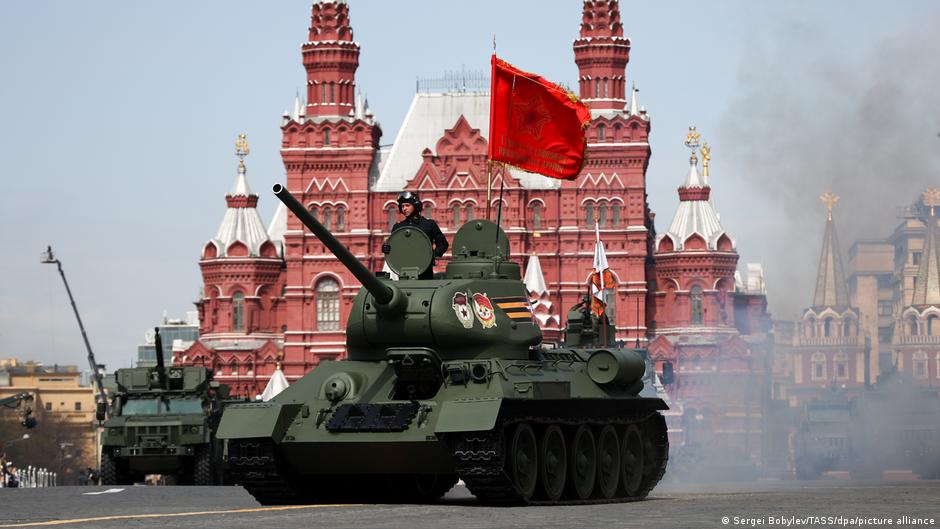
Russia will scale back its May 9 Victory Day parade in Moscow, with no military vehicles on Red Square and no cadets from elite academies, citing the current operational situation and a terrorist threat from Ukraine. Several regional parades and fireworks have also been canceled, while St. Petersburg will reduce its celebrations to a single tribune. The article suggests the changes reflect war-related security risks and resource constraints, but the direct market impact is limited.
The immediate market read is not about pageantry; it is about Moscow telegraphing tighter internal security constraints and a lower-confidence regime posture. That tends to matter first in Ukrainian strike expectations: if the Kremlin is materially reducing visible equipment exposure, it likely sees the probability distribution of disruptive drone activity as non-trivial over the next 1-2 weeks, which can keep Russian air-defense assets and electronic warfare systems pulled toward the capital rather than the front.
Second-order, the scaling back reinforces the resource strain narrative even if official messaging frames it as a precaution. The opportunity cost is real: every truck, launcher, and crew held back for ceremonial or protective duties is another marginal reduction in frontline flexibility, logistics throughput, or maintenance cadence. That is incrementally bullish for the quality of Ukraine’s attritional campaign, especially if it can force Russia to keep high-value assets dispersed instead of concentrated.
For markets, the more investable implication is sentiment around defense-industrial replenishment, not immediate commodity price action. A regime that must prioritize air defense, perimeter security, and internal control over symbolism tends to remain a structurally better customer for drones, interceptors, radar, and short-cycle munitions than for heavy platforms. The contrarian angle is that this is less a sign of collapsing Russian capability than of adaptation; if the parade is compressed without incident, the Kremlin may claim resilience, muting any near-term escalation premium.
The risk window is acute around the holiday itself and then fades quickly over days. The bigger medium-term catalyst is whether Ukraine can demonstrate a repeatable pattern of penetrating defended Russian airspace; if yes, Russia will likely spend more on homeland defense and less on offensive depth, tightening supply for front-line systems over months rather than weeks.
AI-powered research, real-time alerts, and portfolio analytics for institutional investors.
Request DemoOverall Sentiment
mildly negative
Sentiment Score
-0.15
