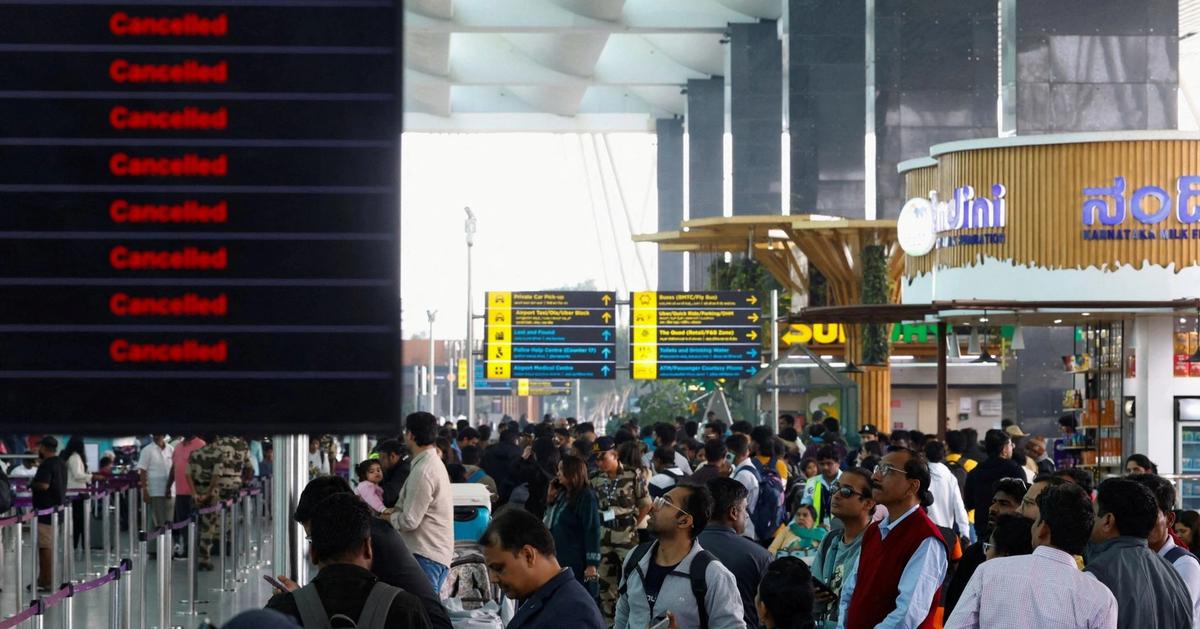
IndiGo, which controls roughly 65% of India’s domestic aviation market, canceled thousands of flights after a pilot shortage triggered by new limits on pilot work hours, producing what officials call the country’s worst aviation crisis. The disruption has crippled domestic air travel, drawn government ire—heightened by timing during President Putin’s visit—and prompted opposition allegations that regulatory complacency enabled IndiGo’s near-monopoly, raising near-term revenue, reputational and regulatory risks for the carrier and political scrutiny for sector oversight.
Market structure: IndiGo's operational collapse (~65% share) creates immediate beneficiaries among smaller carriers (SpiceJet, private start-ups) and airport operators (e.g., GMRINFRA) that can capture diverted traffic. Expect a short-term spike in ticket prices on remaining IndiGo flights (+10–25% on busy routes within 7–30 days) as capacity tightens and rebooking costs rise; larger carriers can raise yields if they can staff crews quickly.
Risk assessment: Key tail risks include regulatory intervention (market-share caps, punitive fines >₹5–10bn) and accelerated pilot hiring rules raising industry unit costs by 5–10% YoY. Immediate window (days) is operational chaos; short-term (weeks–months) risk of market-share reallocation; long-term (12–24 months) reputational damage could trim IndiGo share from 65% to ~55% if competitors scale, pressuring margins by several hundred basis points.
Trade implications: Near-term volatility favors targeted shorts/puts on InterGlobe Aviation (NSE: INDIGO) and tactical longs in airport operators (GMRINFRA.NS) and selected smaller carriers able to scale. Use pair trades to express relative value (short INDIGO vs long GMRINFRA or SPICEJET) and 1–3 month option spreads to cap capital at known loss while capturing event-driven moves.
Contrarian: Consensus assumes permanent market-share loss for IndiGo; that may be overdone if management fixes rostering within 2–3 months and accepts marginal margin compression. A mispriced outcome is a fast rebound in INDIGO shares if DGCA penalties are limited to <₹1–2bn, creating a 15–30% mean-reversion opportunity.
AI-powered research, real-time alerts, and portfolio analytics for institutional investors.
Overall Sentiment
strongly negative
Sentiment Score
-0.60
