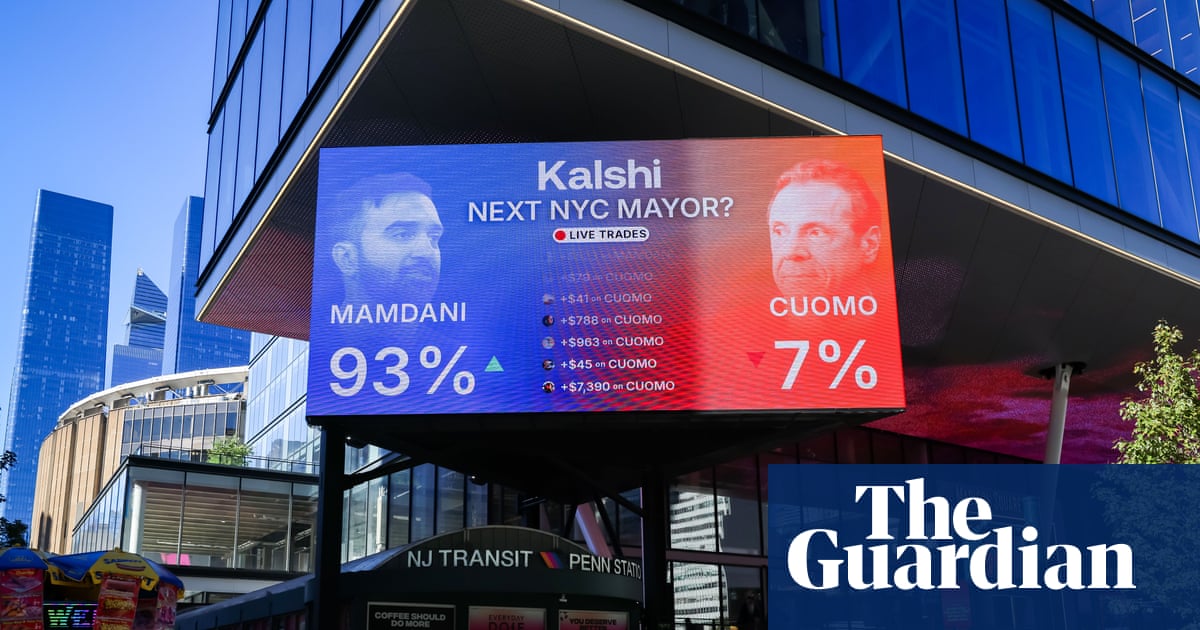
Senators Adam Schiff and John Curtis introduced the 'Prediction Markets are Gambling Act', which would ban sports-related contracts and could eliminate a substantial portion of Kalshi and Polymarket's addressable market. Both platforms immediately tightened rules (Kalshi banning candidates and sports participants; Polymarket barring users with potential confidential or outcome-influencing information) and the CFTC chair signaled federal support for Kalshi in state-level legal battles. Market reaction included a sharp intraday rise in DraftKings and FanDuel-owner shares; overall the bill represents a material sector-level regulatory risk to prediction-market business models.
Incumbent, licensed sportsbooks (scale players with multi-product stacks) are the primary latent beneficiaries of regulatory pressure on niche prediction markets because market share from nascent platforms can be migrated without incremental customer-acquisition cost if distribution is carved up at the state level. Economically, every 1% of incremental sports handle captured by a national operator translates into high-margin revenue (low marketing overlap, cross-sell to DFS/casino) and a disproportionate uplift to free cash flow versus small, single-product entrants.
The regulatory vector creates a two-layer timing profile: 1) near-term (days–weeks) volatility around legislative announcements and state court rulings; 2) multi-quarter structural outcomes if federal pre-emption is litigated to finality. Key second-order beneficiaries include odds-feed providers, sponsorship brokers, and media ad platforms that reallocate spend from prediction-market sponsorships to regulated sportsbook partners — these revenue streams flip quickly once leagues/teams reprice sponsorship inventories.
Tail risks are asymmetric: a rapid congressional ban on sports-related contracts would be a clear shock that benefits established bookmakers only if state-by-state enforcement is patchy; conversely, a definitive CFTC pre-emption win would entrench licensed operators and force consolidation of casual bettors into incumbents over 12–24 months. The consensus fear discounts two underappreciated mechanics — (a) consumer stickiness to single-wallet experiences provided by incumbents, and (b) legal precedent effects that amplify market concentration rather than fragment it — making this a convex outcome for large-cap sportsbook operators if federal rulings land in their favor.
AI-powered research, real-time alerts, and portfolio analytics for institutional investors.
Request DemoOverall Sentiment
strongly negative
Sentiment Score
-0.65
Ticker Sentiment
