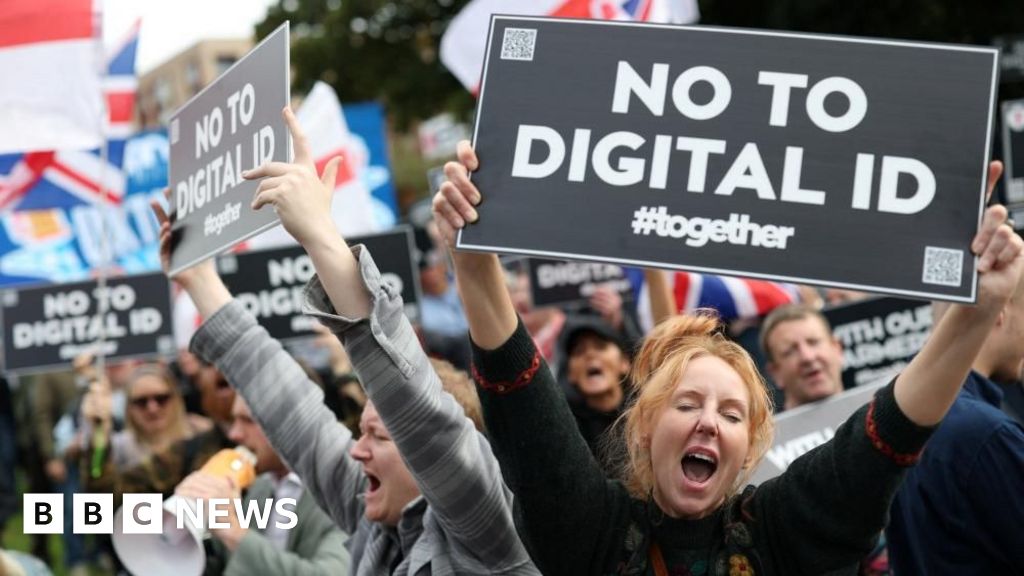
The UK government has dropped plans to require workers to sign up to a mandatory digital ID to prove right-to-work, instead committing to fully digitise existing document-based checks (including biometric passports) by 2029. The reversal follows intense public and political backlash — nearly three million signatures on a petition and polling showing support collapsed — and highlights internal government U-turns and messaging failures. Operationally, the proposal would rely on existing platforms (Gov.uk One Login and a not-yet-launched Gov.uk Wallet) and builds on digital verification options already available for British and Irish passport holders since 2022; the change reduces an immediate regulatory shock but signals ongoing policy uncertainty and potential reallocation of funds previously earmarked for the scheme.
Market structure: The U-turn reduces probability of a large, guaranteed multi-billion mandatory rollout and repositions growth toward incremental digitisation of existing checks (targeted completion by 2029). Winners: niche digital ID/verification vendors and cloud/identity service integrators (benefit from voluntary public-service integrations); losers: large incumbents bidding for one-off compulsory-enforcement contracts (outsourcers) if mandatory element is scaled back. Expect 12–36 month revenue ramp rather than immediate multi-year contracted cashflows.
Risk assessment: Tail risks include privacy/regulatory clampdowns (ICO fines, class actions) or a future government re-introducing mandatory rules after an election; both could swing equity values ±30–50% for pure-play ID names. Immediate impact (days) is minimal; watch for RFPs/procurement in 1–6 months and formal policy papers by 2024–2029. Hidden dependency: access to Gov.uk One Login/Wallet and existing public-sector contracts will be decisive — incumbency matters more than pure technology.
Trade implications: Favor selective longs in listed identity verification and cybersecurity (1–3% position sizes) and tactical shorts in large government-outsourcing names if procurement guidance weakens. Use options to express asymmetric exposure: buy 9–12 month calls to cap downside while retaining upside on policy-driven re-rates. Rotate from broad IT outsourcing into SaaS identity/security over the next 3–12 months as visibility improves.
Contrarian angles: Consensus treats this as political noise; we see structural opportunity — a softened mandatory stance increases voluntary adoption in health, transport and benefits where incumbents are weaker, amplifying TAM for specialist vendors by an estimated +20–30% over baseline by 2029. If government quietly funds One Login/Wallet scale-up, early-listed beneficiaries could re-rate sharply; conversely, a permanent policy kill would penalise those priced for mandatory adoption.
AI-powered research, real-time alerts, and portfolio analytics for institutional investors.
Request DemoOverall Sentiment
neutral
Sentiment Score
0.00
