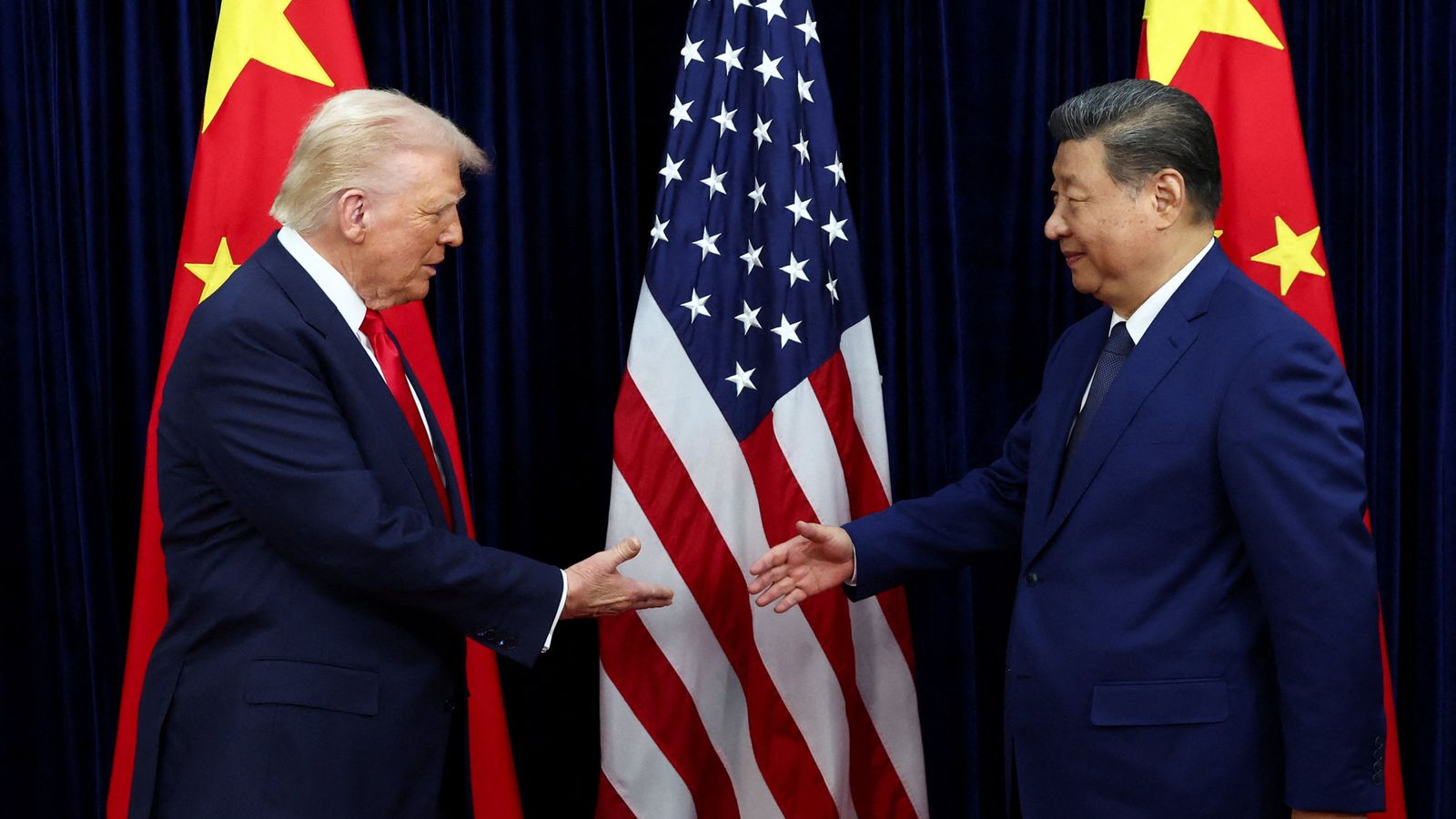
President Trump’s announcement of a 25% tariff on any nation trading with Iran escalates trade tensions and risks undoing the US–China tariff truce; China is Iran’s largest buyer, estimated to take 80–90% of Iran’s exported oil. Raising China’s average US tariff from ~47% to over 70% would make most bilateral trade economically unviable and likely provoke severe retaliation or force Beijing to seek an exemption, creating heightened downside risk for trade-exposed equities, energy markets and global supply chains.
Market structure: A 25% tariff threat against countries trading with Iran prizes energy and commodity exporters (US majors XOM/CVX, oil services SLB) and safe-haven assets (GLD, long-duration Treasuries) while pressuring China-exposed exporters, shipping, insurance and EM importers. If applied to China the article implies China’s average tariff could jump from ~47% to >70%, effectively crushing US-China goods flows and transferring pricing power to onshore Chinese producers and commodity suppliers.
Risk assessment: Key tail risks are a Chinese retaliation (tariff increases, rare-earth export curbs) or Iran-provoked supply shocks in the Strait of Hormuz — each could lift Brent >20% within 30–90 days and spike EM FX stress. Probabilities: exemption for China ahead of the April Xi-Trump meeting raises chance of de-escalation to ~60%; meaningful retaliation retains ~30% chance; immediate volatility window is days–weeks, structural shifts play out over 3–18 months.
Trade implications: Near-term trades should express convex oil upside and China downside while limiting directional equity beta: buy limited WTI call exposure (3-month spreads), long selective US majors (XOM/CVX) 2–4% net, hedge with FXI puts or short China export names (BABA, 9988.HK) sized 1–2%. Rotate from EM credit/insurers into energy, gold miners (GDX) and US IG credit; use options to cap downside and exploit volatility.
Contrarian angles: Consensus expects harsh Chinese retaliation, but political incentives favor a China exemption (trade truce + April visit), meaning short-China trades could be crowded and quickly mean-revert; historical parallel: 2018 tariffs produced large early dispersion then normalization over 6–12 months. Unintended consequences include higher oil driving Fed tightening that crushes risk assets — so size positions small and use clear stop/trigger rules (see decisions).
AI-powered research, real-time alerts, and portfolio analytics for institutional investors.
Request DemoOverall Sentiment
moderately negative
Sentiment Score
-0.50
