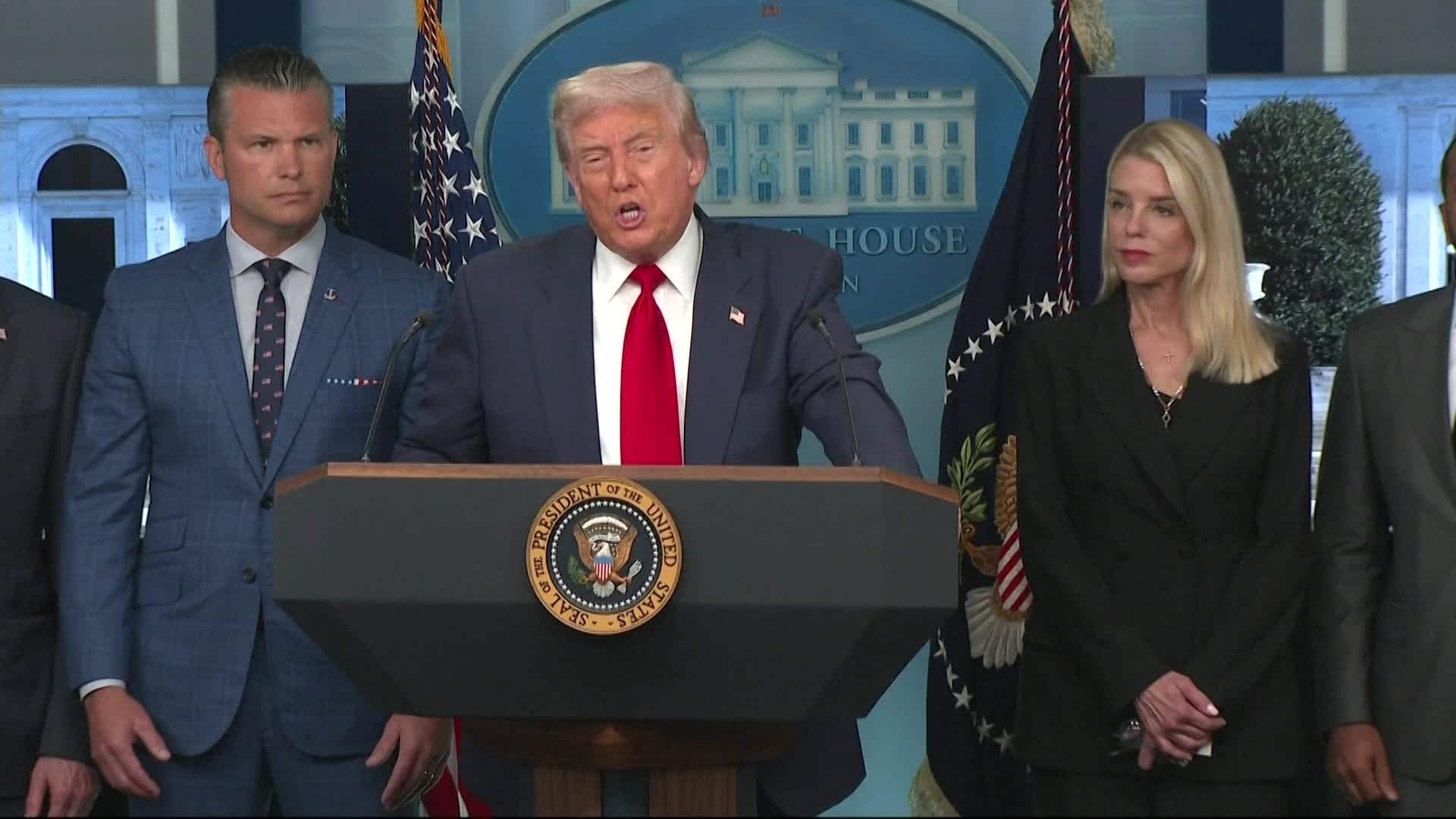
President Donald Trump announced his decision to take control of Washington D.C.'s Metropolitan Police Department and deploy the National Guard. This federal action is intended to address what he characterized as significant crime and homelessness issues plaguing the capital city.
President Donald Trump's announcement to federalize the Washington D.C. Metropolitan Police Department and deploy the National Guard marks a significant escalation of executive authority over municipal governance. The stated rationale, to combat what was described in strongly pessimistic terms as rampant crime and homelessness, positions this as a major law-and-order initiative. While no specific publicly traded entities are directly implicated, the action introduces a notable level of political and social risk. The moderately negative sentiment score of -0.5 reflects the confrontational nature of the announcement and the potential for civil unrest or legal challenges. The low-to-moderate market impact score of 0.4 suggests that, while not a systemic event, the move contributes to an environment of heightened political uncertainty, a key concern for institutional investors assessing sovereign risk in the United States.
AI-powered research, real-time alerts, and portfolio analytics for institutional investors.
Request DemoOverall Sentiment
moderately negative
Sentiment Score
-0.50
