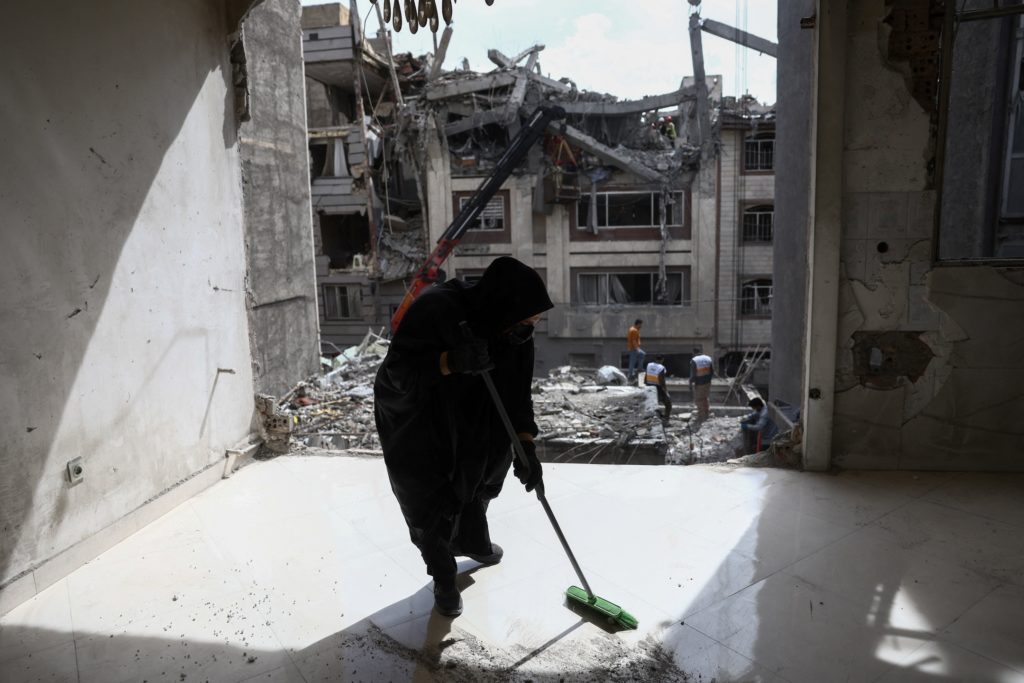
Israel launched a new wave of strikes across Iran, including an attack on the Khandab heavy water research reactor in Arak; Iran reports ~20,399 commercial units damaged and 290 medical centers targeted. The U.S. has deployed thousands of Marines to the Persian Gulf, Secretary of State Marco Rubio said the campaign could conclude "in a matter of weeks," while Iran has closed the Strait of Hormuz to some shipping and turned away three oil tankers. The U.N. has formed a task force to restore safe navigation and Iran agreed to facilitate humanitarian shipments, but the disruption raises significant near‑term oil shipping and geopolitical risk for markets.
The immediate market response is being driven by a chokepoint shock rather than pure supply destruction: even partial or intermittent closures of the Strait of Hormuz increase tanker voyage times by ~10–14 days for reroutes around Africa, tightening effective spare capacity and magnifying short-term physical dislocations in refined fuel and crude flows. That dynamic elevates spot freight rates and war-risk premiums disproportionately to a comparable permanent loss of barrels — meaning public VLCC/Suezmax owners and P&I/reinsurance markets capture outsized margin expansion before upstream producers materially reprice capex.
Second-order winners include owners of flexible crude storage and modern VLCCs (they can arbitrage time-value of barrels), reinsurers/war-risk underwriters who will reprice premiums higher and selective defense contractors with spare capacity in early production (sensors, munitions, naval systems). Losers are time-sensitive supply chains (chemicals, aviation fuel) and carriers with thin hedges; airlines and just-in-time manufacturing in Europe/Asia face margin squeeze from diesel/jet fuel spikes and higher freight-inflation, which could depress discretionary profit pools over the next 1–3 quarters.
Tail risks are binary and concentrated: escalation into sustained Gulf closure or strikes on major export infrastructure would lift Brent into a new regime (+$20–$40) within weeks; conversely, a coordinated diplomatic/convoy response (or large SPR release) could normalize flows within 30–90 days and leave equities that priced in a protracted shock materially overbought. Watch two high-frequency indicators as catalysts: VLCC spot time-charter rates and Lloyd’s war-risk premium notices — both lead price action in oil and shipping equities by ~3–10 trading days.
The consensus is treating current moves as purely geopolitical premium; it underweights market-structure mechanics that favor capital-light owners of tonnage and premium war-risk writers. If hostilities remain episodic, the best alpha will come from trade selection (not broad energy longs) — owning operational optionality (storage/tonnage/insurance exposure) with defined downside is preferable to outright commodity long exposure that invites policy intervention.
AI-powered research, real-time alerts, and portfolio analytics for institutional investors.
Request DemoOverall Sentiment
strongly negative
Sentiment Score
-0.75
